


For a landscape lighting brand or pergola supplier, an IP65 label is not a complete buying decision. Before you approve a production order, verify the evidence behind the rating, the consistency of the light, the compatibility of the system, and the factory’s ability to reproduce the same result at scale.
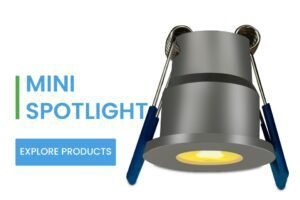
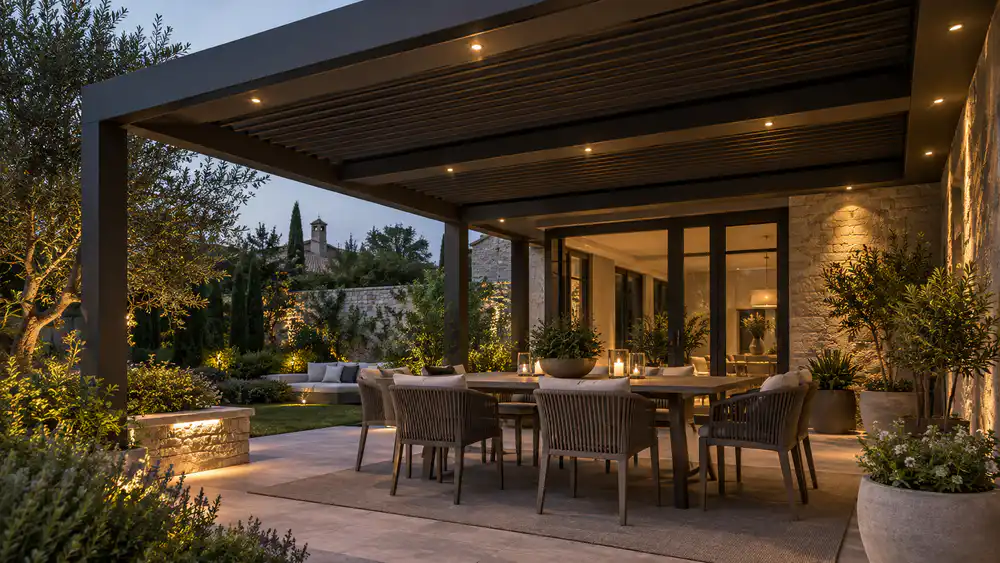
Mini LED spotlights are attractive to outdoor lighting buyers because they deliver a discreet fixture with a precise lighting effect. They can disappear into a pergola beam, veranda ceiling, soffit, patio structure, cabinet, or landscape detail while leaving the illuminated surface as the visual focus.
That small form factor also creates procurement risk. A fixture may be advertised as IP65 yet still leave questions about the driver, connector, cable entry, cutout tolerance, thermal behavior, optical consistency, or documentation supplied for the target market. A sample that looks acceptable on a showroom table can become an installation problem when hundreds of units are fitted across multiple projects.
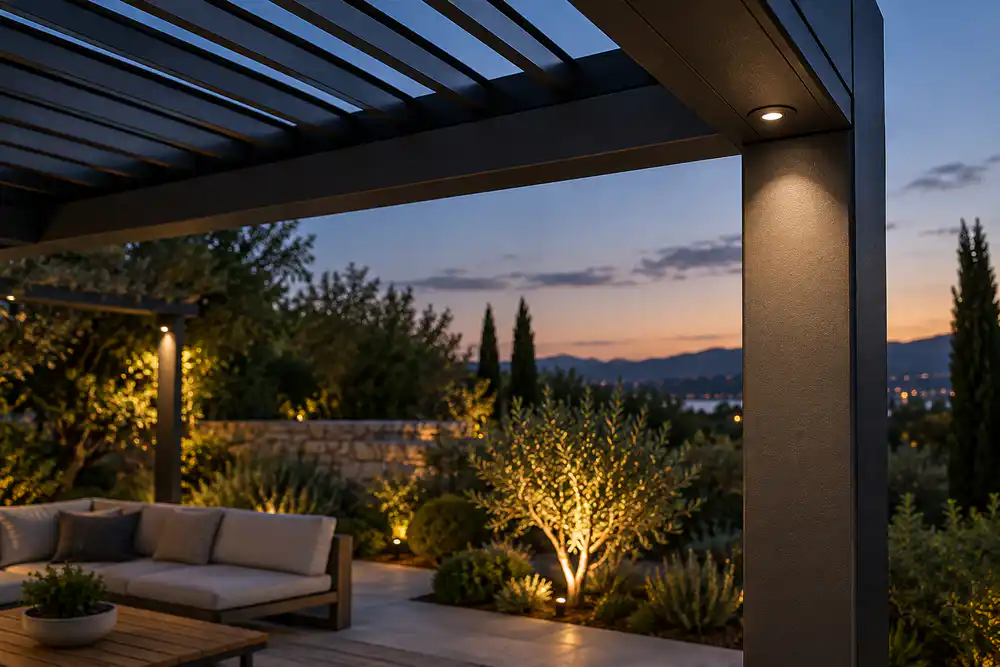
Our position: treat IP65 as the starting requirement, not the final quality claim. A reliable bulk-order decision connects ingress protection with the complete lighting system, the file evidence, optical consistency, thermal management, installation compatibility, and repeatable manufacturing controls.
1. Confirm what IP65 covers—and what it does not
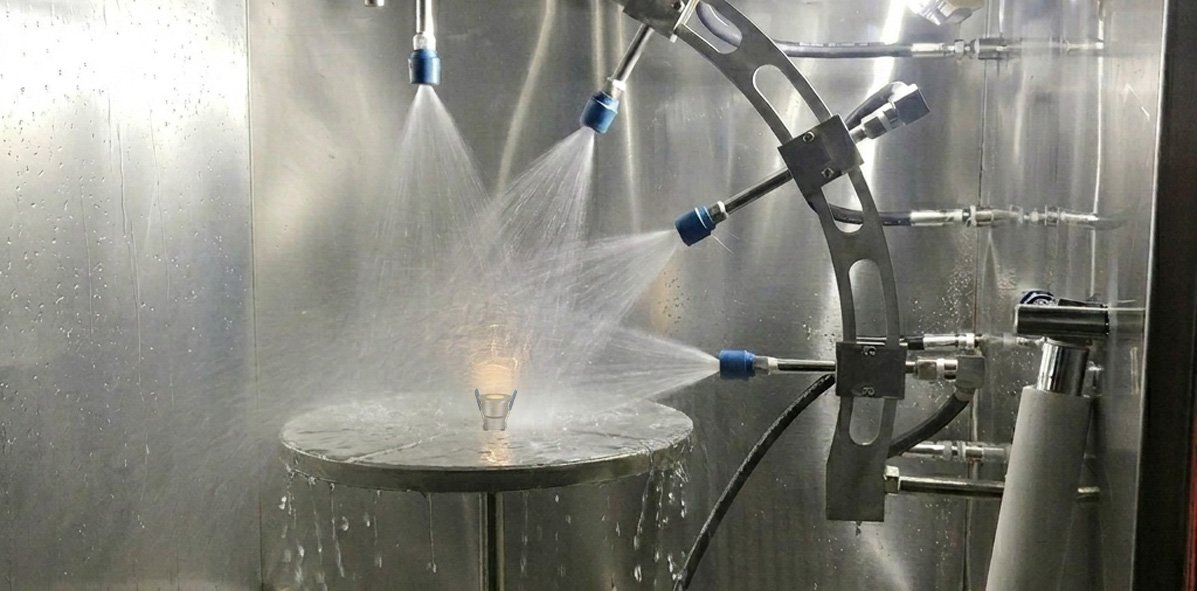
IP65 is defined under IEC 60529, the international standard for degrees of protection provided by enclosures. The first digit, 6, indicates dust-tight protection. The second digit, 5, relates to protection against water jets from any direction.
That is useful for exposed outdoor applications, but it is not the same as immersion protection. Buyers should match the rating to the real installation: a recessed spotlight under a pergola roof, a light exposed to driving rain, a ground-level landscape fitting, and a fixture close to a pool do not necessarily face the same moisture risk.
Ask the supplier to define exactly what the IP65 claim applies to:
- the complete luminaire;
- the front face and housing only;
- the cable entry and connector assembly;
- the supplied driver or power supply; and
- the product after installation according to the supplied instructions.
For a bulk order, request the test basis, product identification, test date, and the exact configuration tested. If the supplier changes the lens, housing, cable, connector, seal, or driver after testing, the original evidence may no longer describe the delivered product.
2. Inspect the whole outdoor system, not only the lamp head
The most common procurement mistake is to approve the spotlight body while treating the rest of the system as an accessory. Outdoor reliability depends on every interface that carries power or allows moisture to enter. The lamp, driver, splitter, extension cable, connector, and junction point should be reviewed as one installation system.
For example, a recessed mini spotlight may be IP65 at the housing while its power connection requires a protected location or a specific installation orientation. A low-voltage system can simplify project planning, but it still needs correct cable routing, connector selection, load planning, and protection from standing water.
Before ordering, request a wiring diagram and clarify:
- nominal input voltage and acceptable voltage range;
- maximum quantity per driver or control channel;
- connector type and polarity;
- extension cable options and maximum recommended run;
- driver location and ventilation requirements;
- dimming protocol or control method; and
- whether the supplied accessories are included in the compliance evaluation.
VLED’s product pages show why this system-level review matters: its mini spotlight solutions can be specified for DC 12V or DC 24V, dimming, different CCT or RGB configurations, and related power supplies, mini drivers, splitters, extension cables, and hole saws. Those options are valuable for brand and project flexibility, but they must be frozen in the purchase specification before production.
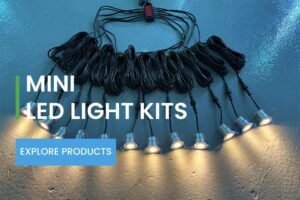
For a closer look at the product family, see the VLED mini LED spotlight range and its related mini LED light kits.
3. Verify optical performance with test data, not wattage alone
Wattage tells you how much electrical power a fixture uses. It does not tell you how the light is distributed on a tree, wall, pergola ceiling, pathway, or patio surface. For project buyers, the more useful questions concern luminous output, beam angle, color consistency, glare, and the repeatability of those values from batch to batch.
Request a photometric file or optical test report for the exact model and configuration. At minimum, check:
- measured luminous flux, not only nominal LED output;
- beam angle and the method used to define it;
- candela distribution or a luminous intensity diagram;
- color temperature and color rendering index;
- SDCM or another stated color-consistency metric;
- lens material and optical pattern; and
- measurement conditions and tolerances.
VLED’s DELUXE specification, for example, lists multiple beam-angle and lens options, 2700K–6500K and RGB-family choices, CRI options above 80Ra or 90Ra, and an optical test report section. Its DEER model lists a 90-degree beam option. These details are more useful to a landscape designer or pergola brand than a generic “bright outdoor spotlight” claim because they can be matched to a defined application.
Do not approve a mixed batch simply because the first sample is visually acceptable. Set the production tolerance in writing. If your brand sells a coordinated kit, color shift between spotlights is immediately visible on a wall or roof plane, even when each individual light appears acceptable in isolation.
4. Check thermal design and lifetime assumptions
Miniature housings have less physical volume for heat management. A compact fixture can still perform well, but the buyer should understand how heat moves from the LED and driver into the housing and surrounding installation environment.
Ask for the working-temperature limits, housing temperature data, LED or driver test conditions, and the definition behind any lifetime statement. “50,000 hours” should not be treated as a universal promise independent of ambient temperature, current, enclosure, duty cycle, or installation method.
| Item to verify | Why it affects a bulk order | Evidence to request |
|---|---|---|
| Housing material | Influences heat transfer, corrosion resistance, finish, and perceived quality. | Material specification, finish sample, and corrosion or surface-treatment information where relevant. |
| Operating temperature | Outdoor installations can combine sunlight, enclosed cavities, and warm climates. | Rated ambient range and test conditions. |
| LED current and driver | Affects output stability, dimming behavior, heat, and system compatibility. | Driver datasheet, wiring diagram, and dimming test results. |
| Installation clearance | Recessed fixtures can be affected by insulation, trapped heat, or an undersized cavity. | Installation drawing and required clearance notes. |
For outdoor projects, thermal design and sealing should be reviewed together. A tightly sealed housing may reduce water ingress while also changing heat dissipation. The correct question is not whether the fixture is sealed; it is whether it remains within its design limits in the proposed installation.
5. Match the mechanical design to the installation method
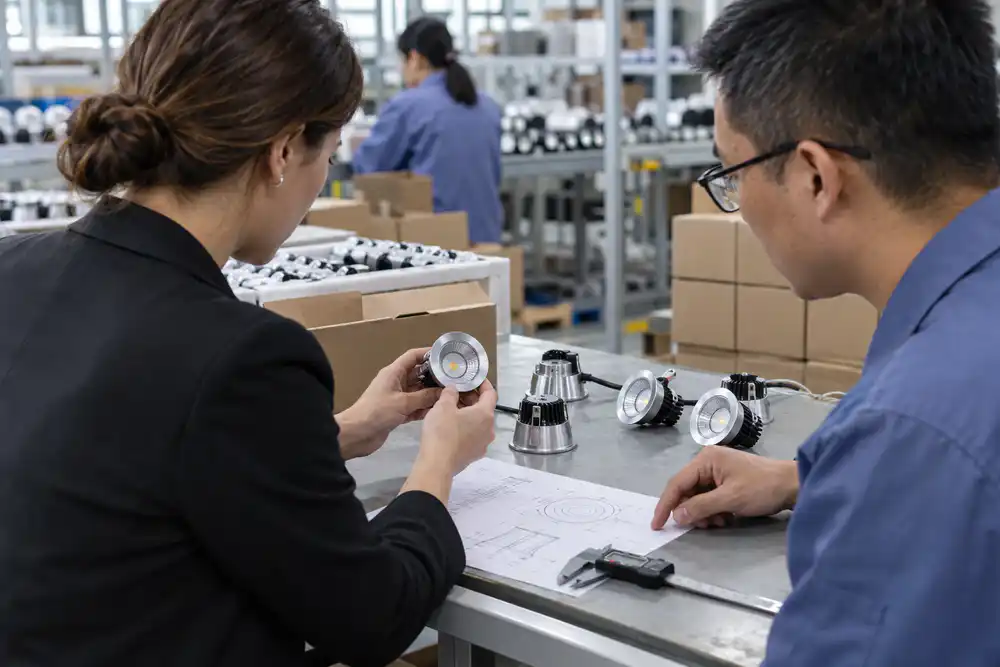
Small differences in diameter and cutout size can create expensive installation delays. Before a purchase order is released, confirm the actual body dimensions, suggested cutout, mounting method, depth, spring or clip arrangement, cable exit, and adjustment range.
VLED’s published models illustrate the importance of model-level specification. The DELUXE is listed at 36 mm diameter by 36 mm high with a 28 mm cutout, while the DEER is listed at 40.5 mm diameter by 35 mm high with a 35 mm cutout. Both are presented as recessed, fixed, dimmable IP65 mini LED spotlights, but they are not interchangeable in an existing installation without checking the opening.
For pergola and veranda brands, also confirm how the fixture interacts with the structure:
- Does the mounting hole fit the extrusion, beam, or panel thickness?
- Can the installer replace or service the light without dismantling the structure?
- Is the visible trim consistent with the brand’s finish and color system?
- Will the cable and connector fit inside the available cavity?
- Does the installation method remain stable under vibration, movement, or thermal expansion?
For landscape applications, the mechanical question may be different. A spike-mounted or surface-mounted spotlight needs stable aiming, cable protection, drainage, and resistance to accidental impact. IP65 alone does not answer those installation questions.
6. Review compliance documents for the destination market
Compliance is part of procurement, not paperwork added after the order. European buyers should confirm the applicable requirements and obtain a current EU Declaration of Conformity and supporting technical documentation. The European Commission’s CE guidance explains that CE marking is the manufacturer’s responsibility and that the mark must relate to the applicable EU rules; it is not a generic quality certificate.
For the United States and Canada, ask whether the exact luminaire and system configuration has the required evaluation for the intended installation. UL Solutions’ outdoor and landscape lighting guidance distinguishes between line-voltage luminaires, low-voltage systems, and other outdoor lighting categories. The relevant standard and marking depend on the product and application.
Your pre-order document pack should normally include the items relevant to your market and product:
- product datasheet with a controlled model number;
- EU Declaration of Conformity where applicable;
- test reports or certificates for claimed safety and EMC requirements;
- RoHS documentation where applicable;
- driver and power-supply documentation;
- installation and wiring instructions;
- packaging and marking artwork; and
- traceability information for production batches.
VLED states that its products are developed for global lighting markets and lists CE, RoHS, SAA, CB, and ETL among the certifications shown for certain mini spotlight models. Treat those statements as a starting point for document review: request the certificate or report that matches the exact model, electrical configuration, and destination market.
7. Test the sample as an installation, not as a photograph
A sample approval should answer practical questions that a catalogue image cannot. Install the sample in a representative section of the pergola, veranda, soffit, or landscape assembly. Use the intended power supply, dimmer, connector, cable length, mounting hole, and surface finish.
During the sample review, record:
- actual cutout fit and installation time;
- connector engagement and cable strain relief;
- light distribution at the planned mounting height;
- color consistency across several units;
- dimming range and control response;
- surface temperature after a defined operating period;
- appearance of the trim, lens, and finish under daylight and at night; and
- clarity of the installation instructions.
Then retain the approved sample or a documented golden sample. The production order should reference it, including model number, finish, lens, CCT or color mode, cable, connector, driver, packaging, and acceptable tolerances. This gives the factory and the buyer a common reference if a later batch is questioned.
8. Assess the manufacturer’s ability to reproduce the specification
Bulk buying is a manufacturing decision. The right supplier is not simply the one with the lowest unit price; it is the one that can hold the agreed specification while handling customization, documentation, packaging, and after-sales support.
Ask how the supplier manages:
- incoming LED, driver, lens, housing, and cable inspection;
- assembly and sealing controls;
- photometric or functional checks during production;
- batch traceability and change control;
- sample retention and pre-shipment approval;
- custom RAL finishes, logos, packaging, or private-label requirements;
- replacement parts and warranty handling; and
- engineering support when the installation changes.
VLED describes itself as a manufacturer focused on small LED spotlights, mini downlights, and LED kits since 2010, with in-house design and R&D capability and OEM/ODM support. The company’s product information also shows multiple voltage, optical, finish, color, and accessory combinations. For a brand buyer, that combination matters because it can reduce the gap between a standard catalogue item and a project-ready lighting kit—but only when the final specification is clearly controlled.
Learn more about the company’s design, R&D, and manufacturing capabilities, or contact VLED for a project-specific technical review.
9. Use a purchase specification that prevents ambiguity
Many disputes begin with a purchase order that says “3W IP65 outdoor spotlight” and leaves the rest open to interpretation. A professional specification should identify the complete product configuration and the acceptance criteria.
Minimum purchase-order fields: model number; input voltage; wattage tolerance; CCT or color mode; CRI; beam angle; lens; housing material and finish; dimensions and cutout; IP claim and test reference; driver and dimming method; cable and connector; certification documents; packaging; sample approval reference; warranty terms; and change-notification requirements.
For engineered pergola or landscape projects, add the application drawing, quantity per zone, driver loading, cable plan, mounting detail, and commissioning procedure. If the product will be sold under your brand, define which documents and markings must appear on the fixture, packaging, manual, and carton.
Bulk-order checklist for IP65 mini LED spotlights
- Define the installation environment and exposure before selecting the IP rating.
- Confirm that the IP claim applies to the complete delivered configuration.
- Review the driver, connector, cable, splitter, and power supply as one system.
- Request optical test data for the exact model and selected lens or beam angle.
- Set acceptable tolerances for output, color, beam, dimensions, and finish.
- Verify thermal data and installation clearances for the target climate and structure.
- Match the cutout and mounting method to the real assembly.
- Collect destination-market compliance documents before purchase approval.
- Install and test a representative sample using the intended accessories.
- Freeze the approved configuration and link it to the production order.
- Confirm how the supplier controls changes, batches, and after-sales support.
FAQ
Is IP65 enough for every outdoor mini spotlight application?
No. IP65 provides dust-tight protection and protection against water jets, but it is not an immersion rating. The correct choice depends on placement, drainage, exposure, cleaning method, and whether the fixture or connection can be exposed to standing water.
What documents should I request before placing a bulk order?
Request a controlled datasheet, relevant test reports or certificates, the applicable Declaration of Conformity, driver documentation, installation instructions, wiring diagrams, and product traceability information. Match every document to the exact model and electrical configuration.
Should I buy individual spotlights or complete light kits?
Choose complete kits when you need predictable compatibility between lights, drivers, cables, connectors, and controls. Buy individual fixtures when your engineering team already controls the power and wiring architecture. In both cases, approve the complete installed system.
Which specifications matter most for pergola lighting?
Start with cutout and mounting compatibility, low-voltage system design, dimming or control compatibility, color consistency, glare control, cable routing, heat management, and weather exposure. A small fixture still needs to integrate cleanly into the structure and service plan.
Can an IP65 mini spotlight be used near a pool or in a wet location?
Do not decide from the IP label alone. Check the local electrical requirements, the fixture’s intended use, separation distances, driver location, cable system, and any required wet-location or pool-area approvals. Ask a qualified electrical professional to review the installation.
Turn the checklist into a project-ready specification
If you are sourcing mini LED spotlights for a pergola brand, landscape lighting range, patio product line, or installation project, send the application, quantity, voltage, cutout, color, beam, control, and compliance requirements. VLED can review the specification, recommend a suitable configuration, and support OEM/ODM development from sample to production.
Contact VLED for a technical quotation and sample discussion.
Пингбэк: Mini Spotlight Housing Materials: Stainless Steel, Aluminum, Brass, and Plastic Compared - miniledspotlight.com