




The short answer: choose an LED deck light manufacturer that can deliver a coordinated low-voltage system, not a loose fixture. Before approving a sample, verify the cutout, depth, voltage, dimming method, beam distribution, ingress protection, connector strategy, driver compatibility, documentation, and repeatability of production. Those details decide whether a deck-light SKU becomes a dependable product line or a source of installation complaints and warranty work.
Deck lighting sits at the intersection of architecture and electrical hardware. A light installed into composite decking, a pergola post, a stair riser, or a garden path is small enough to disappear visually, yet difficult to replace once the project is complete. That makes specification discipline more valuable than a low first-unit price.
This guide is written for importers, landscape-lighting brands, pergola and patio suppliers, distributors, and project contractors who need to compare manufacturers and build a commercially reliable product range.
Why LED deck lights should be specified as a system
A deck light rarely operates alone. A typical project may include recessed fixtures, cable runs, a splitter or connector, a driver, dimming or scene control, and installation accessories. The fixture can perform well in a laboratory and still create field problems if the driver is mismatched, the connector is exposed, or the installer has no clear hole-saw specification.
For this reason, a manufacturer evaluation should answer six connected questions:
- Will the light fit the intended material and mounting detail?
- Will the electrical architecture work across the target market?
- Will the light provide comfortable guidance rather than harsh glare?
- Can the brand offer consistent color, finish, and performance across repeat orders?
- Can the installer buy or receive the required lights and accessories as one coordinated package?
- Can the supplier provide the technical and compliance documents required for the destination market?
This is the main difference between a product listing and a manufacturer relationship. A listing describes a lamp. A manufacturer should help you define a repeatable solution.
The specification checklist for commercial LED deck-light sourcing
Use the following checklist before comparing quotations. If a supplier cannot answer these points clearly, the quotation is not yet comparable.
| Specification area | What to confirm | Why it matters to buyers |
|---|---|---|
| Application | Deck, stair, riser, pathway, patio, pergola, landscape, or mixed use | Determines optics, housing, mounting, exposure, and expected light level. |
| Electrical input | 12 V or 24 V DC, power per fixture, polarity, and driver requirements | Prevents incompatibility with existing low-voltage systems and control equipment. |
| Mounting | Recessed or surface-mounted, cutout diameter, fixture depth, retention method | Controls installation time and whether the light fits the customer’s structure. |
| Optics | Beam angle, lens or diffuser, glare control, and light distribution | Separates comfortable wayfinding from visible hot spots and unwanted glare. |
| Light quality | CCT, tunable white, RGB, RGBW, RGB+CCT, CRI, and consistency | Supports the brand’s visual language and reduces color mismatch in one project. |
| Environmental protection | IP rating of the fixture, cable, connector, driver, and junction points | An IP claim for the lamp does not automatically protect the whole installation. |
| Documentation | Datasheet, wiring diagram, installation instructions, test reports, and labels | Helps importers, installers, and local compliance teams approve the product. |
| Supply model | Sample process, MOQ, lead time, packaging, spare parts, and change control | Protects launch schedules and future replenishment quality |
1. Choose the mounting format before choosing the finish
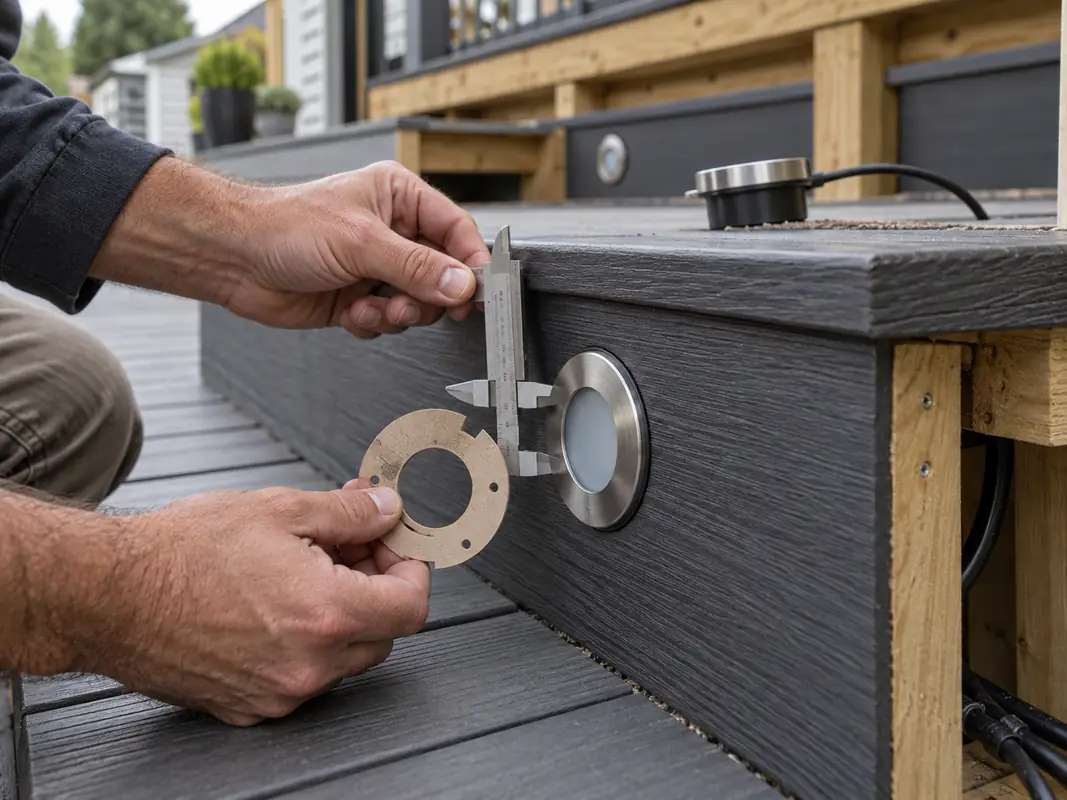
Recessed deck lights create a clean, architectural appearance, but they demand accurate installation dimensions. The installer needs the cutout diameter, body diameter, overall height, clearance behind the deck, cable exit location, and a dependable way to retain the fixture. Even a small change in the cutout can create a visible gap or force a contractor to modify the structure on site.
Surface-mounted lights are more forgiving for retrofit work and can reduce drilling, but they change the appearance and may be more exposed to impact. The right choice depends on the project’s construction stage, deck material, access to the underside, and maintenance plan.
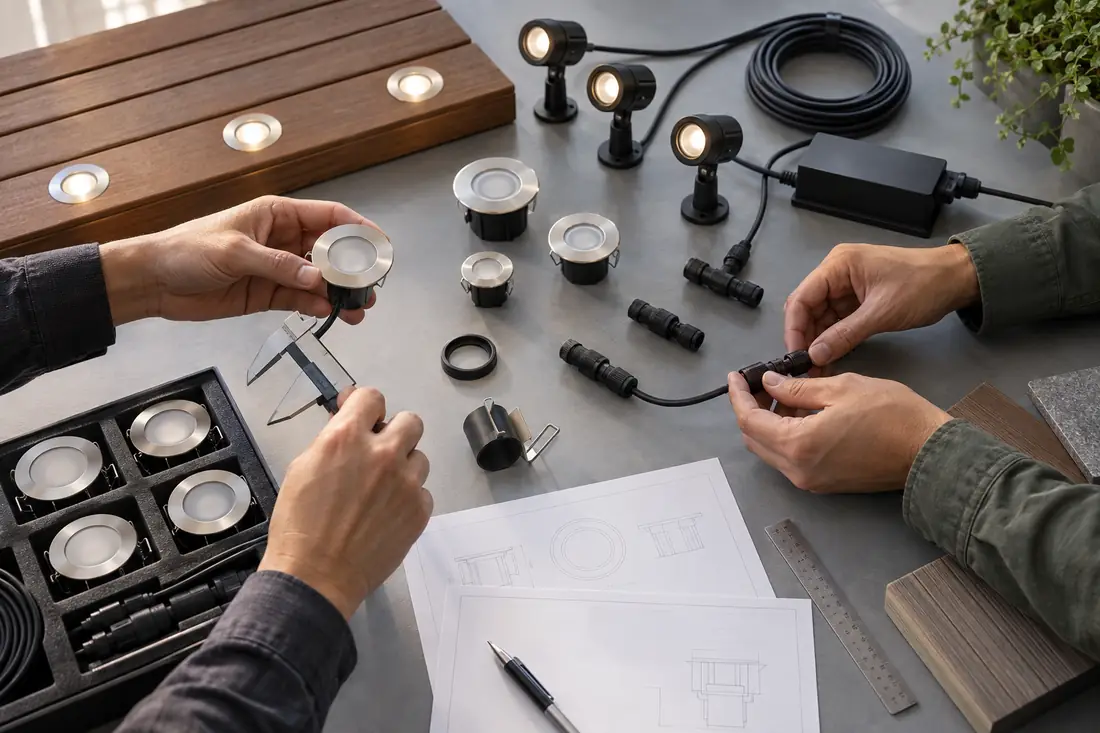
For importers, the practical requirement is not just a dimensional drawing. Ask the manufacturer to send a sample with a real installation template or a clearly marked cutout recommendation. VLED’s deck-light range includes recessed models with different cutout sizes, including the STRAW, SLED, SIP, SPARK, SKIFF, SLOOP, SEQUIN, SITAR, SABRE, and SILO series. That range can help a brand cover different deck details without forcing every project into one hole size.
2. Match voltage, drivers, and controls as one architecture
Low-voltage LED deck lighting is attractive for outdoor living projects because it allows compact fixtures and flexible installation. The system still needs an intentional electrical design. Confirm the fixture’s nominal voltage, wattage, current, dimming behavior, maximum connected load, cable length assumptions, and connector polarity.
Do not treat “12 V” and “24 V” as interchangeable labels. A driver that powers one fixture may not be suitable for a complete run, and a dimmer designed for one control method may produce flicker or limited range with another. If a project uses RGB, RGBW, or RGB+CCT, the control channel count and controller protocol must be defined before the bill of materials is approved.
Ask for a wiring diagram that shows the full path from power supply to the last fixture. It should identify cable type, connector type, maximum recommended run, injection points if required, and how the system is protected from moisture. The UL Solutions overview of landscape and outdoor lighting is a useful reference because it distinguishes the evaluation of low-voltage luminaires, power units, and complete systems.
Why 24 V can be useful in larger outdoor living projects
Many commercial outdoor-living systems use 24 V DC because the higher system voltage can support longer low-voltage runs with lower current than an equivalent 12 V load. That does not remove the need for voltage-drop calculations or correct cable sizing. It simply gives the designer another practical architecture to evaluate.
For a brand, the important point is consistency. If your pergola kit, deck kit, and landscape kit use different drivers and control methods, sales teams must explain multiple systems and installers must stock more parts. A manufacturer that can develop coordinated light kits can reduce that complexity.
3. Treat IP rating as a complete installation question
“Waterproof LED deck light” is not a sufficient specification. The real question is where water can enter the complete installation and how the product is intended to be mounted.
Start by separating the fixture from the system:
- What is the IP rating of the light body and lens?
- Is the cable permanently sealed into the housing or connected through a plug?
- Is the connector rated for the same exposure as the fixture?
- Where is the driver installed, and is it suitable for a damp or wet location?
- Does the installation require drainage, a gasket, sealant, or a specific orientation?
- Is the light intended for surface exposure, ground-adjacent use, or possible temporary pooling?
IP65, IP67, or another rating describes tested protection under a defined method. It does not mean that every installation condition is automatically safe, nor does it certify the power supply or field-made connection. For North American projects, also confirm whether the specification requires a product or system evaluated for the applicable wet-location requirements. UL explains that outdoor luminaires, low-voltage systems, and power units can fall under different standards and evaluation paths.
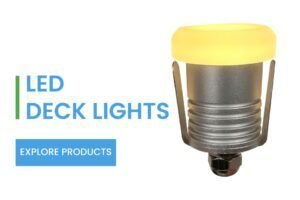
VLED lists selected deck-light models as IP65 and dimmable, with 12 V or 24 V options and CCT/RGB variants. The LED deck lights category should be used as a starting point for product selection, while the final quotation should confirm the exact model, configuration, driver, connector, and destination-market documentation.
4. Specify light quality for the way people use the space
Deck lights normally guide movement, define edges, and add atmosphere. They are rarely intended to illuminate an entire outdoor room like a high-bay or floodlight. More output is not automatically better. Excess brightness or an exposed point source can make a premium deck feel uncomfortable and can reduce night vision when people look toward the fixture.
Color temperature and color options
For residential and hospitality outdoor living, warm white is often selected for a relaxed appearance. Modern commercial landscapes may also require neutral white for visual clarity. A brand selling into several markets may prefer a core single-CCT SKU plus a tunable-white or RGBW option for projects that need scenes and color flexibility.
VLED’s deck-light specifications include ranges such as 2700–6500K, as well as CCT, RGB, and RGBW options on selected models. Do not publish those choices as generic features across every SKU. Build a model-by-model matrix so that sales, installation, and customer-support teams know exactly which light supports which function.
Beam angle, diffusion, and glare
A narrow beam can create a defined visual point or highlight a feature. A wider distribution can support steps, walkways, or general orientation. The best choice depends on fixture spacing, mounting height, surface reflectance, and whether the light is seen directly by people using the space.
Use a sample board or mock-up to judge the result at night. A datasheet can describe the beam angle, but it cannot fully show how a lens behaves in a dark garden, against pale composite decking, or beside a reflective metal pergola. Good specification work combines photometric data with an actual visual review.
Responsible outdoor lighting also means controlling glare, over-lighting, and upward-directed light. The DarkSky Approved Luminaires guidelines provide a useful framework for thinking about light trespass, glare, and environmental impact. A deck-light manufacturer does not need to turn every product into a certification project, but it should design and advise with these effects in mind.
5. Make the fixture work with pergolas, patios, and landscape systems
Outdoor living brands rarely sell deck lights as isolated hardware. They sell a complete experience: a pergola with a roof, a patio with seating, a stairway, a garden path, or a landscape package. The light must therefore fit the geometry and installation workflow of the wider product.
Common applications include:
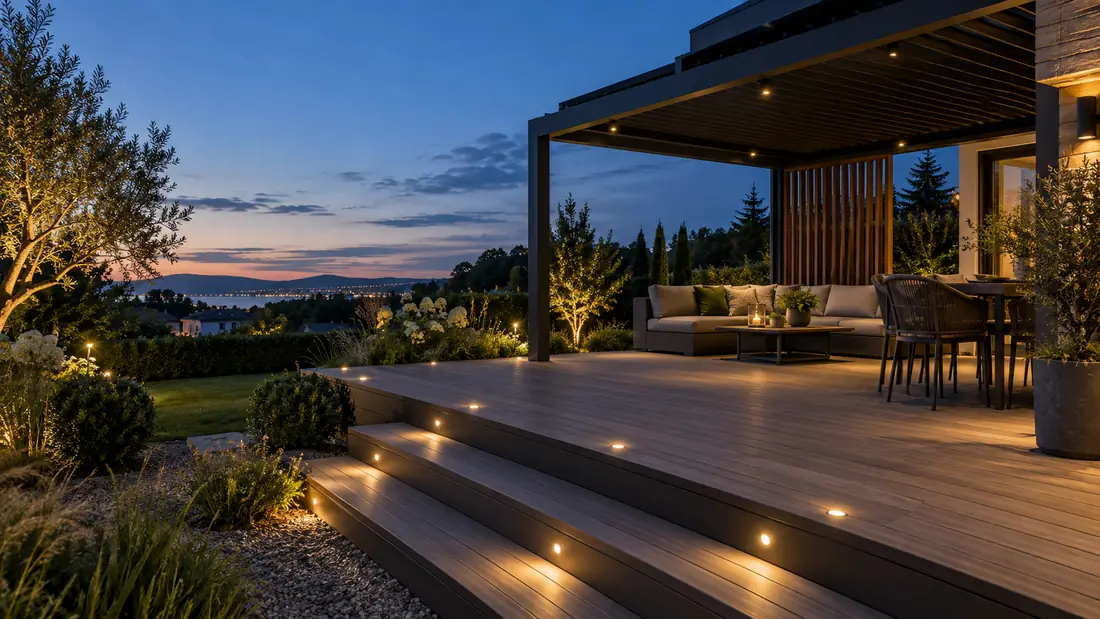
- Recessed points in deck boards and stair treads.
- Step and riser lighting for movement and edge definition.
- Small fixtures in pergola posts, beams, and ceiling panels.
- Pathway and garden-edge markers.
- Accent lighting for planters, walls, outdoor kitchens, and architectural details.
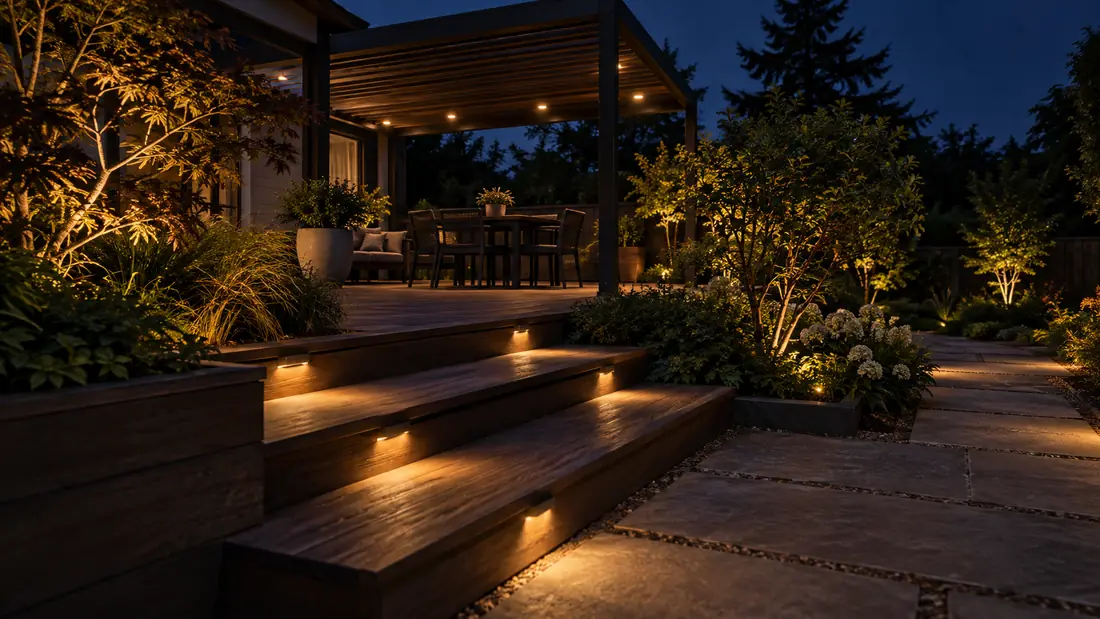
- Coordinated deck and pergola scenes using spotlights, step lights, and LED strip light.
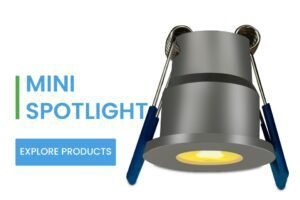
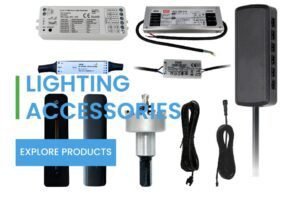
This is where a manufacturer’s product breadth matters. Alongside mini LED spotlights, VLED develops LED step and deck lights, COB LED strip solutions, and installation accessories. A coordinated range gives brands more control over visual consistency and makes it easier to build project-specific kits.
If your product is a motorized pergola or louvered roof, define where the light will be installed before production tooling is finalized. Cable routing, moving-part clearance, service access, and control integration should be reviewed with the lighting manufacturer and the structure manufacturer together.
6. Evaluate the manufacturer behind the sample
A good sample proves that one item can work. It does not yet prove that the supplier can support a product line. Importers should evaluate four capabilities.
Design and engineering capability
Can the supplier adjust the housing, finish, lens, cable, mounting detail, or packaging to fit your market? Can it explain the engineering trade-offs instead of accepting every feature request without checking thermal, electrical, or production consequences?
Manufacturing control
Ask how the supplier controls incoming components, assembly, electrical testing, light output, color consistency, sealing, and final inspection. If the design changes, ask how the change is recorded and communicated before the next production run.
Documentation and compliance support
Request current datasheets, wiring diagrams, labels, installation instructions, packaging marks, and any applicable test or certification documents. A certificate should match the actual model and configuration being sold. Do not assume that a factory’s general certificate covers every product variant.
After-sales response
Outdoor projects can involve contractors, distributors, architects, and end customers. The manufacturer should be able to troubleshoot a field issue using a model number, wiring photo, installation condition, and batch information. A supplier that helps diagnose problems protects the brand’s reputation as much as the fixture itself does.
According to its company profile, VLED has focused since 2010 on the design, development, and production of small LED spotlights, mini downlights, and LED kits. The company describes its model as combined design and manufacturing, with OEM/ODM and NDA support for lighting brands. It also states that its products have been supplied to international markets and that selected products carry certifications such as CE, RoHS, FCC, SAA, UL, TUV, ETL, or PSE. Buyers should still request the documents for the exact SKU and destination market before making a compliance claim.
7. Use kits to reduce installation friction
For many importers, the most commercially useful format is not a single light but a tested kit. A kit can include the fixtures, driver, connectors, cable, remote or controller, splitter, and installation accessories needed for a defined application.
Kit design helps in three ways:
- Fewer compatibility mistakes. The buyer receives parts selected to work together.
- Clearer merchandising. A distributor can sell a three-light, six-light, or twelve-light package with a defined use case.
- Faster installation. Contractors spend less time identifying missing or mismatched components.
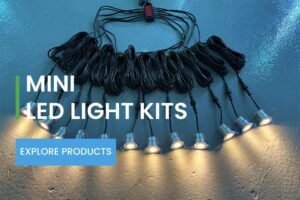
VLED’s home page presents mini LED light kits and pergola lighting kits with options such as dimming, remote control, app control, RGB/RGBW, dynamic white, and rain-sensor-related applications. For a brand launch, translate those capabilities into a clear SKU architecture rather than listing every possible feature in one product name.
A practical range might include a warm-white starter kit, a tunable-white kit, an RGBW scene kit, and a project pack for installers. Each should have a defined light count, driver, control method, cable plan, mounting format, and replacement-part policy.
8. Plan the importer’s RFQ and sampling process
A precise RFQ saves more time than a long negotiation over unit price. Send the manufacturer a short technical brief covering:
- Target markets and required electrical standards.
- Application and mounting location.
- Preferred input voltage and control method.
- Light count per kit and expected annual demand range.
- Required CCT, CRI, RGB/RGBW/CCT functions, and beam options.
- Cutout, fixture depth, finish, cable, connector, and packaging requirements.
- Branding, private-label, manual, label, and carton requirements.
- Sample quantity, testing period, target launch date, and replenishment expectations.
Evaluate samples in the same conditions where customers will use them. Install them into representative deck or pergola materials. Test dimming at low and high levels. Check color consistency between multiple units. Inspect the cable exit and connector after repeated handling. Run the lights through the intended control scenes and confirm that the driver, controller, and fixtures behave as one system.
Procurement rule: do not approve a deck-light SKU from a product photo and a single illuminated sample. Approve the complete specification, the installation detail, the control behavior, the documents, and the supplier’s change-control process.
9. Questions to ask an LED deck lights manufacturer
Use these questions in your supplier review:
- Which deck-light models are designed for outdoor exposure, and what is the exact IP rating of each configuration?
- What are the nominal voltage, wattage, current, and driver requirements?
- Which dimmers, controllers, remotes, and smart systems have been tested with the fixture?
- What are the cutout, depth, body diameter, cable length, and connector dimensions?
- What is the measured light output and beam distribution for the selected CCT or color mode?
- How does the factory control LED binning, color consistency, and production repeatability?
- What documents are available for the target market and exact SKU?
- Can the supplier provide branded packaging, manuals, labels, and a private-label program?
- What happens if the housing, LED source, driver, or connector changes after approval?
- How are samples, pilot orders, bulk orders, and warranty cases tracked?
What a reliable LED deck-light product line looks like
A strong product line is not the one with the largest number of nearly identical models. It is the one that gives a sales team a clear answer for each common project condition.
For example, a landscape brand may need a compact recessed marker for steps, a wider beam for paths, an accent light for planting beds, and a coordinated strip light for pergola edges. The products should share a recognizable visual language and, where practical, a common power and control strategy. That creates a simpler customer experience while leaving room for project-specific performance.
VLED’s manufacturing position is relevant to this model because the company focuses on small-format spotlights, deck and step lights, light kits, and related accessories rather than treating them as unrelated catalog items. Its stated OEM/ODM approach allows a buyer to discuss the fixture, kit, finish, control, and packaging as one development brief.
Final buying decision: compare total project risk, not only unit cost
The cheapest LED deck light can become the most expensive option when a contractor drills the wrong hole, a connector fails in the field, the driver cannot dim correctly, or a replacement fixture no longer matches the original color. Total cost includes installation time, technical support, returns, lost project confidence, and the effort required to maintain too many incompatible SKUs.
When comparing manufacturers, score the complete offer:
- Product fit and optical quality.
- Electrical and control compatibility.
- Environmental protection and installation guidance.
- Documentation and destination-market support.
- Customization and private-label capability.
- Repeat-order consistency and change control.
- Technical response before and after delivery.
That is the standard professional buyers should expect from an LED deck lights manufacturer: a product that looks right, installs predictably, operates as specified, and can be supported across the life of the project.
Build your next deck-light specification with VLED
VLED develops and manufactures mini LED spotlights, LED deck and step lights, light kits, and related solutions for pergola, patio, veranda, and landscape applications. Send your target market, mounting dimensions, voltage, control requirements, and expected order quantity to the VLED lighting team. We can help you compare suitable models, coordinate the system parts, and define a sample brief for your brand or project.
Send Us Your Request