


The wrong first question is, “Are these mini LED lights waterproof?” A supplier can answer yes, point to an IP number, and still leave every important purchasing risk unresolved.
Outdoor reliability depends on the exact luminaire, its cable entry, connector, driver, controller, mounting cavity, drainage, ambient temperature, and installation method. One impressive rating on one component does not make the assembled system suitable for every outdoor location.
That distinction matters to landscape-lighting brands, pergola manufacturers, patio suppliers, importers, wholesalers, and project contractors. A field failure does more than replace a small spotlight. It can require access to a finished aluminum profile, reopen waterproof connections, delay handover, and damage the buyer’s brand.
Key takeaways
- Buy verified exposure performance, not the word “waterproof.”
- Match every report to the exact model and finished configuration.
- Evaluate the luminaire, cable, connector, driver, and installation as one system.
- Freeze specifications and change control before mass production.
Why Is “What Is the IP Rating?” the Wrong First Question?
An IP rating is useful, but it has a narrow job. IEC 60529 classifies the protection an enclosure provides against access, solid foreign objects, and harmful water ingress. It does not, by itself, prove corrosion resistance, UV stability, thermal durability, electrical safety, or suitability for a specific installation.
For example, IP67 identifies a dust-tight enclosure protected against temporary immersion under defined conditions. It does not mean permanent underwater operation. It also does not promise that a field-installed connector, remote driver, or cable splice shares the same protection. NEMA’s enclosure guidance makes another important point: IP and NEMA Type ratings are not equivalent because NEMA Types consider additional characteristics, including corrosion and icing in some classifications.
The strongest supplier answer is not a higher IP number. It is a traceable explanation of what was tested, how it was tested, which configuration passed, and where the limits are.
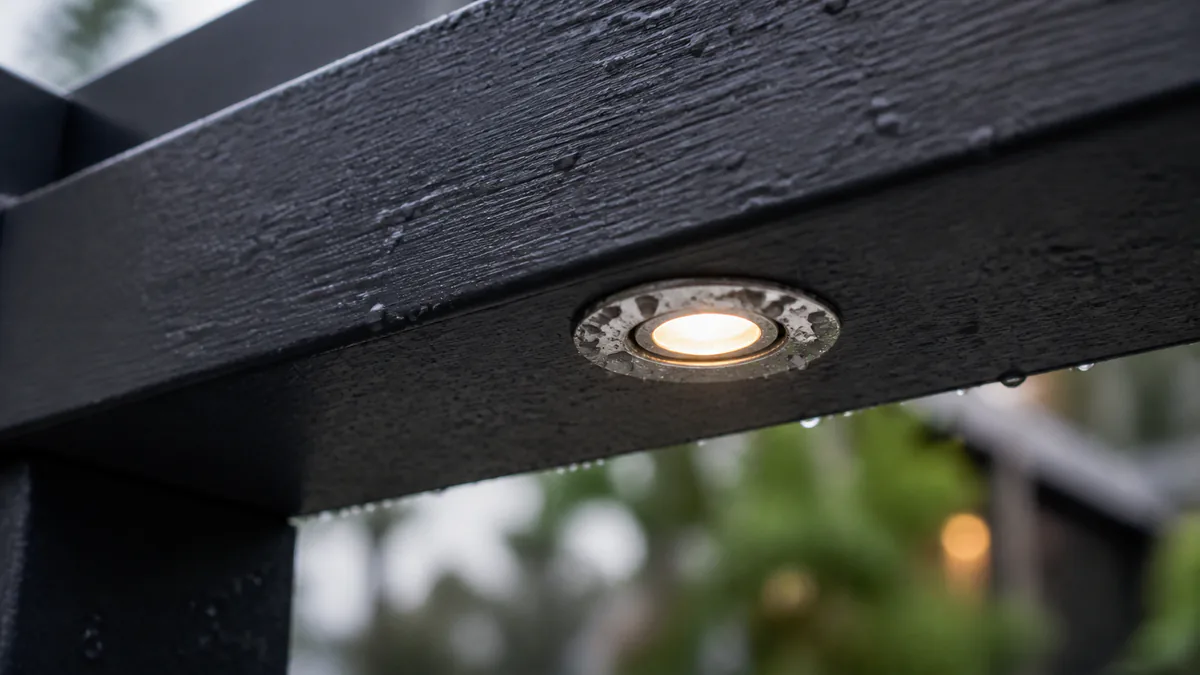
This is especially important for miniature fixtures. Their compact size helps them disappear into pergola beams, soffits, steps, and narrow profiles. Yet the same compact package leaves little room for weak assembly control, poor cable strain relief, or uncontrolled heat. Buyers should therefore treat waterproofing as a system-engineering question, not a catalog filter.
| Supplier evidence | What it proves | What it does not prove |
|---|---|---|
| “Waterproof” in a listing | Only a marketing claim | Test method, rating, model scope, or field suitability |
| IP rating on a datasheet | The supplier declares an enclosure protection level | That an independent lab tested the ordered configuration |
| Internal test record | The factory ran a defined check on a stated sample | Independent verification or market certification |
| Third-party report for the exact model | A stated configuration met the reported conditions | Every accessory, installation, climate, or production batch will perform identically |
| Market-specific product listing | The listed model was evaluated within the certification scope | Unlisted variants, altered components, or installation outside the listing |
Which Supplier Questions Reveal the Real Risk?
Good supplier questions force evidence, boundaries, and ownership into the quotation. They turn “outdoor mini LED light” into a controlled specification. Use the following twelve questions before approving samples or comparing final prices.
1. Which exact model and configuration earned the stated IP rating?
Ask for the model number, drawing revision, housing, lens, gasket or sealant, cable type, cable length, connector, and assembly state shown in the report. The sample, datasheet, quotation, label, and test document should describe the same product.
A credible answer:The supplier identifies the tested revision and explains whether color, finish, cable, connector, or optical changes remain within scope. A certificate for a similar housing is supporting information, not proof for your SKU.
2. What test method, conditions, and pass criteria were used?
“Water tested” is too vague. Request the applicable standard, water exposure method, duration, sample orientation, preconditioning, and post-test inspection. If the supplier claims IP67, the evidence should address temporary immersion rather than only a spray test. Intertek’s IEC 60529 overview explains how the two IP numerals relate to solids and water exposure.
Red flag:A sales representative sends a short video of a lamp in a bucket but cannot provide a controlled test record. The video may demonstrate effort, but it does not define repeatable acceptance criteria.
3. Where does the waterproof boundary begin and end?
Require the supplier to mark the boundary on a system diagram. Does the rating cover only the luminaire body? What about the factory cable joint, splitter, extension lead, connector, controller, and power supply? Where must the installer place the driver?
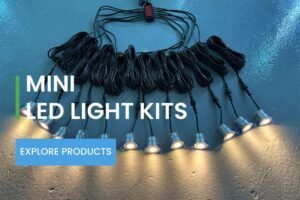
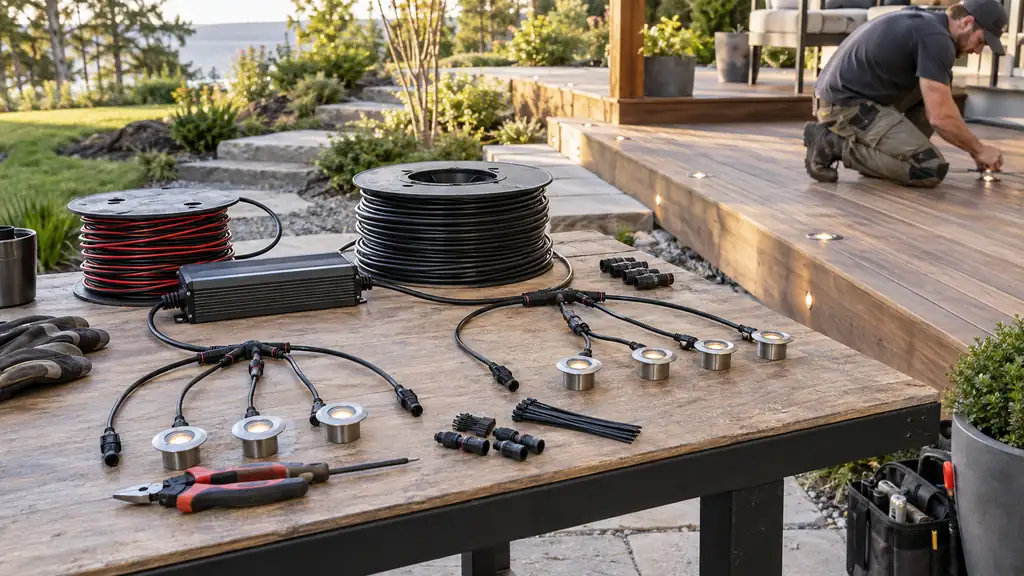
VLED documents many products as complete low-voltage sets, not isolated light heads. Buyers can review the available mini LED light kit architecture and the related outdoor lighting kit bill of materials before freezing the system boundary.
4. How does the design manage condensation and thermal cycling?
Rain is not the only moisture mechanism. Temperature changes can create pressure differences and condensation inside or around an enclosure. Ask how the supplier assessed repeated hot-cold operation, internal moisture, cable movement, and seal aging in the intended mounting position.
A credible answer:The engineer discusses the actual housing, seal interfaces, heat path, and installation cavity. The answer should include limits. No responsible supplier should claim that one enclosure design is immune to every climate and mounting condition.
5. Which materials protect the light from corrosion, UV, and seal degradation?
IP tests address ingress, not every outdoor aging mechanism. Ask for the housing alloy or stainless grade, finish system, lens material, gasket or sealant type, cable jacket, connector material, and any relevant corrosion or UV evidence. Coastal air, pool chemicals, fertilizer, and cleaning agents can change the risk.
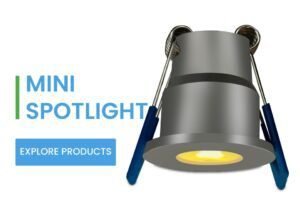
Material decisions also affect appearance and heat transfer. VLED’s guide to mini spotlight housing materials is a useful starting point, but the approved drawing and sample should control the final selection.
6. What is the thermal result in the intended installation?
Compact LED spotlights can operate differently in open air, a timber soffit, an insulated cavity, or a narrow aluminum pergola profile. Ask for ambient limits, measured case or housing temperature, driver loading, and the installation assumptions behind any lifetime statement.
A lifetime claim based only on the LED package is not the same as luminaire life. The driver, solder joints, seals, and optical materials also matter. Freeze the cutout, fixture depth, ventilation, substrate, and driver location before the supplier confirms the design.
7. Are the voltage, driver, controller, and cable sized as one system?
For 12V and 24V systems, ask for maximum run length, cable gauge, connector current, voltage-drop assumptions, driver load range, dimming method, controller compatibility, and expansion limits. A light head may pass its own test while the installed system flickers, dims unevenly, or overheats at a connection.
Use a system-level comparison such as the 12V versus 24V outdoor lighting guide, then request a wiring diagram for your actual fixture count and cable lengths.
8. Can the supplier prove delivered light, beam, and color?
Request luminaire-level output, wattage, CCT, CRI, beam angle, intensity distribution, and color-tolerance data. ANSI/IES LM-79-24 defines procedures for reproducible optical and electrical measurements of solid-state lighting products under standard conditions.
For projects, ask for IES or LDT files when available. Then verify the actual beam on a sample. A miniature spotlight with the wrong optic can create glare, scalloping, dark gaps, or a visible hot spot even when its lumen figure looks acceptable. The mini LED spotlight beam-angle guide helps translate the application into an optical brief.
9. How will color and output stay consistent between batches?
Ask which LED package is specified, how CCT and color tolerance are controlled, what substitution rules apply, and which records tie a finished batch to incoming components. A private-label range needs repeatability across reorders, not just an attractive first sample.
Put it in writing:Require buyer approval for material or component changes. This includes the LED, driver, PCB, lens, seal, cable, connector, finish, and control when a change can affect fit, appearance, compliance, waterproofing, or performance.
10. Which compliance documents apply to the destination market and exact SKU?
Do not buy a folder of logos. Ask who holds each report or certificate, which model numbers are covered, which standards apply, and whether the finished configuration matches the listing. For North American projects, outdoor and low-voltage lighting may fall under different standards and location requirements. UL’s outdoor lighting guidance distinguishes line-voltage wet-location evaluation from low-voltage system pathways.
For EU sales, CE marking is the manufacturer’s declaration that the product meets applicable EU requirements. The official EU CE marking guidance makes clear that the mark applies only where harmonized EU rules require it. Ask for the Declaration of Conformity and supporting technical file for the ordered product.
11. Which production controls protect the approved sample?
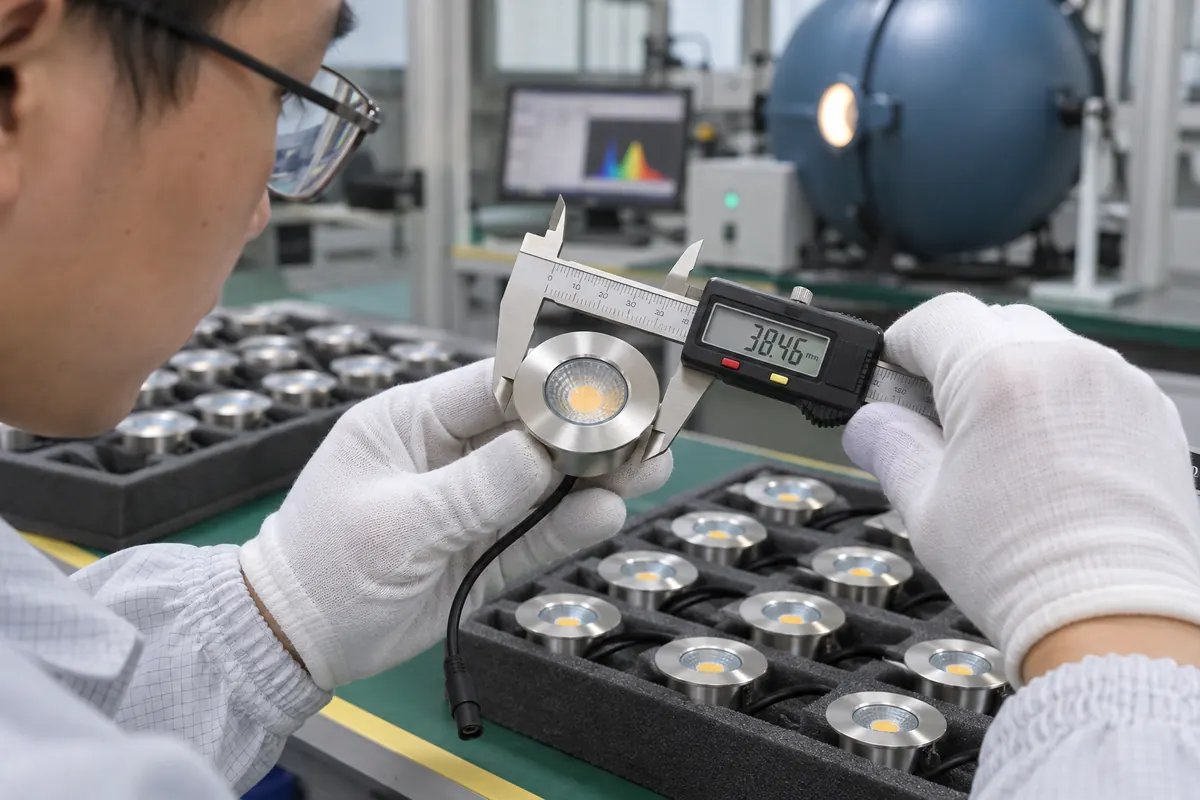
Ask how the factory controls incoming parts, seals, assembly, electrical tests, waterproof sampling, aging, photometric checks, appearance, labels, and final inspection. The plan should identify sample size, frequency, records, and authority to stop a batch.
VLED has focused on the design and production of mini spotlights and lighting kits since 2010 and presents itself as an OEM, ODM, and NDA manufacturing partner. Its design and manufacturing overview provides useful context. Still, every buyer should agree on product-specific controls rather than rely on a general factory profile.
12. What happens if the sample or field installation fails?
Confirm the pilot quantity, sample approval record, failure-analysis process, response time, replacement responsibility, labor exclusions, freight terms, spare-parts policy, and warranty start date. A long warranty is weak if the claim route is unclear or the buyer must return every low-value lamp for inspection.
Also ask who owns corrective action. The supplier should be able to quarantine affected stock, trace the batch, identify the root cause, approve containment, and prevent recurrence. Price matters. Accountability matters more when fixtures are embedded in finished structures.
How Should the Questions Change by Outdoor Application?
The exposure map should set the specification. A covered pergola soffit, an open patio edge, a deck step, and a ground-level landscape fixture do not face the same water, drainage, cleaning, corrosion, or service conditions. Start with the site, then choose the rating and evidence.
| Application | Questions to emphasize | Commonly missed risk |
|---|---|---|
| Pergola, veranda, soffit, or awning | Mounting cavity, roof drainage, fixture orientation, cable routing, heat path, dimming, and access for service | Water travels inside the profile or along the cable even when direct rain is limited |
| Patio, deck edge, or step | Foot traffic, cleaning jets, cutout sealing, cable strain, slip-related glare, and replaceability | The light passes, but the field connector sits in a wet cavity |
| Landscape or near-ground installation | Drainage, temporary standing water, soil chemicals, corrosion, mower or tool impact, and below-grade connections | IP67 is treated as permission for continuous immersion |
| Coastal, poolside, cold, or high-heat location | Material compatibility, salt or chemical exposure, UV, freeze-thaw, ambient limits, and cable flexibility | Ingress evidence is mistaken for full environmental durability |
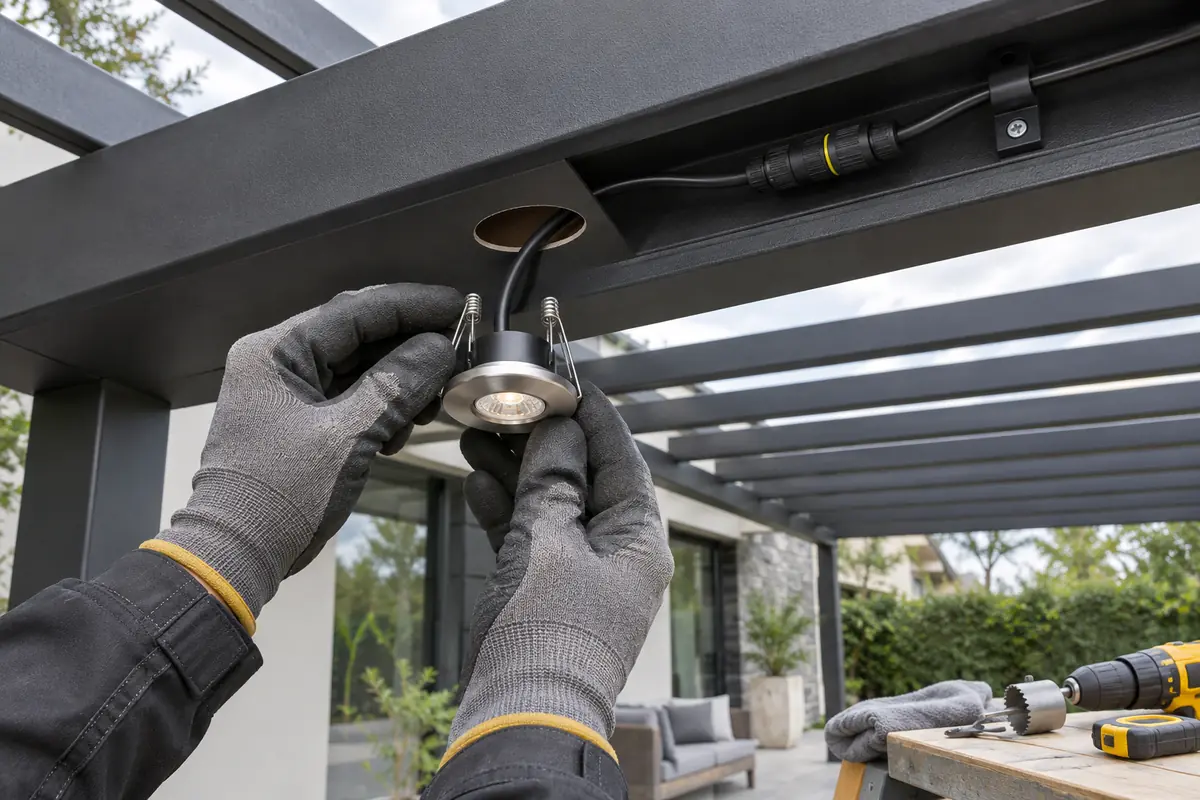
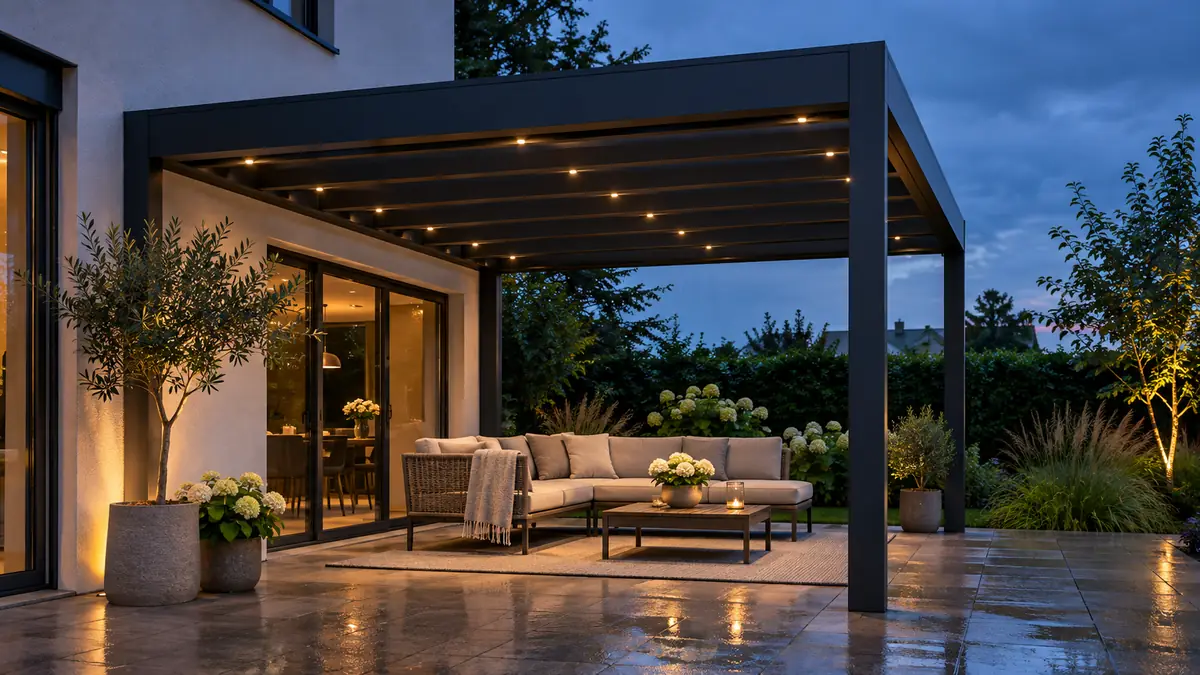
For a pergola or gazebo program, the product brief should include the beam dimensions, profile section, cutout, mounting thickness, fixture spacing, desired beam, CCT or RGBW control, cable path, driver location, and target market. VLED’s overview of mini LED spotlights for pergolas and gazebos can help define those inputs before sampling.
A Better Buying Rule: Approve the Evidence Chain, Not the Claim
The supplier with the highest IP number is not automatically the safest choice. Prefer the supplier that defines limits, links every claim to the exact product, controls changes, and treats installation as part of performance. That behavior predicts project support better than a polished catalog.
Approve a bulk order only when these records agree
- Application brief and exposure map
- Frozen specification and revision-controlled drawing
- Approved golden sample and labeled configuration
- IP, photometric, electrical, and market-compliance evidence
- System diagram covering lights, cables, connectors, controls, and power
- Quality plan, change-control rule, packaging standard, and warranty route
This approach may slow the first quotation by a few days. It usually speeds everything that follows. Engineering compares like with like. Sampling has clear acceptance criteria. Production knows what cannot change. Installers receive a coherent system. After-sales teams can trace a failure instead of debating what “waterproof” was supposed to mean.
Frequently Asked Questions
Is IP67 always better than IP65 for outdoor mini LED lights?
No. IP67 addresses dust ingress and temporary immersion under defined test conditions, while IP65 addresses dust ingress and water jets. The correct rating depends on exposure, mounting position, drainage, cleaning method, and market requirements. A higher numeral does not replace application-specific validation.
Does an IP67 report mean the entire lighting kit is waterproof?
Only if the report and test scope clearly cover the same finished configuration you will buy, including relevant cable entries and connectors. The driver, controller, splitter, extension cable, and field connections may have different location limits and must be evaluated separately.
Which certifications should a supplier provide?
Ask for evidence that matches the destination market, exact model, voltage architecture, and installation type. EU and North American requirements differ. Do not accept a logo sheet or a certificate for a similar product as proof for the ordered model.
What should be approved before a bulk order?
Approve the frozen specification, labeled sample, drawing, and bill of materials boundary first. Then confirm photometric and electrical data, finish and color tolerance, cable and connector details, packaging, inspection, change control, and warranty terms before mass production.
Send the Application Before You Request the Final Price
Share the target market, installation drawing, exposure, quantity, voltage, control method, finish, CCT, beam, cable lengths, and delivery plan. VLED can then review a mini spotlight or matched low-voltage kit, identify the documents required for that exact configuration, and propose a controlled sample path.
Send Us Your Request