



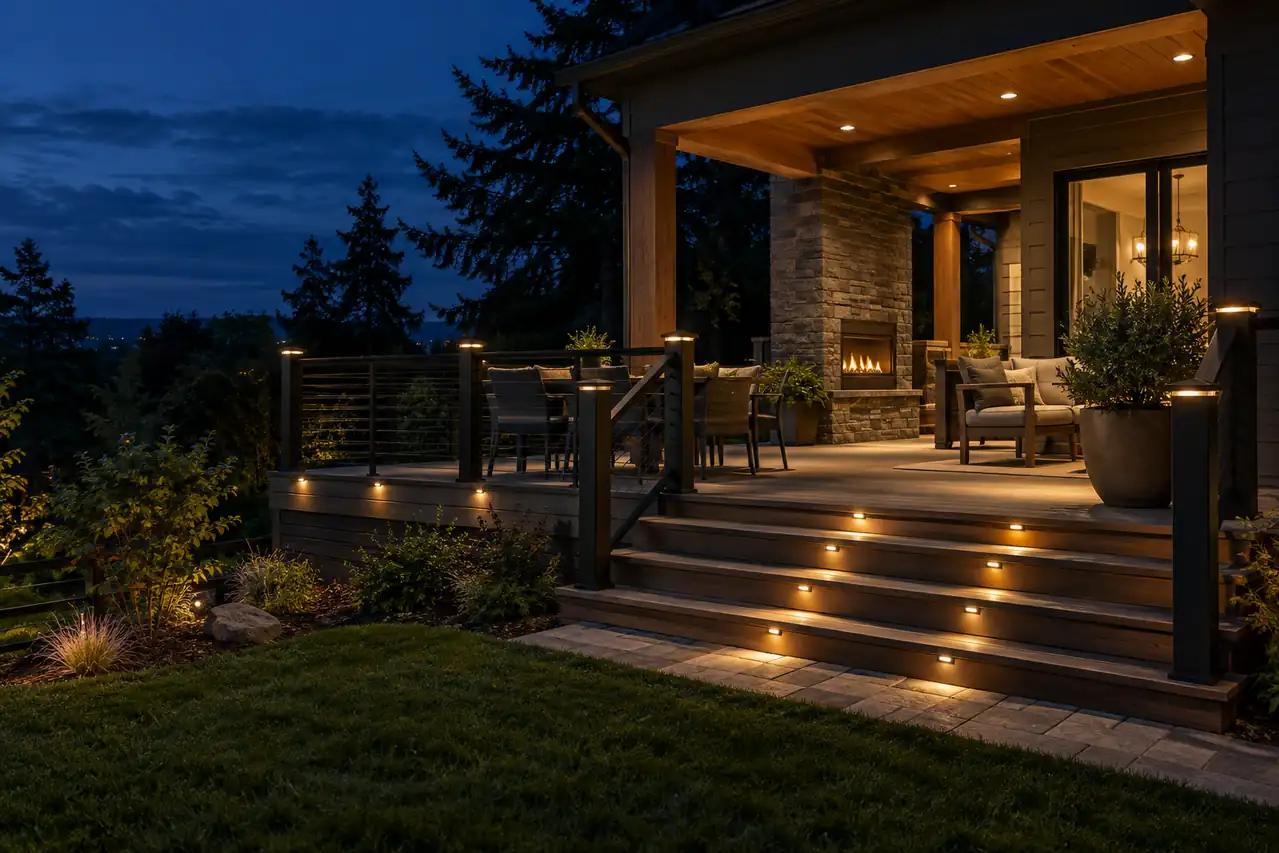
A private-label LED deck light range should do more than illuminate a stair tread. It should give your sales team a repeatable answer for patios, railings, walkways, garden paths, and landscape projects without forcing every customer into a one-off engineering exercise.
That is the commercial opportunity. A buyer may first ask for recessed stair lights, then need matching railing lights, a patio accent fixture, a low-voltage driver, and a complete installation kit. If every product uses a different cutout, cable system, control method, and finish, the range becomes expensive to explain, stock, install, and support.
The better approach is to build a product platform: a controlled family of compact LED fixtures with shared specifications where it matters and differentiated optics or housings where the application demands it. This is the approach we recommend as a mini LED spotlight, deck-light, pergola-light, and landscape-light manufacturer serving OEM and ODM partners.
The central position: private-label success in deck lighting comes from reducing system complexity for the customer while preserving enough visible choice for the brand. Start with applications and installation constraints, then define the range architecture.
What the market already tells us about deck-lighting demand
Consumer and contractor guides consistently organize outdoor deck lighting around movement, use, and atmosphere. Stairs and changes in level are treated as safety priorities; seating and dining areas need comfortable ambient light; railings and posts provide opportunities for concealed or accent illumination. Fine Homebuilding’s deck-lighting guide groups the subject around safety, task, and security lighting, while Home Depot’s outdoor-lighting guide emphasizes using light where it improves movement and visibility rather than lighting every surface equally.
More design-led guidance makes the same point in different language: outdoor light should guide the eye and create depth, not simply fill a space with brightness. Homes & Gardens recommends dividing an outdoor area into zones such as dining, outdoor kitchens, paths, and stairs, with shielded fixtures where glare would reduce comfort.
For a private-label brand, these patterns translate into a useful product brief:
- A discreet, shielded option for steps and circulation routes.
- A compact accent or directional option for railings, posts, walls, and landscape features.
- A system that can extend across patios and pergola structures without changing the customer’s control logic.
- Installation kits that make the product easier for distributors and contractors to specify.
What most competing content does not explain is how to turn those use cases into a coherent range that can be manufactured under another company’s brand. That is where product architecture matters.
1. Define the range by application, not by fixture shape
Begin with an application matrix. The first question is not “How many models should we launch?” It is “Which lighting jobs must the range solve?” A practical first release can cover three core zones and one extension zone.
| Application | Primary job | Product direction |
|---|---|---|
| Stairs and risers | Reveal treads and changes in level with low glare | Recessed or surface-mounted step light with controlled forward distribution |
| Patios and deck surfaces | Add discreet points of ambient or perimeter light | Flush compact light, matching trim, or low-profile accent fixture |
| Railings and posts | Define edges and create visual rhythm | Small directional spotlight or concealed linear companion |
| Paths and landscape | Extend the range beyond the deck package | Beam-angle or mounting variation using shared electrical components |
This matrix prevents a common launch mistake: adding models because they look different in a catalogue while leaving a real application unresolved. It also gives distributors a simple merchandising story. They can sell a “stair package,” “patio package,” or “railing package” rather than asking customers to understand a technical product taxonomy.
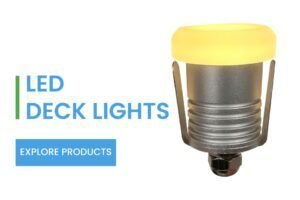
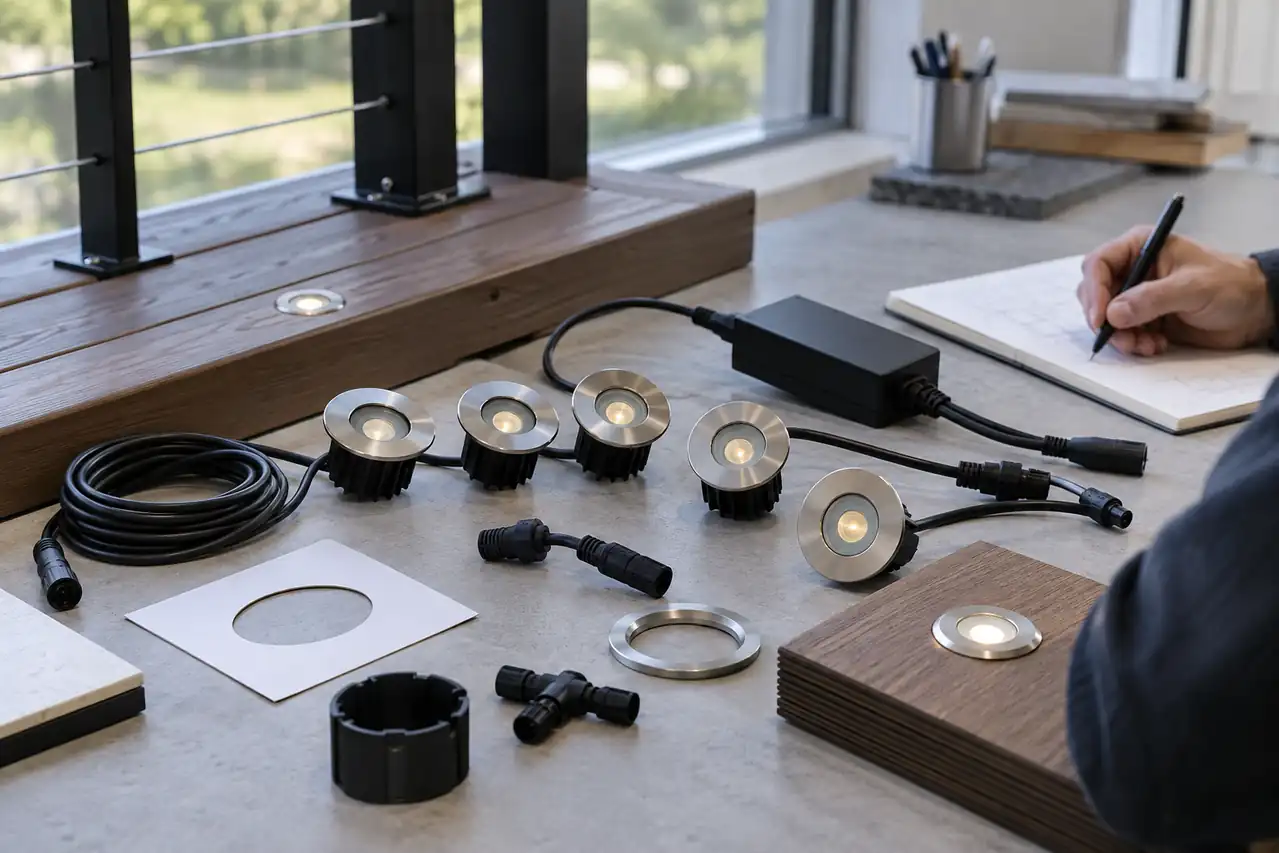
VLED’s LED deck light range follows this application-led logic, with compact recessed models for stairs, decks, walkways, patios, garden paths, and landscape use. The range includes different body dimensions and cutouts while retaining a recognizable family of low-voltage, dimmable outdoor products.
Private label does not mean putting a logo on a catalogue item and stopping there. A brand earns repeat business when products installed on the same project behave as one system. Shared specifications are therefore more valuable than a large model count.
At the platform level, decide which characteristics should remain common:
- Voltage architecture: choose the low-voltage family that suits your target market, installation partners, and control ecosystem. Do not mix 12 V and 24 V casually in one starter range; make the difference obvious on labels, packaging, and wiring documents.
- Control behavior: define whether the line is dimmable, remote-controlled, app-controlled, or designed for a third-party landscape controller. If RGB, RGBW, or tunable white is offered, clarify which models support it and which remain single-CCT.
- Connector and cable logic: shared connectors, cable lengths, splitters, and extension options reduce installation errors and simplify inventory.
- Visual language: use a controlled finish palette, trim geometry, and logo treatment so the product family looks intentional across stairs, posts, and patio edges.
- Documentation: use one consistent naming system for wattage, CCT, beam angle, cutout, IP rating, cable, and control compatibility.
A platform does not mean every model must be identical. The visible housing and optical output can change by application, while the hidden parts of the system remain stable. This is the difference between useful modularity and superficial variety.
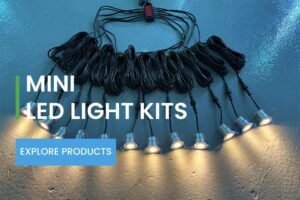
For brands that also sell pergola or veranda products, a shared control and low-voltage strategy can be especially valuable. VLED’s mini LED light kits y pergola lighting solutions show how compact spotlights, strip lights, remote control, and dimming can be developed as a broader outdoor-lighting system rather than isolated SKUs.
3. Treat optics and glare control as the product’s real design language
Two fixtures with the same wattage can create completely different customer experiences. The decisive variables are beam angle, lens or diffuser behavior, mounting height, shielding, and the relationship between the light source and the observer.
For stairs, the goal is usually to make the walking surface legible without turning the LED into a bright point in the user’s field of view. For railings and posts, a narrow beam may highlight a planting, wall texture, or architectural detail. For a patio perimeter, a softer and wider distribution can create continuity without a row of visible hotspots.
Specify the optical job before specifying the LED package. A practical private-label brief should state:
- What surface or feature is being illuminated?
- From which viewing positions must glare be controlled?
- Is the light meant to guide movement, provide task visibility, or create atmosphere?
- Should the effect be symmetrical, directional, diffuse, or adjustable?
- Will the fixture be recessed, mounted on a face, hidden under a lip, or installed into a railing system?
Do not use brightness as a substitute for optical design. A brighter fixture can make a product look more powerful on a specification sheet while making the actual project less comfortable. In our experience, the best product families give buyers a choice of optical behaviors, not just a choice of wattages.
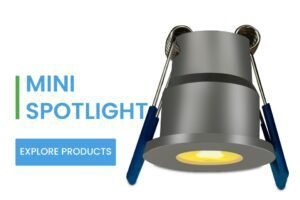
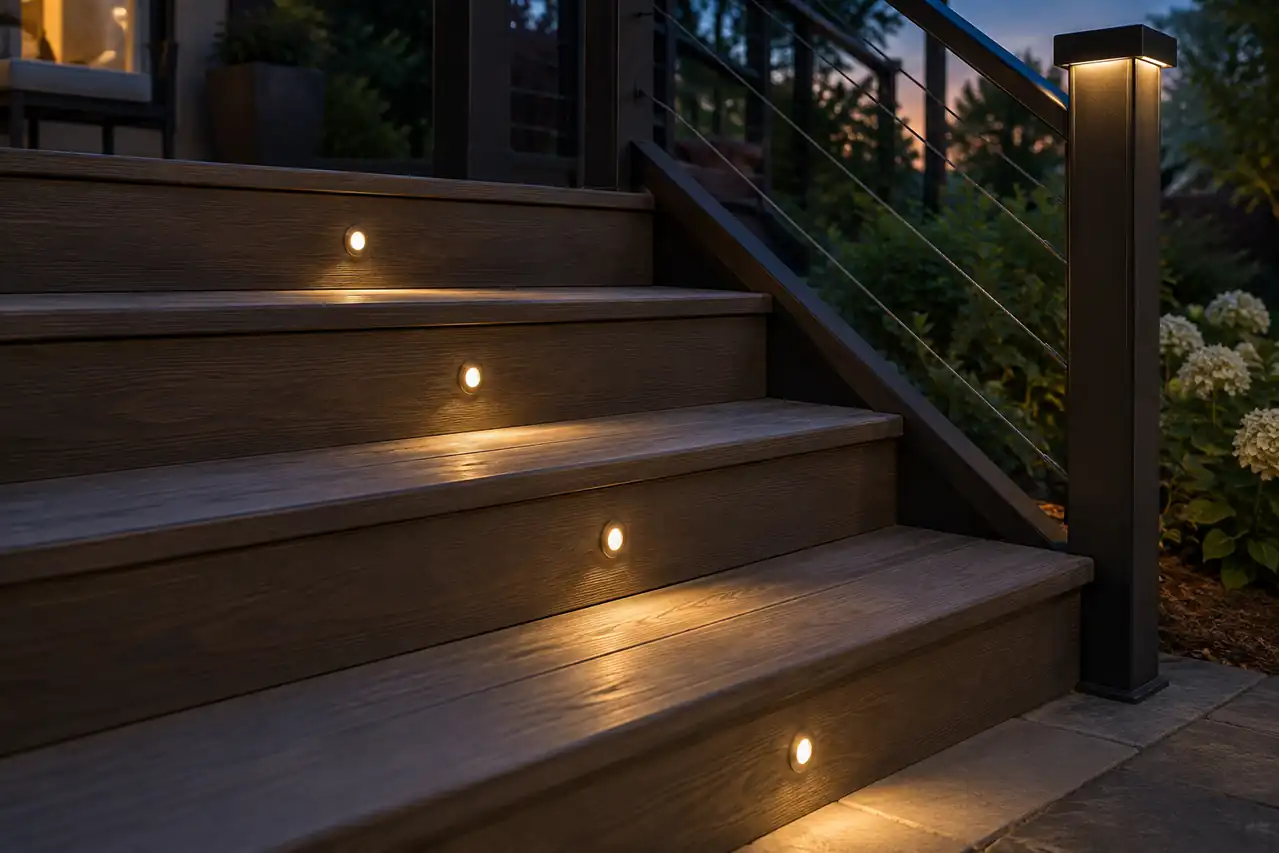
VLED’s deck-light products include options such as wide distribution for step applications, narrow-beam miniature spotlights, and recessed bodies with different cutout dimensions. The mini spotlight range can also extend the same design language into pergolas, soffits, awnings, landscape features, and architectural accents.
4. Design around installation realities: cutouts, depth, cables, and service
For a contractor, a deck light is not only a light source. It is a hole, a cable, a connector, a driver, a sealing detail, a replacement decision, and a line item on a quotation. A product range that ignores those realities will create support costs even when the light itself performs well.
Cutout families
Too many unrelated cutout sizes make a range difficult to specify and retrofit. Too few sizes can prevent the product from fitting common decking, stair, and railing constructions. The right solution is usually a small cutout family with clearly documented dimensions, tolerances, minimum material thickness, and clearance requirements.
Recessed versus surface-mounted versions
Recessed lights give a clean architectural result but require drilling and adequate depth. Surface-mounted lights can serve retrofit projects and locations where the structure cannot accept a deep body. A strong private-label range normally needs both, but they should share finishes, cable logic, and control expectations.
Cable and connector strategy
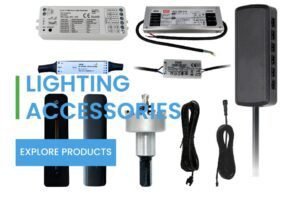
Outdoor wiring is often routed through tight spaces and exposed to water, dirt, movement, and maintenance activity. Provide cable lengths that match the intended installation pattern, specify the connector system clearly, and offer compatible splitters or extensions. The VLED accessories category includes power supplies, wires, cables, mini drivers, splitters, and hole saws intended to make installation more complete.
Serviceability
Ask early how a failed fixture will be replaced. Can a contractor access it without damaging the deck? Is the connector accessible? Can a distributor identify the correct replacement by the label? These questions are more useful than adding another decorative finish to the launch list.
5. Make weather protection a verifiable specification
Outdoor buyers often search for “waterproof LED deck lights,” but the word waterproof is too vague for a professional product range. A private-label specification should define the intended installation environment, ingress protection target, sealing method, cable entry, connector limitations, and the conditions under which the rating applies.
IP65, for example, may be appropriate for many exposed outdoor lighting applications, but the fixture rating does not automatically make every cable joint, power supply, or field connection suitable for direct exposure. The complete installation system must be considered. Product pages and packaging should distinguish between the lamp body, driver, connector, and installation location.
VLED’s outdoor deck-light listings identify IP65 models, low-voltage DC options, dimming, CCT ranges, and cutout sizes. Use those fields as the basis for a controlled technical datasheet, then verify the exact configuration selected for your private label. Do not copy a rating from one model to the whole family without testing and documentation.
For a professional launch, request evidence for the final configuration, including:
- Ingress-protection test documentation for the housing and relevant assemblies.
- Electrical safety and EMC documentation for the intended market.
- Material, finish, and corrosion-resistance information where the project environment requires it.
- Temperature, dimming, and control compatibility information.
- Installation instructions that explain the limits of the rating rather than promising unlimited exposure.
This documentation is not only for compliance. It protects the importer’s sales team from making claims that the product was never designed to support.
6. Turn individual fixtures into sellable kits
For many customers, a kit is easier to buy than a fixture list. A kit can reduce the number of decisions for a homeowner, landscape contractor, pergola installer, or distributor while increasing the average order value.
A useful starter architecture might include:
| Kit | What it solves | What to standardize |
|---|---|---|
| Stair kit | A defined run of steps or risers | Fixture count, cable spacing, driver, mounting template, and dimming method |
| Patio perimeter kit | Low-level ambient or edge lighting | Light spacing, extension cables, connectors, and finish |
| Railing and post kit | Posts, corners, and rail transitions | Mounting accessories, beam choice, cable routing, and corner treatment |
| Project expansion pack | Add-on lights for a larger installation | Compatibility with the starter kit and clear maximum system load |
The kit should never hide important technical information. Show the number of lights, total wattage, input voltage, included driver, cable lengths, control method, and what must be purchased separately. For installers, include a wiring diagram and a simple load calculation method.
VLED’s light-set approach is relevant here: the company has focused on mini LED kits since 2010 and offers configurations with multiple light quantities, low-voltage inputs, dimming, remote or app control, and different CCT or color options. A private-label customer can use this kind of kit architecture as a foundation while adapting packaging, model names, instructions, and market-specific requirements.
7. Decide where customization creates value
Not every custom request deserves new tooling. The most commercially useful private-label customization usually falls into four levels:
- Brand layer: logo, packaging, manuals, model names, labels, and warranty documents.
- Configuration layer: voltage, CCT, beam angle, cable length, connector, light quantity, control method, and kit composition.
- Appearance layer: housing finish, trim, diffuser, visible fasteners, and mounting details.
- Engineering layer: new housing geometry, cutout, optical system, driver, control integration, or installation accessory.
Start with the first two layers when testing a market. Move into appearance and engineering customization when the brand has a clear application gap, a credible volume plan, or a project requirement that standard products cannot satisfy.
This is where a design-and-manufacturing partner matters. VLED describes its model as combining product design, R&D, and manufacturing, with OEM, ODM, and NDA cooperation for global lighting brands. Its factory and design overview also explains how the team develops small spotlights, mini downlights, and LED kits for international applications. The commercial benefit is not simply lower unit cost; it is the ability to control the relationship between industrial design, optical performance, manufacturing method, and final price.
8. Validate the range before committing to a full launch
A professional sample process should answer three questions: does the light create the intended visual effect, can the installer use it without friction, and can the factory reproduce the result consistently?
Evaluate samples in the actual materials and environments that matter to your customers. Test against composite decking, timber, stone, metal railing, and painted surfaces where relevant. Review the installation from the underside as well as from the finished surface. A product that looks excellent in a studio may be awkward when a cable must pass through a narrow joist bay.
Use a written validation checklist covering:
- Light distribution and glare from normal viewing positions.
- Color consistency between fixtures and across CCT settings.
- Fit, cutout tolerance, mounting strength, and finish quality.
- Cable routing, connector access, driver placement, and maximum system load.
- Dimming behavior, remote range, app behavior, and power-on memory if controls are included.
- Weather-exposure assumptions and the documentation supplied with the final configuration.
- Packaging protection, installation instructions, labels, and replacement identification.
Do not approve a private-label range from photographs alone. Ask for production-representative samples and a pre-production approval process. The goal is to make the first commercial shipment resemble the sample that your sales team showed to customers.
What a strong private-label LED deck-light range should look like
A credible first range is usually compact, not crowded. It can include a recessed step light, a smaller or differently distributed deck light, a directional mini spotlight for posts and landscape, a surface-mounted option for retrofit work, and a kit system that brings the pieces together.
It should share an understandable electrical and control architecture. It should offer a limited number of finish and CCT choices that match the market instead of every possible option. It should have a clear installation story for distributors and contractors. Most importantly, each model should solve a recognizable application problem.
That structure gives a private-label brand room to grow. New trim options, smart controls, strip-light companions, pergola kits, and larger project configurations can be added without rebuilding the logic of the entire catalogue.
Frequently asked questions
Should a private-label range start with 12 V or 24 V?
There is no universal answer. Choose based on the target market, system length, driver and controller ecosystem, installer expectations, and the applications you plan to serve. The important point is consistency: clearly separate voltage families and provide compatibility information for every kit.
Is IP65 enough for LED deck lights?
IP65 may suit many exposed outdoor fixture applications, but it is not a blanket guarantee for every installation. The lamp body, cable entry, connector, driver, and field installation all matter. Verify the exact configuration and communicate the rating’s intended conditions in the technical documentation.
How many models should the first range include?
Launch around the applications you can support well rather than a target SKU number. A small family covering stairs, patios, railings, retrofit mounting, and expansion kits is often more useful than a large list of near-duplicates.
Can one range support both private-label retail and project sales?
Yes, if the product platform is designed for both. Retail packaging and simplified kits can serve smaller buyers, while project documentation, photometric information, cable options, and repeatable configuration support contractors and landscape distributors.
What should I send to a manufacturer for a quotation?
Prepare your target applications, voltage, CCT or color requirements, beam behavior, cutout constraints, finish, cable and connector preferences, control method, estimated order pattern, packaging needs, and target markets. The more clearly the use case is defined, the less likely the quotation will be based on an unsuitable catalogue model.
Build the range around your customers’ installations
If you are developing a private-label deck, stair, railing, pergola, or landscape-lighting line, start with the applications you want to win and the installation problems you want to remove. Then turn those decisions into a shared product platform, documented kits, and production-ready samples.
VLED can support that process with mini LED spotlights, LED deck lights, light kits, COB LED strips, accessories, and OEM/ODM development. Contact VLED with your target applications, technical requirements, and expected market so the product team can recommend a practical starting range.
Send Us Your Request