



Outdoor LED light kits are often evaluated as if they were simple bundles: a few lamps, a driver, cables, and a remote. That approach works for a one-off residential purchase. It is not enough for a lighting brand, an importer building a product range, or a project buyer responsible for hundreds of installations.
For professional buyers, the real product is the complete system. It includes the optical result, voltage architecture, connectors, mounting method, control logic, documentation, packaging, production consistency, and the manufacturer’s ability to solve problems after launch. A low unit price cannot compensate for an inconsistent cutout, an incompatible controller, or a kit that cannot be replenished six months later.
This guide explains how to assess an outdoor LED light kit manufacturer before you approve samples or commit to a purchase order. The framework is designed for European and North American landscape lighting brands, pergola and veranda suppliers, patio and garden distributors, import wholesalers, installers, and project teams.
Our position: choose the manufacturer that can control the whole lighting system and document the important variables, not simply the factory that offers the lowest fixture price.
What professional buyers should expect from an outdoor LED light kit manufacturer
A capable supplier should be able to answer four questions clearly: Can the kit produce the intended lighting effect? Can it survive the stated environment? Can it be manufactured consistently at the required volume? Can your team install, sell, and support it without redesigning the system around hidden limitations?
That means looking beyond the lamp housing. A professional kit normally includes a defined fixture family, power supply or driver, cable lengths, splitters or connectors, mounting hardware, control components, installation instructions, labels, packaging, and a replacement strategy. For a brand, it may also include private labeling, packaging artwork, a product data sheet, sample approval records, and a clear change-control process.
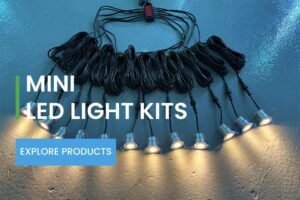
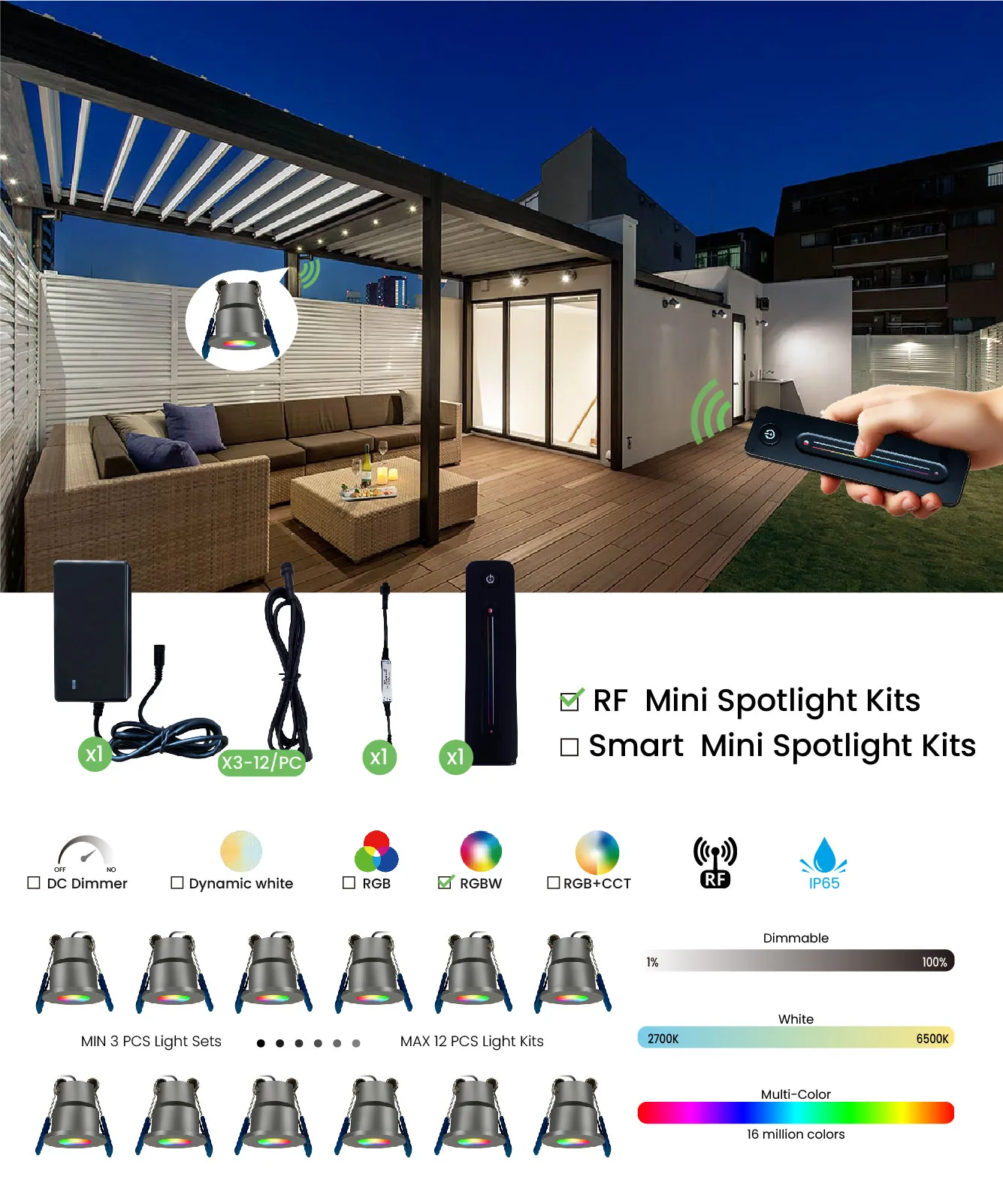
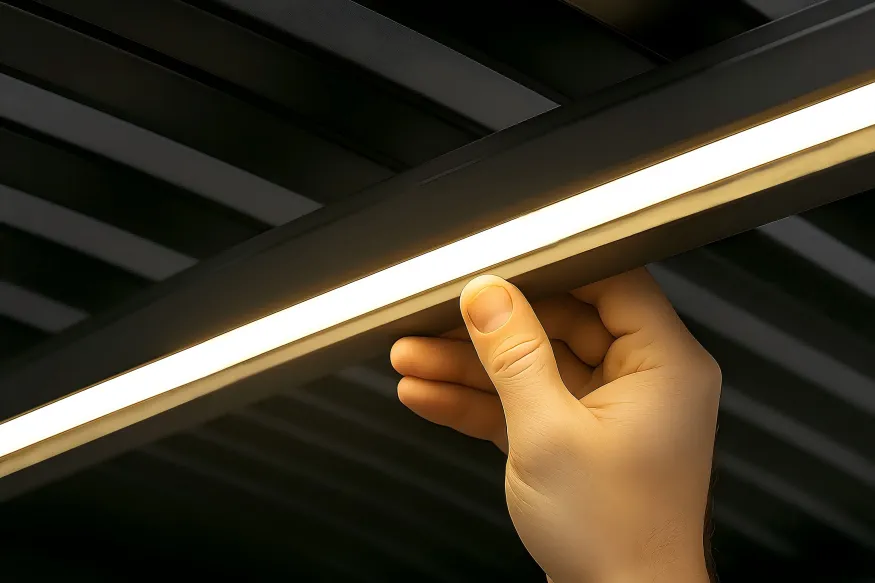
VLED approaches mini LED lighting as a system rather than a loose collection of parts. Its product range includes mini LED light kits, mini LED spotlights, deck and step lights, COB LED strips, drivers, wires, splitters, and installation accessories. This matters when a pergola or landscape project needs several fixture types that share a visual language and a compatible low-voltage architecture.
Start with the application, not the catalog
The same “outdoor kit” label can describe very different products. A recessed mini spotlight installed beneath a pergola beam has different optical, thermal, and installation requirements from a spike-mounted landscape spotlight. A deck light must manage foot traffic and flush mounting. A veranda kit may need a clean cutout, a short body, and a dimming method that integrates with the structure’s existing controls.
Before asking a manufacturer for a quotation, define the application in practical terms:
- Where will the fixture be installed: pergola roof, veranda, soffit, awning, deck, stair, pathway, planter, wall, or tree?
- Will it be recessed, surface-mounted, adjustable, or spike-mounted?
- What surface thickness, cutout diameter, cable route, and service access are available?
- Is the light decorative, task-oriented, wayfinding, accent, or a combination?
- Will the system use single white, dynamic white, RGB, RGBW, or RGB plus tunable white?
- Which control ecosystem must it work with, and who is responsible for configuring it?
- What are the climate, cleaning, salt, UV, condensation, and temperature conditions?
VLED’s design and manufacturing capability is relevant when a standard catalog item is close but not quite right. The company describes its work as a combination of product design, R&D, and factory manufacturing, with OEM, ODM, and NDA support for global lighting brands. In practice, that can mean changing a cutout, body depth, finish, beam angle, cable arrangement, control package, or kit composition instead of forcing the project into an unsuitable standard product.
The technical specification that should be frozen before sampling
A sample is useful only when its specification is explicit. Ask the manufacturer to identify the version of every part that affects performance or installation. A sample that is approved without this discipline can be replaced by a visually similar but electrically different production item.
| Specification area | Questions to document |
|---|---|
| Light source | Which LED source is used? What output, color bin, CRI target, CCT range, and consistency can be supplied? |
| Optics | What beam angles are available? Is the lens fixed, adjustable, diffused, or interchangeable? How is glare controlled? |
| Electrical system | Is the kit DC 12 V, 24 V, or another low-voltage architecture? What driver, dimmer, polarity, connectors, and maximum run lengths apply? |
| Environmental protection | What IP rating applies to the complete luminaire, cable entry, connector, driver, and control box? Are installation conditions stated? |
| Mechanical fit | What are the fixture dimensions, cutout tolerance, body depth, mounting method, material, finish, and service clearance? |
| Controls | Is control by RF remote, wall switch, Bluetooth, Wi-Fi, or a third-party protocol? Can units be grouped, dimmed, scheduled, or reset? |
| Kit configuration | What is included, what is optional, how many lights are supported, and how are expansion kits or replacement parts identified? |
Do not treat “IP65” as a complete outdoor qualification. IP codes describe protection provided by enclosures under the relevant test conditions; the IEC 60529 IP Code standard is the appropriate reference for understanding what the designation means. The rating of a lamp does not automatically transfer to a connector, driver, junction, or field connection. Ask for the rating and installation guidance of the complete system.
How to judge outdoor durability without relying on marketing language
Outdoor durability is a chain. A well-sealed spotlight can still fail if the cable gland is poorly assembled, the connector is exposed beyond its intended use, the driver is installed in the wrong location, or condensation is ignored. A manufacturer should explain the weak points of the system and the conditions under which its claims apply.
For North American projects, distinguish an IP rating from a product listing or certification required by the project specification. UL Solutions’ outdoor and landscape lighting guidance separates low-voltage landscape luminaires, line-voltage luminaires, and their associated safety evaluation needs. For a commercial or public project, ask the electrical consultant or authority having jurisdiction which approvals, markings, and installation rules apply in the target market.
For European distribution, the manufacturer should provide the documentation needed for the applicable market and product configuration. Do not accept a generic certificate that does not identify the actual model, control equipment, or electrical version being sold. A serious supplier should be comfortable providing test reports, declarations, labels, wiring diagrams, and revision-controlled technical files for review.
Material selection also deserves a direct conversation. Aluminum housings, coatings, stainless parts, seals, lenses, and cable jackets all respond differently to UV exposure, moisture, cleaning chemicals, and coastal air. If the product is intended for a marine or high-salt environment, say so at the quotation stage. A general outdoor claim is not the same as a corrosion-performance guarantee.
Why optical consistency matters more than maximum brightness
For pergolas, patios, and landscapes, the best kit is rarely the brightest kit. It is the one that creates a controlled, repeatable effect without glare, hot spots, or mismatched color. A buyer who compares only watts may approve a product that looks impressive on a bench but performs poorly across a finished installation.
Evaluate the light source using the measures that affect the application: lumens, beam angle, CCT, color fidelity, glare, lens distribution, and spacing. The U.S. Department of Energy’s LED Basics resource explains the difference between color appearance and the way light affects the color appearance of objects. That distinction is important in landscape work, where foliage, stone, wood, textiles, and architectural finishes must look natural at night.
For a product family, consistency between batches is as important as the performance of one unit. Request a sample set rather than one sample when the project depends on multiple lights appearing identical. Check the warm-white appearance, dimming behavior, beam shape, connector fit, and body finish side by side. If a brand sells a 2700 K, 3000 K, or dynamic-white range, define how the manufacturer controls and verifies those variants.
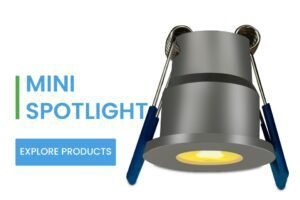
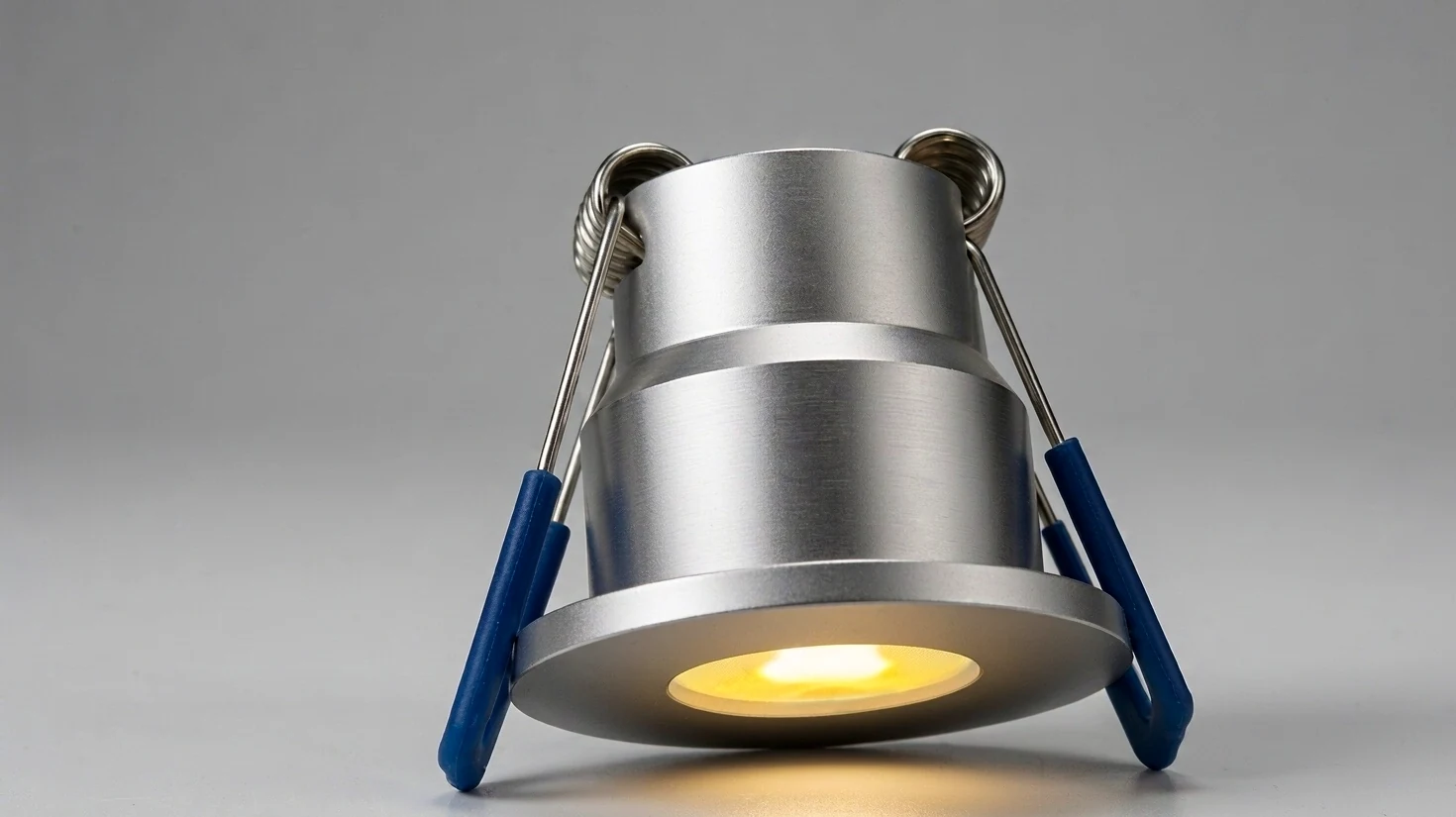
VLED’s mini spotlight range includes small recessed formats with different cutouts, body sizes, voltages, beam options, and color configurations. That breadth can help a brand create one coordinated family for pergola, veranda, deck, and landscape applications, provided the final specification freezes the exact model and electrical combination for each SKU.
Many outdoor LED light kits use low-voltage DC because it can simplify system design and support compact fixtures. It does not remove the need for engineering. Voltage drop, load calculation, cable length, polarity, driver capacity, connector quality, and future expansion still determine whether the installed system performs as expected.
Ask the manufacturer for a wiring diagram that reflects the actual kit, not a generic illustration. It should show the power source, controller, splitter, cable direction, maximum quantity, recommended cable length, and any requirement for parallel wiring. Confirm whether the stated quantity is a tested configuration or simply a theoretical load calculation.
Control compatibility is equally important. A kit may be advertised as “smart” while locking the buyer into a proprietary app or an unsuitable wireless protocol. For a brand or distributor, document whether the control system supports grouping, scenes, dimming, dynamic white, RGBW, power-loss recovery, and replacement remotes. For projects, confirm who will commission the controls and who will support the end user after handover.
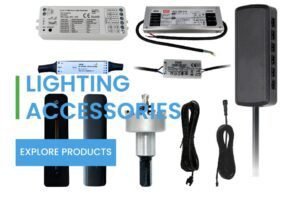
VLED supplies accessories including power supplies, wires and cables, mini drivers, splitters, and hole saws. Linking these items to the fixture specification at the quotation stage is a practical way to reduce field substitutions and installation uncertainty. A kit should arrive as a coherent system, not as a lamp purchase followed by an improvised search for compatible accessories.
OEM and ODM questions for lighting brands and importers
Brands should evaluate a manufacturer’s operating discipline as carefully as its engineering. Ask how the supplier handles a new product from concept to production:
- Who owns the drawings, firmware, tooling, packaging artwork, and approved sample?
- How are engineering changes communicated and approved?
- Which components are standard, and which are reserved for the program?
- How are incoming materials, assembly, electrical safety, appearance, and final function checked?
- What is the process for pilot production and first-article approval?
- How are batch codes, spare parts, warranty claims, and corrective actions managed?
- What is the realistic lead time for samples, pilot orders, repeat orders, and urgent replacements?
These questions reveal whether you are working with a manufacturer or only with a trading layer. A trading company may still be a useful partner, but you need to know where design decisions, quality responsibility, and after-sales authority actually sit.
VLED states that it has focused on small LED spotlights, mini downlights, and LED kits since 2010, and that it supports OEM/ODM and NDA relationships. Its stated capabilities cover design, R&D, manufacturing, customization, and global brand cooperation. For a buyer, the useful next step is to test those claims against a real sample request: send a clear application brief and ask for a technical proposal, not just a price list.
Project buying: what to request before approving a quotation
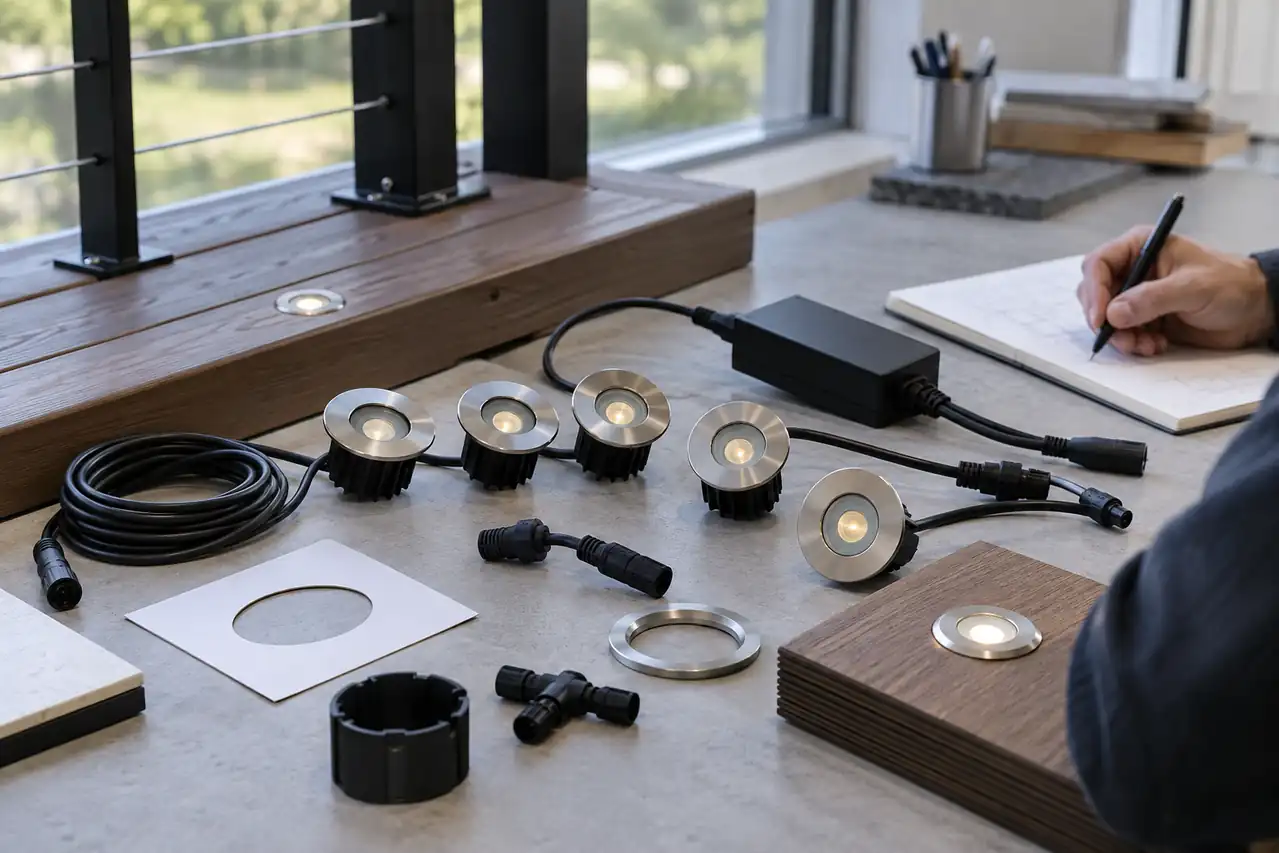
Project buyers should turn the lighting concept into a procurement package that installers can use without interpretation. A quotation should identify the exact models, quantities, accessories, controls, cable lengths, power supplies, spare allowance, packaging units, delivery terms, and documentation included.
For a pergola or patio development, include the structure drawings or at least the beam dimensions and mounting conditions. For landscape work, include the target objects, distances, planting conditions, power availability, and control zones. A manufacturer can then recommend fixture spacing, beam distribution, and kit topology based on the actual use rather than an abstract product category.
Build a sample approval record with photographs and measurements. Record the cutout diameter, body depth, cable exit, connector orientation, light appearance, control response, and packaging. If the project spans multiple sites, keep one approved reference sample and require written approval for substitutions. This simple control prevents a late production change from becoming an installation problem.
Also plan for the second order. Outdoor lighting projects expand, replacement parts are needed, and a successful brand may sell the same kit for years. Ask how long the model is expected to remain available, how a successor will be managed, and whether the manufacturer can supply individual lamps, drivers, remotes, and connectors without requiring a complete new kit.
How VLED can fit a professional outdoor lighting program
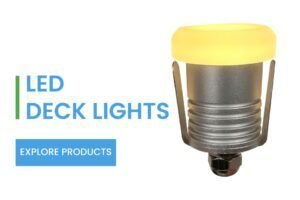
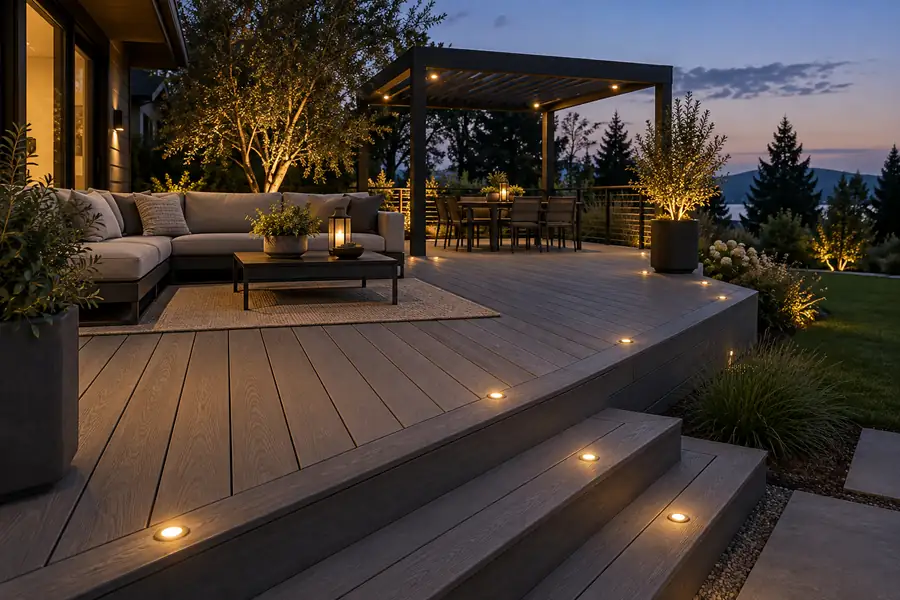
VLED is a relevant candidate when the project needs compact, coordinated, low-voltage lighting rather than a generic consumer kit. Its range covers mini LED light kits, recessed and adjustable mini spotlights, LED deck and step lights, COB strip lighting, and accessories. The website also lists applications including pergolas, verandas, soffits, awnings, patios, decks, pathways, and landscape lighting.
For a brand, the potential value is the ability to develop a product family around a common design language and a controlled accessory system. For an importer, it is the possibility of selecting proven standard items while reserving customization for the features that matter commercially, such as cutout size, finish, cable configuration, control method, kit quantity, and packaging. For a project buyer, it is the ability to discuss the complete installation rather than sourcing every component separately.
VLED’s contact page provides a direct route for technical and project discussions. A useful first inquiry should include the application, target market, estimated quantity, desired light color and control, mounting dimensions, required approvals, delivery destination, and whether the program is standard, OEM, or ODM. The more concrete the brief, the more meaningful the manufacturer’s response will be.
Outdoor LED light kit manufacturer checklist
Use the following checklist before making a supplier decision:
- The manufacturer understands the intended application and installation conditions.
- The approved sample has a complete, revision-controlled specification.
- Fixture, connector, driver, controller, and cable ratings are considered as one system.
- Voltage, load, cable length, polarity, and expansion limits are documented.
- Optical performance is assessed by beam, glare, CCT, color consistency, and application result.
- Required certifications, markings, declarations, and test documents are identified for the target market.
- Production quality checks and change-control responsibilities are clear.
- Packaging, labeling, manuals, spare parts, warranty, and replacement support are included in the commercial discussion.
- The supplier can support your next order, not only the first sample.
Conclusion: buy the system you can support
The most reliable outdoor LED light kit is not defined by the longest feature list or the lowest quotation. It is defined by fit, optical consistency, environmental suitability, electrical compatibility, documentation, and the manufacturer’s ability to repeat the result at scale.
Brands and importers should select a partner that can contribute to product development and protect the commercial consistency of the range. Project buyers should select a system that installers can understand and maintain. In both cases, the decision should begin with the application and end with a documented, tested kit configuration.
If you are developing a pergola, patio, veranda, deck, or landscape lighting range, send VLED your application brief and target specifications. The VLED team can help compare standard mini LED spotlight kits with a customized OEM or ODM route, then build the product and accessory package around the way your customers will actually install and use it.
Contact VLED about your outdoor LED light kit project or review the mini LED light kit range to begin.
Send Us Your Request