




A sample can look excellent on a meeting table and still fail as an OEM product. The beam may feel warm in the showroom, but a later batch shifts green. The housing may look compact, but the installer discovers the cable exit conflicts with a pergola beam. The IP rating may be printed on the datasheet, but the connector, splitter, or power supply in the same kit may not be specified to the same outdoor logic.
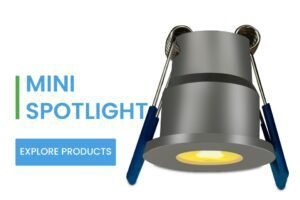
This is why lighting brands should treat a mini LED spotlight specification as a repeatability contract. It should define how the product looks, performs, installs, ships, and stays consistent across production batches. If a requirement cannot be inspected, measured, photographed, or matched to a document, it is not yet a specification.
At VLEDSTAR, we develop and manufacture mini LED spotlights, low-voltage spotlight kits, LED deck lights, strip light kits, and related accessories for brand and project customers. This checklist reflects the questions that usually decide whether an OEM lighting program becomes a clean product line or a long series of corrections.
Start With the Application, Not the Wattage
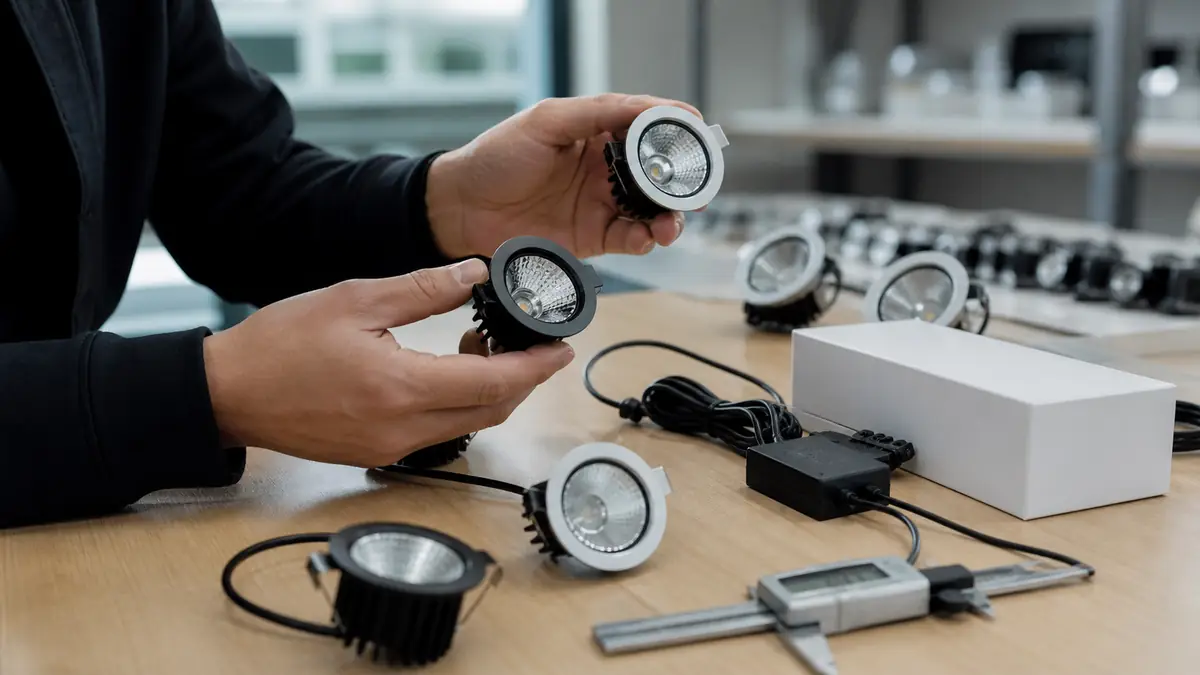
The fastest way to create a weak OEM brief is to start with only wattage, diameter, and price. Mini LED spotlights are small, but their working environments are rarely simple. A spotlight used under a pergola beam, inside a patio roof profile, along a stair riser, near coastal air, or in a hospitality courtyard will not have the same installation risk.
Before selecting the LED, lens, driver, or finish, define the product’s job in the customer environment. A landscape lighting brand may need a compact accent light for planting beds. A pergola manufacturer may need a recessed kit with fixed cable lengths and predictable hole sizes. An importer may need neutral packaging and documentation that passes retailer review. A project contractor may care most about installation speed, spare parts, and failure traceability.
OEM position: A good specification does not describe the brightest possible mini spotlight. It defines the most reliable version of the light for the brand’s application, channel, warranty promise, and installation method.
The Core OEM Specification Checklist
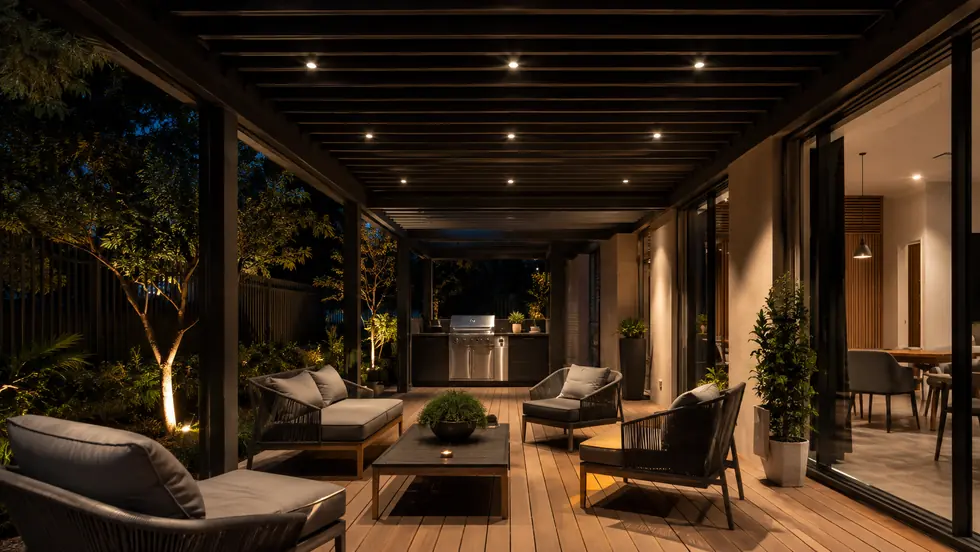
Use the checklist below before approving samples or requesting a production quotation. It helps separate attractive prototypes from products that can be manufactured, inspected, stocked, installed, and supported consistently.
| Specification area | What to define | Why it matters for brands |
|---|---|---|
| Application scenario | Outdoor or semi-outdoor use, pergola, deck, step, cabinet, display, garden, hospitality, marine-adjacent, or architectural accent use. | Controls the required IP level, connector choice, finish, installation accessories, cable routing, and service expectations. |
| Mounting method | Recessed, surface-mounted, bracket-mounted, stake-mounted, trim-ring design, cut-out size, installation depth, and allowable panel thickness. | Prevents site rework and makes the product easier for installers to repeat across pergola, deck, or project layouts. |
| Optical performance | Beam angle, center intensity preference, lens type, glare control, diffuser effect, photometric file requirement, and target visual effect. | Allows the brand to sell a controlled lighting effect instead of a generic small lamp. |
| Color quality | CCT, CCT tolerance, CRI target, optional TM-30 discussion, LED binning rules, and batch-to-batch color acceptance range. | Reduces customer complaints when replacement lights or repeat project orders are installed next to earlier batches. |
| Electrical design | Input voltage, constant voltage or constant current logic, driver location, polarity, power tolerance, surge considerations, and maximum run length. | Protects system reliability and avoids mismatched power supply, cable, splitter, and control components. |
| Dimming and control | PWM, RF remote, 0-10V, TRIAC compatibility if applicable, smart-control interface, dimming curve, memory function, and flicker expectations. | Prevents a technically working light from feeling poor in premium outdoor living spaces. |
| Ingress protection | Target IP rating for the luminaire and for each exposed system part, including connector, splitter, driver enclosure, and cable entry. | Outdoor system reliability depends on the weakest exposed component, not only the light head. |
| Materials and finish | Aluminum, stainless steel, brass, plastic parts, surface treatment, color, salt-spray expectations, UV resistance, and scratch tolerance. | Supports brand appearance, outdoor durability, and alignment with pergola frames, decking hardware, or landscape fixtures. |
| Thermal path | LED board material, heat dissipation path, housing mass, installation cavity limits, operating temperature, and derating rules. | Miniaturization can hide thermal risk; a small housing needs disciplined heat management. |
| Acessórios | Power supply, extension cables, splitters, hole saw, mounting clips, spare lenses, junction parts, and installation guide. | A product line becomes easier to sell when the kit solves the full installation workflow. |
| Documentation | Datasheet, drawing, wiring diagram, installation manual, test report, compliance files, packaging artwork, and inspection standard. | Reduces back-and-forth during importing, retailer onboarding, and project submittals. |
| Private label scope | Logo position, label format, model naming, carton mark, instruction sheet, barcode, language versions, and brand color rules. | Turns the fixture into a brand-ready product instead of a factory item with superficial relabeling. |
Optics: Specify the Lighting Effect Before the Beam Angle
Beam angle is useful, but it is not the whole optical story. Two mini spotlights with the same declared beam angle can produce very different field edges, glare levels, hot spots, and perceived brightness. For premium patio, pergola, and landscape applications, the buyer should define the visual effect first.
For example, a narrow beam can highlight a column, planter, sculpture, sign, or wall texture. A wider beam may be better for soft pathway rhythm or under-roof ambient accents. In small recessed lights, glare control becomes especially important because the LED source is close to the viewer’s eye line. Ask for sample photos in the intended mounting condition, not only a studio photo of the light head.
When the project requires measurable optical data, request an IES or photometric report. For deeper color quality discussion, the Illuminating Engineering Society’s TM-30 method can help buyers evaluate color rendition beyond a simple CRI number. Not every commercial mini spotlight program needs full TM-30 reporting, but professional brands should understand when it matters.
Color Consistency: The Silent OEM Risk
Warm white sells well in outdoor living because it feels comfortable around wood, stone, plants, and people. But “warm white” is not precise enough for OEM purchasing. Define the CCT target and the acceptable range. A brand selling 2700K should know whether it accepts a broader range, requires tighter LED binning, or needs a matched production batch for a specific project.
Color shift becomes visible when products are installed in rows, clusters, or replacement situations. Pergola ceiling lights, deck step lights, and landscape accents are often seen together at night. A small deviation that looks acceptable on one sample can become obvious when twenty lights are mounted across a roof frame.
The specification should also state the lens or diffuser material because optics can change color perception. Frosted lenses may soften the beam but reduce punch. Clear lenses can increase intensity but may show glare. If the brand wants the same visual character across multiple SKUs, specify both the LED binning and the optical stack.
Ingress Protection: Rate the Whole System
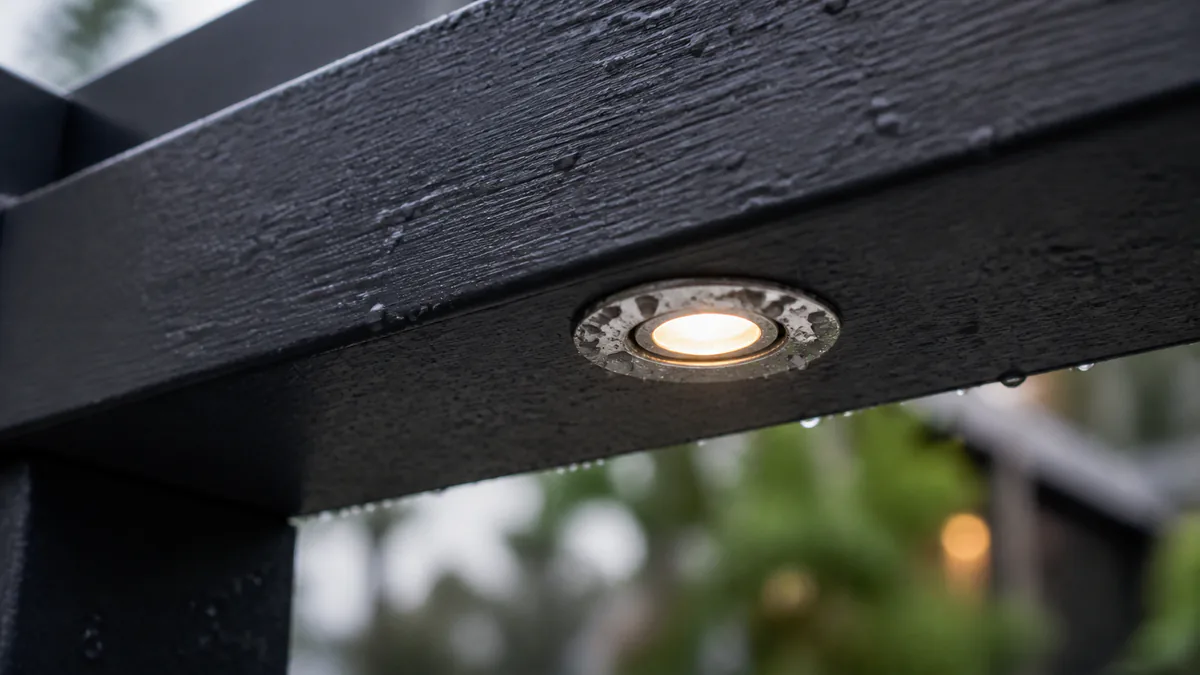
Outdoor buyers often ask for IP65, IP66, or IP67. That is reasonable, but the rating must be applied to the correct parts of the system. A mini LED spotlight may have a sealed light head while the connector, splitter, or power supply is installed in a more exposed location. The real outdoor reliability of a low-voltage kit depends on system design.
The International Electrotechnical Commission defines IP code logic under IEC 60529. The important OEM lesson is simple: ingress protection is not a marketing adjective. It is a testable expectation tied to dust and water exposure. For brands, the spec should state which components are rated, what installation orientation is allowed, and whether the driver must remain in a dry, ventilated, or protected location.
For landscape and patio systems, define water exposure by scenario: rain splash under a pergola, irrigation spray near planting beds, temporary puddling on a deck surface, condensation inside an aluminum profile, or wash-down cleaning in commercial hospitality spaces. The more realistic the exposure description, the better the factory can choose cable entries, seals, potting, gaskets, connectors, and strain relief.
Electrical Specification: Low Voltage Does Not Mean Low Discipline
Many mini LED spotlight programs use low-voltage DC systems because they are suitable for compact fixtures, kits, and distributed outdoor layouts. The specification should still define the full electrical architecture. State whether the product is 12V DC, 24V DC, or another system. Clarify constant voltage versus constant current. Define the maximum number of fixtures per power supply, recommended cable length, splitter capacity, and polarity marking.
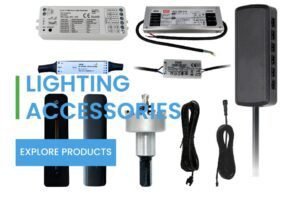
Brands should also define the target power supply family. On the VLEDSTAR site, the accessories range includes LED power supplies, wires and cables, and splitters. These parts are not secondary details. They decide whether the finished product is easy to install as a complete kit.
If the product is intended for North American landscape lighting distribution, discuss applicable safety standards with your certification partner and supplier early. UL’s UL 1838 is a common reference point for low-voltage landscape lighting systems. Requirements depend on the exact product category, installation method, and market, so brands should confirm the needed certification path before locking tooling or packaging claims.
Dimming and Control: Match the User Experience
Dimming is not only an electrical feature. It affects how premium the outdoor space feels. A mini spotlight that jumps from bright to dim in rough steps will not feel aligned with high-end pergolas, hospitality patios, or architectural landscape projects. Define the control method, dimming range, dimming curve, flicker expectation, and default memory behavior.
For kit-based programs, an RF remote can be practical because it keeps installation simple. For architectural projects, buyers may need 0-10V, DMX, or integration with a broader control system. For retail and dealer channels, the installation guide must explain pairing, reset logic, maximum load, and troubleshooting in plain language.
The safer OEM question is not “Can it dim?” The better question is “Can this dimming behavior stay consistent across production and remain easy for installers and end users to understand?”
Mechanical Design: Small Tolerances Become Big Installation Problems
Mini LED spotlights are often selected because they disappear into the structure. That makes mechanical accuracy more important, not less. A difference of 1 mm can decide whether a recessed light fits a pergola beam, cabinet panel, stair riser, or deck board without rework.
The specification should include an approved drawing with outside diameter, cut-out diameter, depth, flange size, cable exit direction, and tolerance. It should also state installation tool assumptions. If a hole saw is recommended, include the exact size and whether the accessory can be supplied in the kit. VLEDSTAR’s accessory category includes a hole saw option, which is the kind of small detail that can reduce installer friction.
For pergola and patio structure brands, the fixture cannot be treated as an isolated decorative part. It must be coordinated with aluminum profiles, drainage paths, concealed cable channels, roof movement, and service access. If the spotlight is difficult to replace after installation, the brand’s warranty exposure increases.
Materials and Finish: Specify the Environment, Then the Surface
Outdoor finish selection should begin with the environment. A matte black fixture under a residential patio roof faces a different risk than a brushed metal fixture near coastal humidity or a dark fixture installed in full sun. Specify the base material, surface treatment, color tolerance, UV exposure expectation, and cleaning assumptions.
For brand consistency, request finish samples under daylight and warm night lighting. A color that matches a pergola frame in a catalog photo may look different under a 2700K beam. If the product will sit near painted aluminum profiles, stainless hardware, wood, composite decking, or stone, evaluate finish harmony as part of sample approval.
When the product is sold into outdoor or semi-outdoor spaces, ask the supplier to explain the corrosion strategy. That may include material selection, anodizing, powder coating, plating, gasket design, screw material, or sealant choice. The exact answer should fit the use case; the important part is that the answer exists before mass production.
Compliance and Documentation: Make Claims Verifiable
Lighting brands do not need every possible certificate for every product, but every claim on the product page, carton, manual, and quotation should be supported. Common areas include CE marking for relevant European-market products, RoHS material restrictions, safety testing, EMC considerations, energy-related claims, and installation warnings.
The European Commission explains the manufacturer’s responsibility for CE marking, and it also maintains guidance on the RoHS Directive. These links are not a substitute for a test lab or compliance advisor, but they are useful reference points when a brand is deciding what must appear in the technical file.
For OEM work, ask for documents in the language and format your sales channel needs. A retailer may need a clean datasheet, barcode, carton label, user manual, and compliance statement. A project buyer may need drawings, wiring diagrams, photometric data, and installation notes. An importer may need HS code discussion, packaging dimensions, and spare-parts identification.
Packaging and Private Label: Treat It as Part of the Product
Private label packaging is not just a logo. It is how the installer, dealer, warehouse, and end user understand the product. A complete OEM packaging specification should include model naming, SKU logic, carton mark, barcode, warranty card, manual language, fixture label, cable label, and inner protection method.
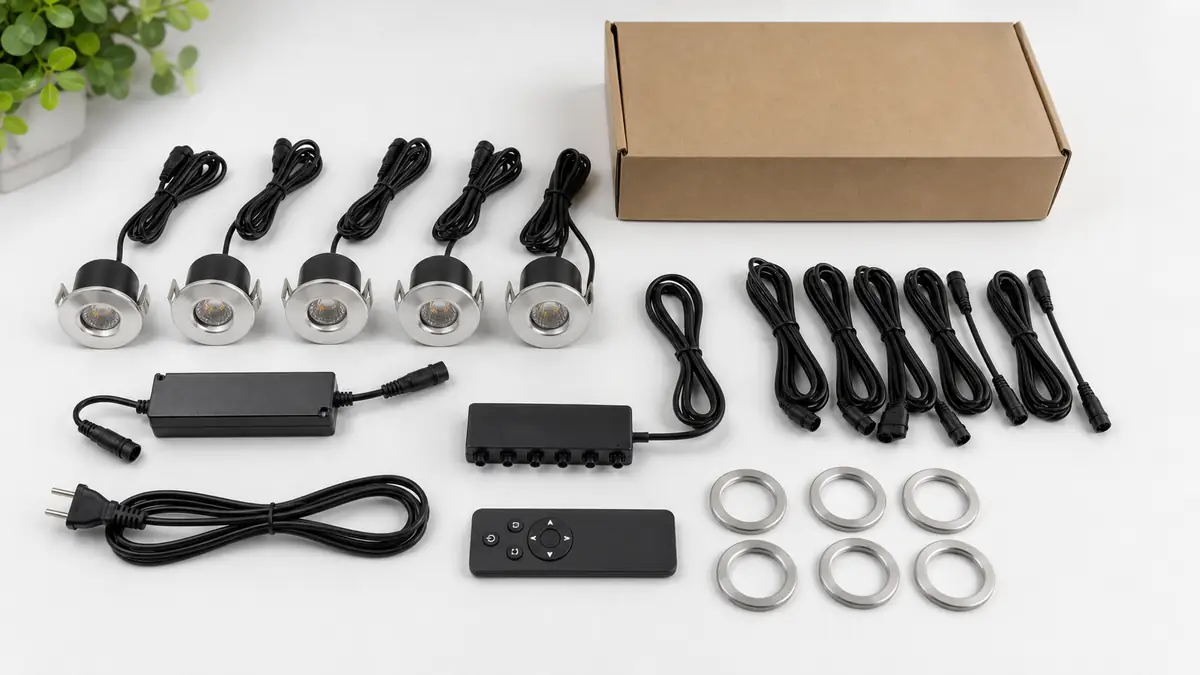
For mini LED spotlight kits, the packaging must make kit contents obvious. If the box includes four lights, one power supply, extension cables, splitters, mounting accessories, and a remote, the buyer should not discover ambiguity at receiving inspection. List every component, quantity, color, cable length, and optional spare part.
Brands should also define what changes are allowed without approval. For example, can the supplier change cable supplier, LED batch, carton structure, adhesive label, or screw material? For serious OEM programs, the answer should be written into the change-control process.
Sample Approval: Test the System, Not Only the Light Head
A strong sample review has three layers. First, inspect appearance and dimensions. Second, test electrical and optical performance. Third, install the complete kit in a realistic mock-up. Many problems only appear at the third layer.
Install the sample using the same hole size, cable path, splitter, driver, controller, and mounting surface expected in the final application. Run the light at full output long enough to evaluate heat. Check dimming behavior at low levels. Compare multiple units side by side for color consistency. Photograph the beam on the intended surface.
If the product is for a pergola or patio system, include the structural team in sample approval. If it is for an importer or wholesaler, include warehouse and after-sales staff. If it is for a project, include the installer. The best OEM sample is not the one that impresses one buyer; it is the one that exposes the questions production must answer.
A Practical Specification Template for RFQ and Production
The following template can be adapted for an RFQ, sample request, or production handoff. Brands can send it to an OEM manufacturer before discussing final cost.
| Field | Specification to complete |
|---|---|
| Product role | Accent spotlight, pergola recessed light, deck light, step light, cabinet light, display light, or custom kit component. |
| Target market | United States, Canada, European Union, United Kingdom, Australia, hospitality project, dealer channel, or retail channel. |
| Voltage and control | 12V DC, 24V DC, RF dimming, PWM dimming, 0-10V, smart-control integration, or no dimming. |
| Optics | Target beam angle, lens type, glare expectation, desired beam edge, CCT, CRI, and batch color tolerance. |
| Mechanical | Diameter, cut-out size, depth, trim shape, cable exit, cable length, installation orientation, and mounting surface. |
| Outdoor protection | IP target for luminaire, connector, splitter, cable joint, and driver housing, plus allowed installation zones. |
| Material and finish | Housing material, surface treatment, color sample, corrosion expectation, UV exposure, and cleaning assumptions. |
| Kit contents | Number of lights, driver, splitter, extension cables, remote, controller, mounting accessories, manual, and optional tool. |
| Branding | Logo position, private label, model number, packaging artwork, barcode, manual language, and carton marks. |
| Documents | Datasheet, 2D drawing, wiring diagram, photometric report, installation guide, inspection checklist, and compliance files. |
| Quality control | AQL level, critical defects, visual inspection rules, electrical test, burn-in expectation, color check, and packaging inspection. |
| Change control | Which components or processes cannot change without written approval from the brand. |
Common Mistakes Lighting Brands Should Avoid
Approving a beautiful sample without a production tolerance
A sample is only a starting point. If the drawing, LED bin, finish range, cable specification, and inspection standard are vague, production can drift while still appearing close to the original sample.
Specifying the light but ignoring the kit
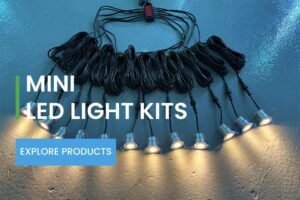
For many customers, the product is not one mini spotlight. It is a system of lights, cable, splitter, power supply, controller, packaging, and instructions. VLEDSTAR’s mini LED spotlight kit category is a useful reminder that OEM buyers should think in installed systems, not loose components.
Using IP rating as a shortcut for outdoor quality
IP rating matters, but it is not the only durability question. Material, heat, connector quality, cable strain relief, installation orientation, and maintenance environment all affect field reliability.
Letting packaging decisions happen after engineering
Packaging affects kit accuracy, freight damage, warehouse picking, returns, and brand perception. It belongs in the specification from the beginning, especially for import wholesalers and brand programs.
Forgetting replacement logic
Brands should define how a replacement light matches earlier batches. Keep records for CCT, finish, model revision, connector type, and control compatibility. This is especially important for project buyers and dealers who may need spares long after the first shipment.
Where VLEDSTAR Fits in an OEM Mini Spotlight Program
VLEDSTAR is positioned for customers who need more than a catalog SKU. The company develops and manufactures mini LED spotlights, LED deck lights, low-voltage kits, COB strip solutions, and installation accessories. That product range matters because many outdoor lighting programs require coordinated components rather than one isolated fixture.
For lighting brands, we can help translate product ideas into drawings, samples, material decisions, kit structures, packaging details, and production inspection points. For pergola and patio system suppliers, we can discuss compact recessed lighting, cable routing, control options, and kit configuration. For import wholesalers, we can support private label planning, carton logic, and product documentation. For project customers, we can review application constraints before the sample stage.
You can review our company background on the About VLEDSTAR page, compare supplier evaluation factors in our mini LED spotlight manufacturer comparison, or explore application thinking in our pergola lighting ideas guide.
Supplier Questions Before You Place an OEM Order
Before placing a purchase order, ask direct questions. The answers should be specific enough to become part of your approval record.
- Which parts of the complete system carry the stated IP rating?
- What LED binning rule will be used for production, and how will replacement batches be matched?
- Can the factory provide drawings, wiring diagrams, packaging layout, and inspection criteria before mass production?
- Which components are locked after approval, and which may change with notice?
- How many fixtures can be connected to one driver or splitter under the recommended cable length?
- What installation condition was used during thermal and optical review?
- What private label elements can be customized without tooling, and what requires tooling?
- Which compliance documents are available for the target market, and which need a new test plan?
- What spare parts can be supplied for warranty and project maintenance?
- How will the supplier report production inspection results before shipment?
FAQ
What is the most important specification for an OEM mini LED spotlight?
The most important specification is the complete use case. Wattage, IP rating, beam angle, voltage, and finish only make sense after the brand defines where the light will be installed, how it will be controlled, who installs it, and what warranty promise the product must support.
Is IP65 enough for outdoor mini LED spotlights?
IP65 may be suitable for some outdoor and semi-outdoor applications, but the correct rating depends on exposure. Brands should specify the IP expectation for the light head, connectors, splitters, cable joints, and driver location. The whole system should match the installation environment.
Should a brand choose 12V or 24V for mini spotlight kits?
Both can work. The choice depends on system layout, cable length, power supply strategy, controller design, and regional market expectations. A 24V system can be useful for longer low-voltage layouts, while 12V may fit certain existing product families. The OEM supplier should help calculate the full system, not only the lamp.
What documents should an OEM mini spotlight supplier provide?
At minimum, request a datasheet, dimensional drawing, wiring diagram, installation manual, packaging specification, inspection standard, and available test or compliance files. For project work, also ask for photometric data and clear spare-parts identification.
Can mini LED spotlights be private labeled?
Yes. Private label options can include product label, packaging, manual, barcode, model naming, carton marks, and sometimes finish or structural customization. The scope should be defined before sample approval so branding does not conflict with compliance labels or production workflow.
How should lighting brands compare OEM mini spotlight manufacturers?
Compare manufacturers by engineering communication, sample-to-production consistency, optical control, outdoor system knowledge, accessory support, documentation quality, private label process, and after-sales traceability. Unit price matters, but it should not be the only filter for a product that carries your brand name.
Build the Specification Before You Build the Order
A strong OEM mini LED spotlight program begins with a precise specification. It should protect the lighting effect, the installation method, the electrical system, the outdoor durability, the packaging, and the brand promise. When those decisions are clear, samples become easier to judge and production becomes easier to control.
If you are developing a mini LED spotlight, pergola lighting kit, deck light range, or private-label outdoor lighting program, send your application requirements, target market, installation drawings, and preferred kit structure to VLEDSTAR. Our team can help turn the idea into a practical OEM specification and a sample plan your brand can evaluate with confidence.
Pingback: Mini LED Spotlight Beam Angle Guide for Pathways, Trees, Walls, and Features - miniledspotlight.com
Pingback: Warm White, Neutral White, RGB, or RGBW Mini Spotlights: Which SKUs Should You Stock? - miniledspotlight.com
Pingback: Custom Mini LED Spotlights: Housing, Finish, Cable, Connector, and Packaging Options - miniledspotlight.com
Pingback: Small Outdoor Spotlights for Modern Gardens: Design Ideas That Also Help Buyers Specify Fixtures - miniledspotlight.com
Pingback: Mini LED Spotlights for Pergolas: Placement & Glare