



Key Takeaways
- Custom mini LED spotlights should be specified as a complete system, not as a lamp head with optional accessories.
- Housing, finish, cable, connector, and packaging choices affect installation speed, waterproof logic, brand consistency, and repeat order stability.
- Outdoor projects need IP thinking across the full chain, including cable entry, splitter, driver location, and connector protection.
- For brand programs, packaging should reduce installer confusion and protect the commercial value of the product line.
Many catalog pages make mini spotlights look simple: wattage, diameter, beam angle, IP rating, price. That is enough for a sample request, but it is not enough for a brand owner, importer, patio system supplier, or contractor who has to support repeat sales.
The business question is sharper: can this small light become a stable product line? If the answer is yes, customization has to move beyond surface decoration. It must define how the light fits the structure, survives the site, connects to the power system, arrives at the warehouse, and looks under your brand name.
That is the angle of this guide. Custom options are not extra features. They are risk controls.
Why Should Custom Mini LED Spotlights Be Specified as a System?
Custom mini LED spotlights should be specified as a system because the fixture, driver, cable, splitter, connector, finish, and packaging all affect field performance. The IEC IP rating framework is a useful reminder: protection is about the enclosure and exposure conditions, not just a marketing phrase on a product page.
In real projects, a beautiful lamp head can still fail the program. A connector may sit where rainwater gathers. A cable may be too short for a pergola beam route. A white finish may not match the customer’s frame. A retail carton may look good, yet force installers to open three bags before finding the splitter.
For that reason, the strongest RFQ does not ask only for a 3W mini spotlight. It asks for a light set that fits a defined project type, sales channel, installation method, and service policy. VLEDSTAR’s OEM mini LED spotlight specification checklist takes the same view: if a detail cannot be inspected, measured, photographed, or matched to a document, it is not yet a real specification.
Manufacturer’s view: the lamp body may be the visible part, but the system around it decides whether your customer feels the product is professional. For repeat orders, the hidden details deserve the same discipline as the visible finish.
What Should Buyers Decide Before Customizing the Housing?
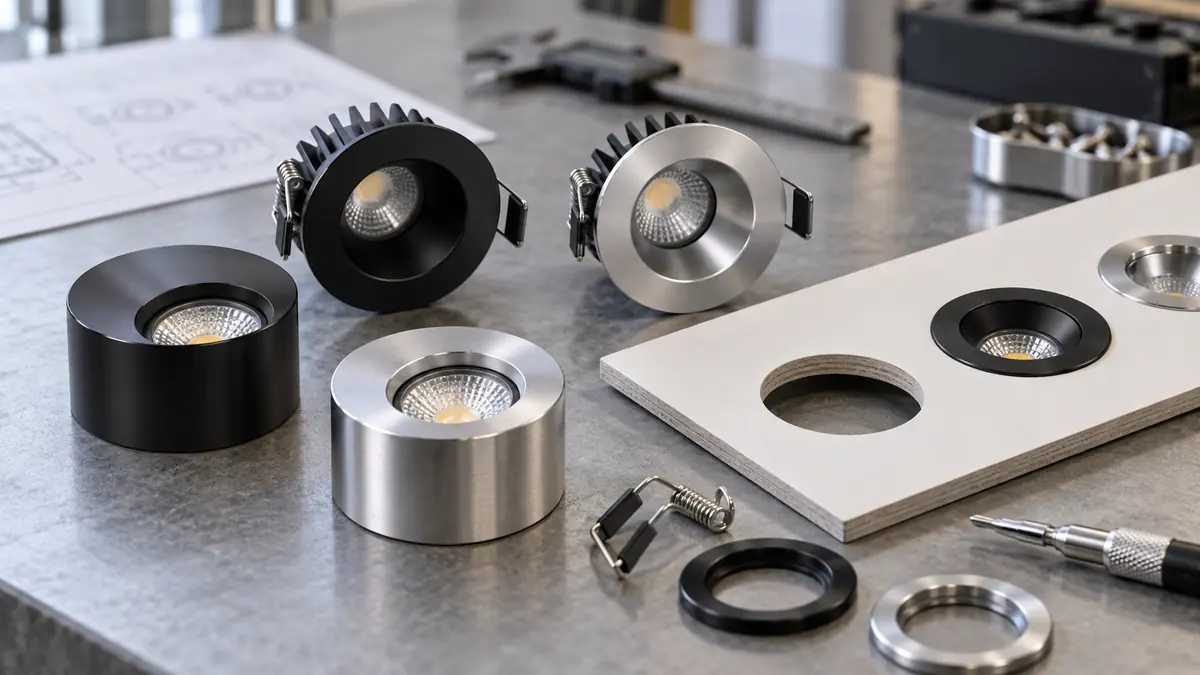
The housing should be chosen after the installation environment is clear: recessed or surface-mounted, indoor or outdoor, wood or aluminum, exposed or protected, fixed or adjustable. VLEDSTAR’s recessed vs surface-mounted mini LED spotlight guide explains why mounting style affects not only appearance, but also drilling, wiring, maintenance, and project cost.
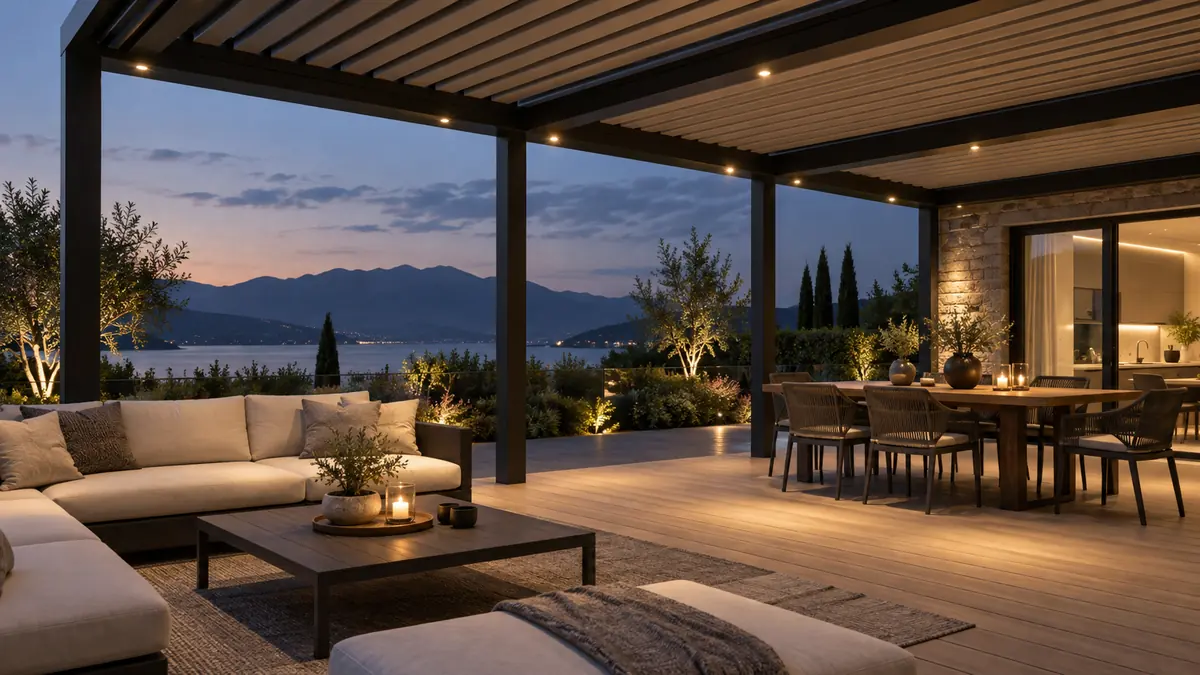
For mini spotlights used in pergolas, verandas, soffits, awnings, decks, cabinets, and garden details, housing design has four jobs. It has to hold the optic accurately, manage heat, protect the electrical parts, and fit the mounting surface without fighting the installer.
Recessed Housing
Recessed housings create a cleaner architectural finish. They are often chosen for pergola beams, deck boards, stair risers, cabinet panels, and soffit applications. The custom risk is cutout accuracy. If the suggested cutout, spring clip, body depth, and cable exit are not aligned with the material, installers lose time and the product feels less premium.
On VLEDSTAR product pages, recessed models such as the DELUXE 3W IP65 recessed mini LED spotlight そして DRAGON 3W IP65 mini LED spotlight show the kind of parameters buyers should lock early: voltage, wattage, housing size, suggested cutout, waterproof level, color temperature, beam angle, lens type, and finish.
Surface-Mounted Housing
Surface-mounted mini spotlights are useful when the substrate should not be drilled deeply, or when a retrofit project needs simpler access. They can also help when a buyer wants a visible design accent rather than a hidden point of light.
The custom questions change here. Buyers should check body height, screw position, base shape, cable outlet direction, rotation or tilt requirements, and whether the housing can hide the wiring cleanly. A compact example is the DROVER surface-mounted mini LED spotlight, which points to the practical difference between flush integration and accessible mounting.
Outdoor Housing Logic
For outdoor use, do not treat IP rating as a single box to tick. Ask how the front lens seals, how the cable enters the body, how water moves around the fixture, and how the light sits after installation. In many failures, water does not attack the most obvious surface. It follows the easiest path.
This is why the fixture’s installation orientation matters. A mini spotlight installed under a protected pergola beam has a different water load from one placed on a garden wall, stair edge, or exposed deck perimeter. If the project is outdoors, review VLEDSTAR’s guide on choosing mini LED spotlights for outdoor projects before freezing the housing.
Which Finish Options Matter for Brand and Project Buyers?
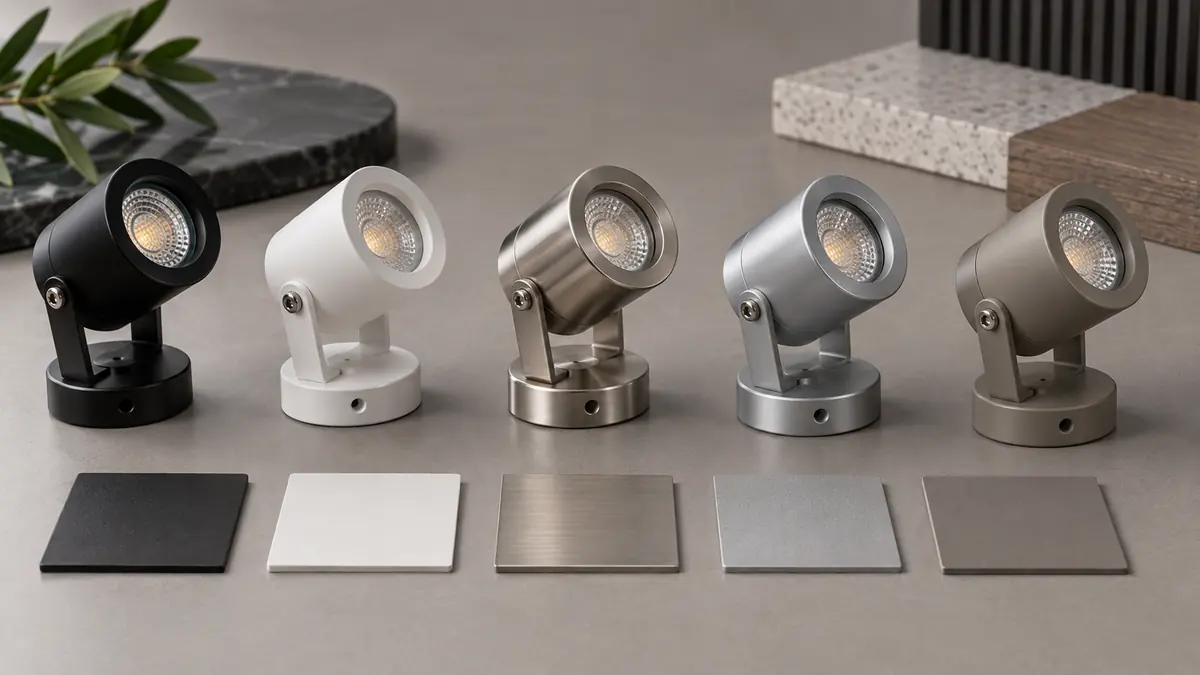
Finish selection matters because mini spotlights sit close to premium materials: powder-coated aluminum pergolas, composite decking, stone, timber, cabinetry, and outdoor furniture. A poor color match makes the light visible for the wrong reason. A weak coating can also create claims long before the LED reaches its rated life.
The common finish choices are black, white, silver, brushed nickel, and custom RAL colors. VLEDSTAR product specifications list aluminum plus PMMA structures and finish options that include standard colors and custom RAL color requests on selected models. For buyers building a private-label range, that flexibility can protect brand consistency across several SKU families.
RAL matching is helpful when the spotlight must align with pergola frame colors, awning hardware, window systems, handrails, or outdoor furniture lines. The official RAL color system gives buyers and manufacturers a clearer shared language than terms such as dark grey, warm white, or champagne.
Black, White, and Silver
Black is often the safest finish for modern pergolas, dark soffits, garden walls, and hospitality projects. It hides small shadows and works well with low-glare optics. White is useful for ceilings, verandas, kitchens, cabinets, and pale aluminum structures. Silver or brushed nickel fits interior trim, stainless accents, and some marine-style outdoor themes.
However, standard colors still need approval samples. One factory’s black may look neutral, while another reads slightly blue or brown beside the customer’s frame. For European and North American brand buyers, this difference can be enough to damage the line’s perceived quality.
Custom RAL Finish
Custom RAL finish is worth considering when the spotlight is sold as part of a pergola, veranda, deck, cabinet, or outdoor living kit. It lets the lighting disappear into the host structure. That matters because premium outdoor spaces are often judged by the details that do not shout for attention.
The buyer should define finish by color code, gloss level, coating method, sample approval process, and acceptable variation. For outdoor use, the specification should also consider UV exposure, salt air, cleaning chemicals, and scratch resistance during installation.
Optical Finish and Glare
Housing color is only one part of visual comfort. Lens type, beam angle, recess depth, and shielding decide whether the light feels refined or harsh. The U.S. National Park Service’s outdoor lighting principles recommend recessed or fully shielded fixtures that direct light downward. That advice fits premium outdoor projects very well.
For brand buyers, the opinion is simple: avoid selling brightness as the main value. A small, controlled beam usually feels more expensive than a stronger beam that creates glare. This is especially true for pergolas, patios, stair edges, and hospitality gardens, where people sit close to the light source.
How Should Cable Options Be Defined?
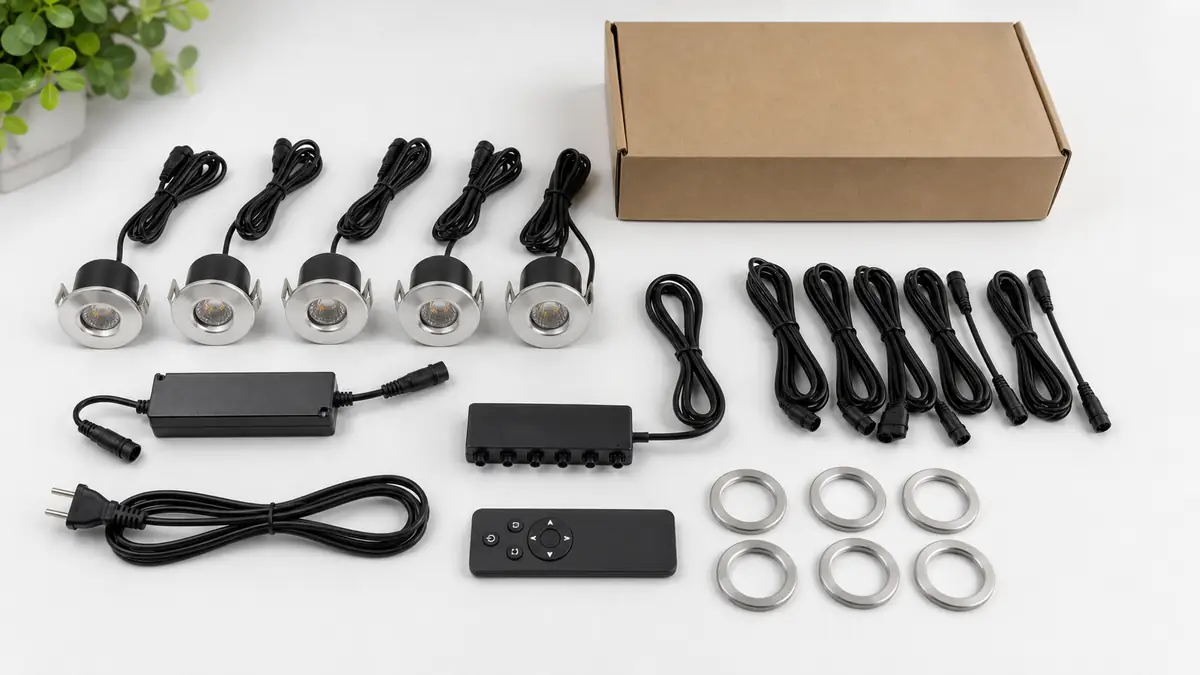
Cable choice should be defined by voltage, current, routing distance, waterproof need, color, length, connector style, and installation environment. VLEDSTAR’s wires and cables category lists extension cable options with IP20 and IP65 choices and lengths from 1m to 10m, which reflects how different projects need different wiring logic.
In a catalog, cable length looks like a small accessory decision. On site, it decides whether the installer can finish cleanly without splicing. For importers and project customers, fewer field splices usually mean fewer complaints, faster installation, and a more controlled warranty story.
Length and Routing
A pergola lighting kit may need short cable tails inside beams, longer extensions to reach a driver, and splitter positions that match the frame layout. A garden or deck project may need more distance between lights. Cabinet or soffit projects often need cleaner cable hiding and smaller connector bulk.
The RFQ should define standard lengths and optional extensions. If the buyer sells kits, the packaging should also make cable length obvious. Mixing 1m, 3m, 5m, and 10m extensions without clear labels can create warehouse and installation errors.
Cable Jacket and Color
For visible or semi-visible runs, cable color matters. Black cable may disappear under dark pergola beams and garden structures. White cable may fit soffits and interior cabinetry. Black and red two-core cable can help with polarity checks during assembly, but it may be less suitable when the cable can be seen by the end user.
Outdoor cable requests should also consider flexibility, jacket durability, temperature range, UV exposure, and whether the cable will pass through metal, wood, stone, or composite materials. Do not approve a cable only on hand feel. Check the actual route.
Voltage Drop and Driver Planning
Mini LED spotlights are often used in low-voltage systems. That does not remove electrical planning. Longer cable runs, more fixtures, and poor driver placement can affect performance. Buyers should ask the supplier for wiring diagrams, maximum recommended run lengths, compatible power supplies, and dimming method limits.
For larger projects, cable planning should happen before packaging planning. Otherwise the retail kit may look tidy but fail to fit the real installation. That mistake is common when a brand copies a small indoor kit format into an outdoor or pergola program.
Why Do Connectors and Splitters Deserve More Attention?
Connectors and splitters deserve more attention because they are frequent failure points in low-voltage lighting kits. The connector decides polarity control, service access, installation speed, and waterproof continuity. A 6-way or 12-way splitter can simplify a kit, but only if its location, IP need, wire length, and driver load are specified together.
VLEDSTAR offers splitter accessories such as the VL-SP6W 6-way splitter and the 12-way splitter listed on its accessory pages. These parts matter because brand buyers rarely sell one isolated lamp. They sell sets, installation convenience, and a promise that the components belong together.
Connector Type
The right connector depends on who installs the product. A professional contractor can handle more technical wiring if it improves reliability. A retail or patio-kit customer usually needs a simpler plug-and-play format with clear polarity and little chance of mismatch.
For outdoor versions, ask whether the connector itself supports the same exposure logic as the lamp head. A product page may list IP65 for the spotlight, but the kit can still be weak if the connector or splitter sits in an exposed area without suitable protection.
Splitter Layout
Splitter layout should match the application. A pergola roof may need several short branches from one central point. A deck perimeter may need longer spacing. A stair installation may need predictable left-right routing. When the splitter layout is wrong, installers start improvising.
Improvisation is expensive for B2B buyers. It creates variable installation quality, harder troubleshooting, and unclear responsibility when a claim appears. A better approach is to define branch count, branch length, connector type, driver capacity, and expected fixture count before approving the production sample.
Service and Replacement
Connectors also affect service. If a failed fixture requires cutting cable, the claim is more painful. If the light can be unplugged and replaced cleanly, the product line is easier to support. For brands and wholesalers, that difference can decide whether a product is profitable after the first season.
What Should Custom Packaging Solve?
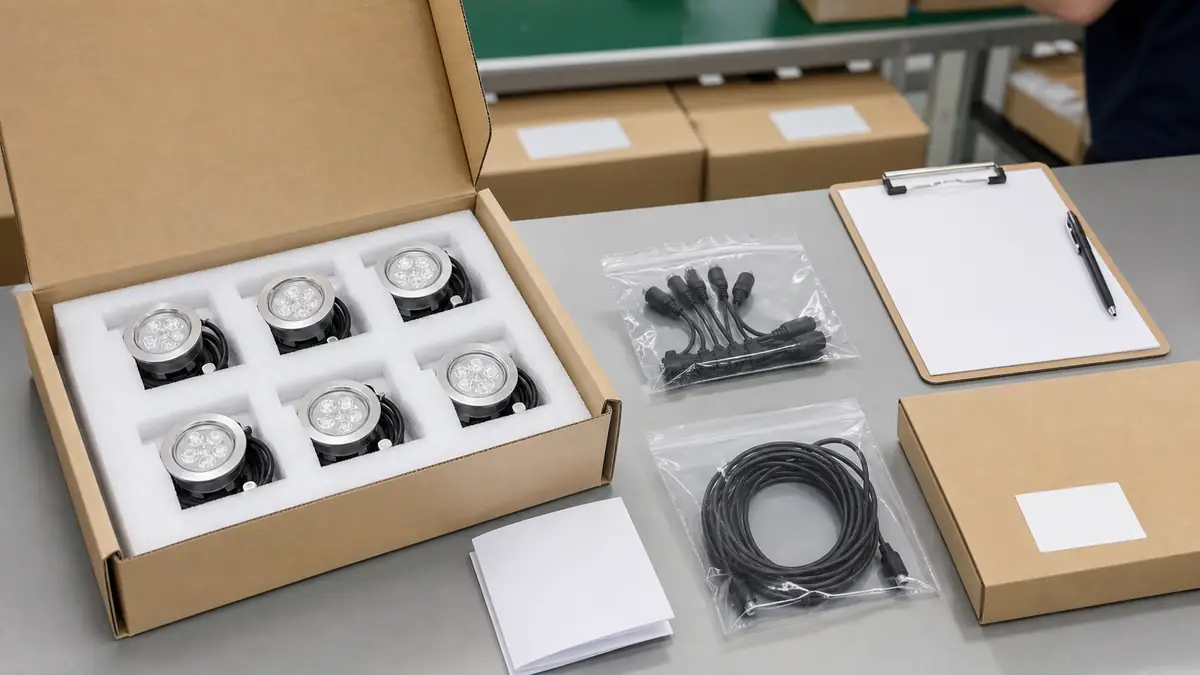
Custom packaging should solve four problems: product protection, brand presentation, accessory control, and installation clarity. Packaging is not only a box around the spotlight. It is the first technical document many installers actually touch, especially in retail kits, pergola kits, and project cartons.
European buyers should also watch packaging rules and recyclability direction. The European Commission’s page on packaging waste shows why packaging materials and claims deserve attention in EU-facing programs. For electrical products, the same discipline applies to RoHS documentation, covered by the EU’s RoHS Directive.
Private Label Packaging
For lighting brands and import wholesalers, private label packaging should be treated as part of the product. The carton, label, insert, wiring diagram, warning text, barcode, SKU code, and accessory bags must match the sales channel.
A premium patio brand may need clean retail packaging with installation steps and a branded insert. A project customer may prefer plain master cartons with strong labels, easy counting, and fewer printed materials. An importer may need both, depending on channel.
Accessory Control
Mini LED spotlight kits often include lamp heads, drivers, extension cables, splitters, controllers, screws, hole saws, or spare parts. If those parts are not separated and labeled well, warehouse teams and installers can make mistakes before the product reaches the final customer.
Good packaging reduces those mistakes. Use separate bags, clear part names, consistent cable length labels, matching diagrams, and carton markings that match the purchase order. For repeat programs, packaging control should be in the approved sample file, not left to memory.
Transit Protection
Small lights can still be damaged by poor packaging. Lens scratches, finish marks, bent clips, and crushed connectors all hurt the buyer’s brand. The packaging design should protect the visible surfaces and stop accessories from rubbing against the lamp body.
For project shipments, master carton strength and inner arrangement matter. For retail, the unboxing experience matters more. The point is not to make every package expensive. The point is to make the package fit the risk.
Which Custom Options Belong in a Professional RFQ?
A professional RFQ should separate must-have specifications from open development choices. This keeps quotation, sampling, testing, and production aligned. It also helps suppliers give useful feedback instead of guessing what the buyer truly needs.
| RFQ Area | What to Define | Why It Matters |
|---|---|---|
| Application | Pergola, deck, stair, garden, soffit, awning, cabinet, or project use | Controls housing, IP need, finish, cable route, and packaging format |
| Housing | Recessed or surface-mounted, diameter, depth, cutout, cable exit, spring or screw fixing | Prevents installation conflict and makes the fixture fit the host structure |
| Finish | Black, white, silver, brushed nickel, custom RAL, gloss level, approval sample | Protects brand appearance and visual match with pergola or project hardware |
| Optics | CCT, CRI, beam angle, lens type, glare preference, dimming method | Controls the night-time effect and prevents over-bright, uncomfortable lighting |
| Cable | Length, jacket color, IP level, polarity marking, extension options, temperature needs | Improves installation speed and reduces field splicing |
| Connector | Plug type, male-female logic, waterproof protection, service access, splitter match | Reduces wrong connections, after-sales claims, and replacement difficulty |
| Driver and Control | Voltage, wattage margin, dimming, RF remote, smart app, driver location | Keeps the light set stable and helps buyers sell complete solutions |
| Packaging | Private label carton, SKU label, barcode, insert, accessory bags, master carton | Supports brand presentation, warehouse accuracy, and installer confidence |
| Compliance | CE, RoHS, ETL, CB, SAA, project documents, test records where applicable | Helps importers and project buyers prepare market and customer documentation |
For North American low-voltage programs, buyers may also need to review applicable safety and installation requirements. UL’s resources for landscape and outdoor lighting are useful when building a certification path or checking buyer requirements.
Where Does VLEDSTAR Fit in a Custom Mini LED Spotlight Program?
VLEDSTAR fits best when the buyer needs more than a single catalog fixture. The company started its lighting business in 2010, later built its own production and R&D capabilities, and focuses on mini LED spotlights, light kits, deck lights, cabinet spotlights, strip light kits, drivers, splitters, cables, and related accessories.
The site shows a clear pattern: products are not presented only as loose lamps. Many are positioned as light sets for pergolas, verandas, soffits, awnings, cabinets, kitchens, patios, and outdoor projects. That is important for European and North American buyers because the commercial product is often a kit, not a bare lamp head.
For buyers comparing suppliers, the mini LED spotlight manufacturer comparison guide is a useful next step. It focuses on the supplier-side risks that matter after ordering: color consistency, waterproof structure, driver compatibility, accessory matching, documentation, and repeat batch control.
What VLEDSTAR Can Help Buyers Define
- Mini LED spotlight housing options for recessed and surface-mounted applications.
- Standard and custom finish directions, including black, white, silver, brushed nickel, and selected custom RAL requests.
- Low-voltage system planning with drivers, splitters, extension cables, RF remote control, and smart control options.
- Outdoor-oriented choices for IP65 mini spotlights, waterproof cable options, and project-specific installation logic.
- Private label packaging and kit configuration for lighting brands, patio system suppliers, import wholesalers, and engineering customers.
The value is not only that these options exist. The value is that they can be discussed together before tooling, sampling, and packaging approval. That is where many mini spotlight programs become easier to scale.
What Is the Right Position on Customization?
The right position is practical: customize the parts that reduce risk and protect repeatability. Do not customize every visible detail only because it is possible. For most buyers, the best product is not the most complex product. It is the one installers understand, customers like, warehouses can manage, and purchasing teams can reorder without confusion.
Housing customization should solve fit and durability. Finish customization should solve brand and material matching. Cable customization should solve routing. Connector customization should solve installation and service. Packaging customization should solve channel requirements and error control.
When these decisions are made together, custom mini LED spotlights become more than small decorative lights. They become a controlled product platform for pergola lighting brands, outdoor living suppliers, import wholesalers, and project contractors.
FAQ
What should be customized first in a mini LED spotlight program?
Start with the installation environment, then define housing, sealing, voltage, cable length, connector type, finish, and packaging. These choices decide whether the product can be installed consistently, protected outdoors, sold under a brand, and repeated across future production batches.
Is IP65 enough for outdoor mini LED spotlights?
IP65 can be suitable for many exposed outdoor applications, but buyers should confirm the complete system. The lamp head, cable entry, connector, splitter, driver location, and installation orientation all affect outdoor reliability.
Should private label buyers choose standard colors or custom RAL colors?
Standard black, white, silver, and brushed nickel are often enough for general sales. Custom RAL color is better when the spotlight must match pergola frames, awning hardware, branded patio kits, or project-specific architectural finishes.
Why does packaging matter for private label lighting buyers?
Packaging controls brand presentation, installation accuracy, warehouse handling, and claim reduction. A strong private label pack should protect the light, separate accessories clearly, show the correct wiring logic, and match the sales channel.
Build the Custom Specification Before You Build the Order
If you are developing a mini LED spotlight line for pergolas, patios, gardens, soffits, decks, cabinets, or project installations, start with the system specification. Define the housing, finish, cable, connector, driver, control method, kit contents, labels, and packaging before approving the first production sample.
VLEDSTAR can help turn that specification into a workable product set. Review the mini LED spotlight range, check compatible lighting accessoriesあるいは contact the engineering and sales team with your application, drawings, target finish, cable route, connector preference, and packaging plan.
ピンバック: Mini Spotlight Housing Materials: Stainless Steel, Aluminum, Brass, and Plastic Compared - miniledspotlight.com