


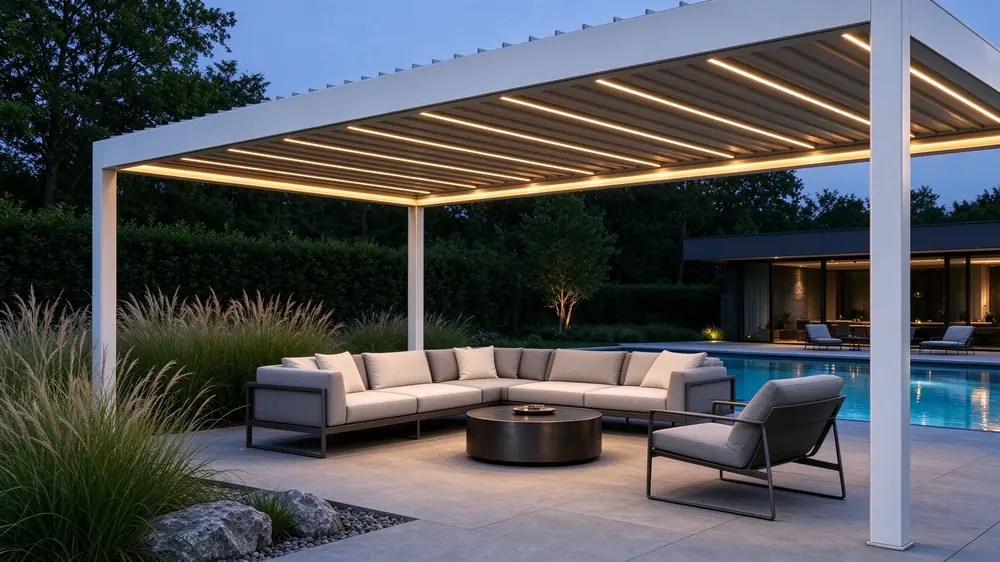
Outdoor LED strip lights are often purchased as if they were a simple reel of tape. In real pergola, patio, deck, veranda, and landscape projects, they behave more like a small lighting system. Length affects voltage drop and installation labor. CCT affects whether the finished space feels warm, architectural, or clinical. RGBW affects both the bill of materials and the control architecture. Connectors determine whether installers can work quickly or spend the evening troubleshooting. Packaging influences whether a distributor can sell the same SKU confidently across multiple projects.
That is why custom outdoor LED strip lights should be developed from the application backward. Start with the illuminated structure and the installation method. Then select the electrical and optical configuration. Only after that should you finalize the connector, accessories, label, and carton.
Manufacturer’s position: customization is valuable when it removes a known project risk. A custom length with the wrong voltage is not a solution. A premium box with an untested connector is not a private-label product. The best specification is the one that makes the product easier to install, sell, and support.
What should be customized before you request a quotation?
A useful quotation request should define the complete operating configuration, not just “outdoor RGB strip.” At minimum, give the manufacturer the following information:
- Application: pergola beam, roof louver, deck edge, stair, handrail, planter, facade, or landscape feature.
- Measured lengths for every section, including cable routes and service loops.
- Input voltage and available power supply location.
- White-light requirement: fixed CCT, tunable white, RGB, RGBW, or RGB+CCT.
- Outdoor exposure: sheltered, rain-exposed, splash-prone, buried, or submerged.
- Strip width, bending direction, cut interval, mounting channel, and diffuser.
- Connector type, lead-wire length, controller, dimming method, and regional plug requirements.
- Packaging format, brand artwork, language, barcode, carton quantity, and spare-parts policy.
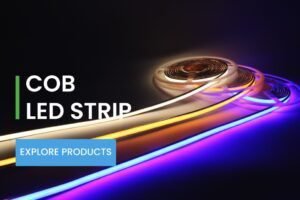
VLED’s COB LED strip range illustrates why these details belong in the same discussion: the listed products vary by voltage, power, LED density, PCB width, and cut size. Those parameters are not interchangeable. They affect the mechanical fit, heat management, power planning, and final appearance.
Custom length: factory-cut sections or standard reels?
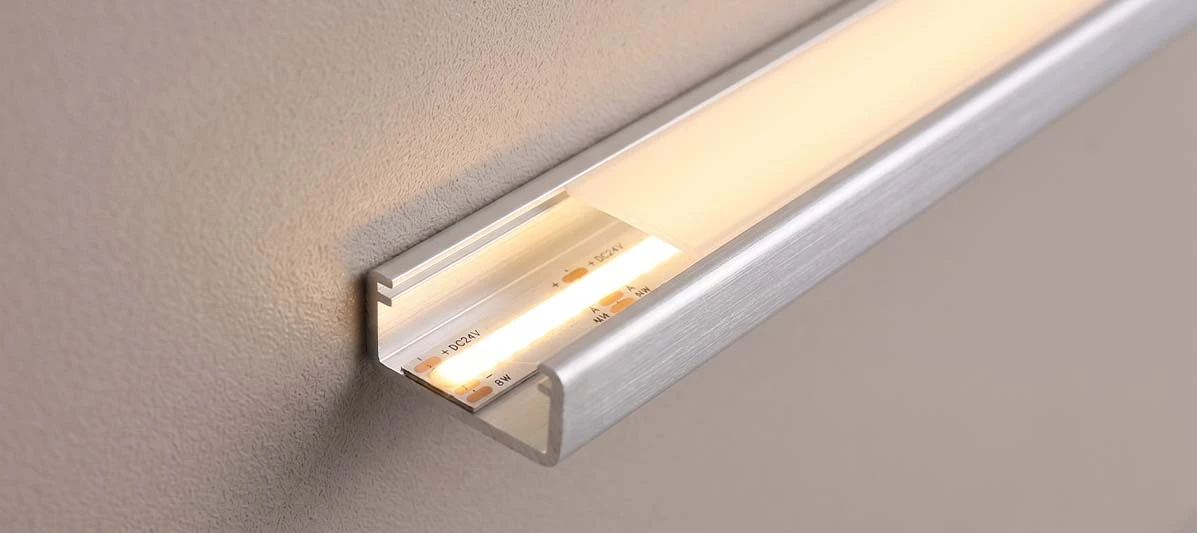
There are two sound ways to supply custom length outdoor LED strip lights. The first is a factory-cut, terminated section that arrives ready for a defined installation. The second is a standard reel with marked cut points, connectors, and installation instructions for field assembly. The right choice depends on your sales channel and the repeatability of the project.
Factory-cut lengths
Factory-cut sections are useful for branded pergola kits, modular patio systems, and projects where each segment has a known dimension. They can reduce field cutting, simplify the bill of materials, and make kit packing more predictable. The manufacturer should record the exact finished length, cut position, lead-wire length, polarity, connector orientation, and test result for each configuration.
Standard reels with field-cut capability
Standard reels give distributors and installers more flexibility. They suit landscape contractors who encounter different site dimensions and replacement projects that cannot be standardized. However, field-cut products need clear cut marks, compatible end caps, a defined sealing method, and instructions that explain where cutting is permitted. “Cuttable” does not automatically mean “safe to cut anywhere.”
Length also has an electrical consequence. A longer run increases the need to check voltage drop, conductor size, power injection, and controller capacity. A 24 V configuration is commonly preferred for longer low-voltage runs because it can reduce current for a given power level, but the actual maximum run must come from the product’s tested electrical design. Do not publish a maximum distance based only on the input voltage.
| Project condition | More suitable starting point | Specification questions |
|---|---|---|
| Repeatable pergola kit | Factory-cut sections | Section lengths, lead wires, connector orientation, kit BOM, spare parts |
| Mixed landscape projects | Marked reels and field connectors | Cut interval, sealing process, extension cables, installer instructions |
| Long architectural run | 24 V or an engineered higher-voltage design | Maximum run, voltage drop, power injection, controller and driver limits |
| Replacement or service SKU | Standardized reel or segment | Compatibility with installed connector, CCT, PCB width, IP construction |
CCT, CRI, and color choice: specify the scene, not just the number
Correlated color temperature describes the appearance of white light in Kelvin. It does not describe brightness, beam spread, or color rendering. The U.S. Department of Energy explains that CCT describes color appearance while color fidelity describes how the light affects the appearance of objects. For outdoor brands, that distinction matters: a 3000 K strip may feel warm, but it can still render timber, stone, food, or planting differently depending on its spectral quality.
For hospitality-style pergolas and residential patios, warm white is often selected to support a relaxed evening environment. Neutral white can suit modern architecture, work surfaces, and commercial outdoor areas. Tunable white is useful when the same product must support different scenes or match adjacent fixtures, but it requires additional control channels and a clear commissioning method.
Ask for the complete white-light specification:
- Nominal CCT or CCT range.
- Target tolerance and binning approach.
- CRI, with R9 or TM-30 data when color quality is commercially important.
- Rated power and delivered light output under the intended waterproof construction.
- Whether the diffuser, channel, silicone, or coating changes the apparent color.
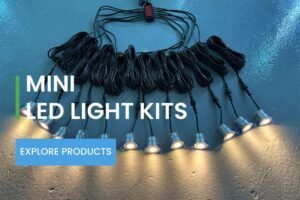
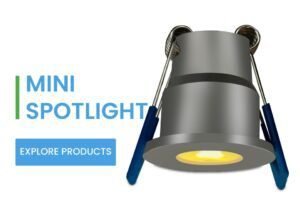
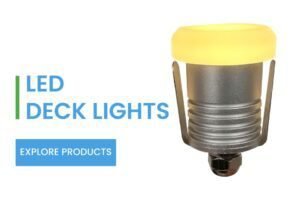
VLED’s product system includes fixed and adjustable color options across mini LED light kits, mini-projecteurs, and COB strip products. For a complete outdoor environment, this makes it possible to coordinate linear light with compact accent, step, or deck fixtures instead of treating the strip as an isolated component.
RGB versus RGBW: when the extra white channel earns its place
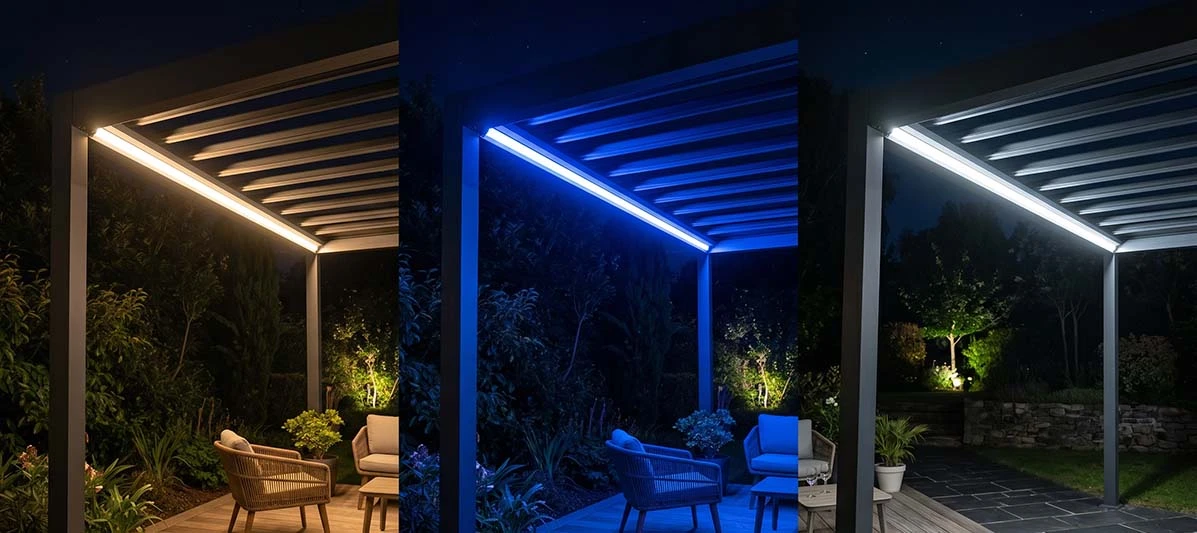
RGB combines red, green, and blue channels to create color effects. RGBW adds a dedicated white channel. That difference becomes important when a pergola, patio, or landscape product must provide both atmosphere and practical illumination. RGB can create vivid decorative scenes, but its mixed white may not provide the same visual quality or consistency as a dedicated white LED channel.
Choose RGB when the product is primarily decorative, the control system is already standardized, and white-light performance is secondary. Choose RGBW when the product must switch between color scenes and useful white illumination, when the lighting is part of a premium outdoor-living system, or when the brand wants one SKU to cover more customer use cases.
RGBW also changes the engineering brief. A five-conductor connection is typical for an analog RGBW strip, but the exact connector and controller must match the strip’s channel arrangement. Power supply sizing must consider the relevant operating condition, including the possibility that several channels run at high output together. For addressable products, the data protocol, pixel grouping, signal direction, backup data, controller compatibility, and injection strategy must be documented separately.
Do not use “RGBW” as a complete specification. State the white CCT, LED density, wattage per metre, control method, connector pin count, maximum tested run, and waterproof construction. Two products can both be called RGBW while behaving very differently in installation and use.
Connectors and cables: the small component that decides installation quality
Outdoor connectors should be selected as part of the lighting system, not added after the strip has been chosen. The connector has to fit the strip width, conductor count, voltage, current, sealing method, and installation workflow. It also has to leave enough room for the installer to make a reliable connection inside a beam, channel, junction box, or landscape enclosure.
For every connector assembly, specify:
- Two-wire, three-wire, four-wire, five-wire, or data-plus-power configuration.
- Strip width and contact geometry.
- Male or female termination and mating direction.
- Lead-wire gauge and finished cable length.
- Locking, soldered, crimped, overmoulded, or field-installable construction.
- End caps, heat-shrink, sealant, junction boxes, and strain relief.
- Compatibility with the controller, driver, splitter, and extension cable.
A connector advertised as waterproof is not proof that the entire assembled system remains waterproof after cutting and installation. The finished product should be evaluated as a complete assembly, including the strip-to-wire joint, cable entry, end cap, and any field connector. UL notes that low-voltage outdoor lighting can be evaluated as a complete system or as separate luminaires and power units, which is a useful reminder to define the certification scope clearly for the market you serve.
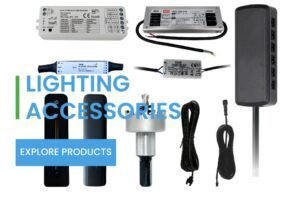
VLED’s lighting accessories category is a natural starting point when the strip must be sold with drivers, wires, splitters, or installation parts. If the required accessory is not listed, include a drawing or sample in the RFQ rather than relying on a generic connector photo.
Waterproofing and outdoor construction: separate the IP label from the real use case
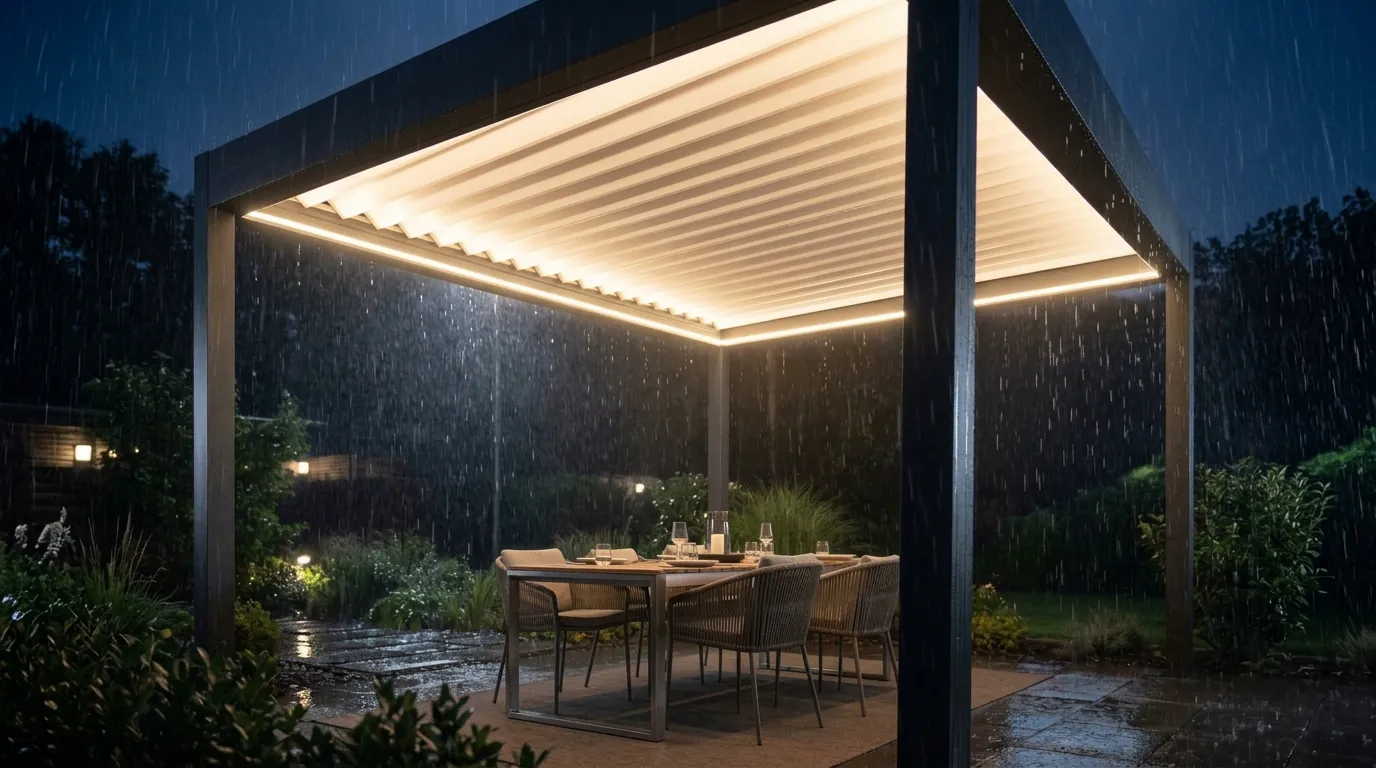
IP ratings classify protection provided by enclosures under IEC 60529. They are important, but an IP number alone does not describe UV exposure, thermal cycling, chemical exposure, mechanical impact, condensation, installation quality, or long-term cable-joint performance. The strip, connector, power supply, controller enclosure, and installation method may each have different environmental limits.
For a specification review, ask where the product will be installed:
- Under a protected pergola beam with occasional rain.
- On an exposed deck edge with direct weather.
- Near sprinklers, pools, salt air, soil, or cleaning chemicals.
- Inside an aluminum channel with a diffuser and drainage path.
- In a location where water can collect at the connector or end cap.
Then specify the construction and test evidence that match that use. A rain-exposed strip and an underwater-rated strip are not simply the same product with a higher number. The coating or extrusion affects flexibility, heat transfer, bend radius, cut and seal process, optical diffusion, and serviceability. For compliance context, see the IEC 60529 IP Code reference et UL’s overview of outdoor and landscape lighting standards.
Packaging options for brands, importers, and project suppliers
Packaging is part of the product specification because it controls warehouse handling, installation accuracy, and the customer’s first impression. A five-metre reel in a plain bag may be adequate for a contractor sample. A retail-ready or professional trade package needs much more information.
Common packaging formats
- Plain anti-static bag or protective sleeve for project shipments.
- Printed individual box for branded distribution.
- Custom carton containing a complete kit with strip, driver, controller, connectors, and instructions.
- Segmented packaging for factory-cut lengths, with each section labelled by location or part number.
- Master carton with inner packs, barcode, carton quantity, gross weight, and shipping marks.
A useful label should make the configuration visible without opening the package. Include model number, strip type, voltage, power, length, CCT or RGBW mode, IP rating, cut interval, connector type, controller compatibility, installation orientation, and manufacturing lot or traceability code. If the product is private label, make sure the label and manual use the same model name and electrical data as the test report.
For distributors, packaging should also reflect the sales channel. A product sold through landscape contractors may need a concise installation sheet and replacement-part list. A product sold as a pergola kit may need a section map, wiring diagram, driver location, controller pairing steps, and a checklist for missing parts. A product sold to an importer may require bilingual or multilingual documentation and carton data for customs and warehouse operations.
How to turn the options into one production-ready specification
The most efficient development process is a short engineering sequence:
- Map the application. Mark every illuminated segment, bend, joint, driver location, and service access point.
- Lock the electrical architecture. Confirm voltage, wattage, maximum run, power supply, controller, dimming, and injection points.
- Choose the light behavior. Select fixed CCT, tunable white, RGB, RGBW, or addressable control based on the user experience you are selling.
- Define the mechanical interface. Confirm strip width, channel, diffuser, bend direction, cut interval, cable route, and connector clearance.
- Build a sample with production parts. Test the actual strip, coating, connector, cable, end cap, controller, and power supply together.
- Approve the documentation and packaging. Match the label, manual, wiring diagram, carton, and BOM to the tested sample.
- Release a controlled SKU. Record the configuration so future replacement orders do not silently change CCT, connector, cable length, or packaging.
This is where a manufacturer with design and production capability can add more value than a catalogue reseller. VLED states that it has focused on small LED spotlights, mini downlights, LED kits, and outdoor lighting since 2010, combining product design, R&D, manufacturing, and OEM/ODM support. Its factory and design profile is relevant for buyers who need the strip to coordinate with mini spotlights, step lights, or a complete pergola lighting kit.
Questions buyers commonly ask
Can outdoor LED strip lights be made to a custom length?
Yes. A manufacturer can supply factory-cut lengths or standard reels that are cut and connected during installation. The choice depends on the project layout, cut interval, voltage, maximum run, connector design, and whether the product is sold as a repeatable kit or a flexible contractor SKU.
Should a pergola lighting product use RGB or RGBW?
RGBW is usually the stronger choice when the same product must provide both saturated color effects and usable white illumination. RGB can be suitable for decorative-only products, but it should not be presented as a direct replacement for a dedicated white channel without validating the intended scene quality.
What should be specified for outdoor LED strip connectors?
Specify the conductor count, strip width, voltage, connector gender, lead-wire length, sealing method, mating direction, and whether the connection is field-installable. The connector and cable assembly should be tested as part of the outdoor lighting system, especially after cutting or extension.
What should private-label packaging include?
A professional package should identify the model, voltage, wattage, CCT or color mode, IP rating, length, accessories, installation limits, controller compatibility, safety information, and traceability details. Packaging should match the actual tested configuration and the product data used by your sales team.
Build the specification around your project
If you are developing an outdoor LED strip SKU for pergolas, patios, decks, landscape projects, or a private-label lighting range, send the application drawing and target configuration first. VLED can review the length plan, CCT or RGBW requirement, connector system, matching mini spotlights, accessories, and packaging direction as one product brief.
Send Us Your Request