



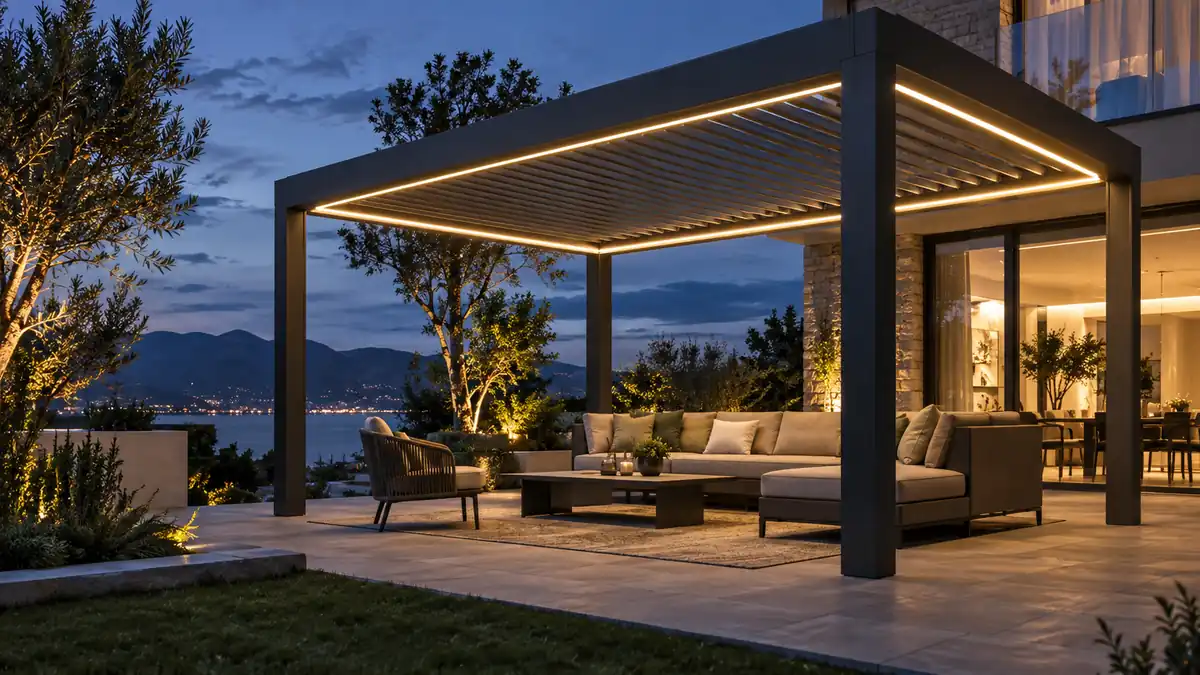
For a deck, pergola, patio, or landscape project, outdoor LED strip lighting has to do more than turn on. It must fit the architecture, maintain a consistent line of light, work with the control system, manage heat, tolerate the actual weather exposure, and remain serviceable after installation. For a brand or importer, the purchasing decision also includes cut length, packaging, private-label documentation, replacement policy, and whether the manufacturer can keep the same performance from sample to production.
This is why we recommend treating an outdoor LED strip as a product platform rather than a roll of tape. Specify the light effect first, then build the electrical, mechanical, optical, and commercial requirements around it. In some locations, a strip is the right answer. In others, a recessed LED deck light or a small mini LED spotlight will create a cleaner and more maintainable result. The strongest outdoor ranges use these products together.
The practical position: do not approve an outdoor LED strip from an IP rating and a product photo alone. Approve the complete installation system: strip construction, voltage, power supply, connectors, cable exits, mounting method, control protocol, thermal path, and service plan.
What outdoor lighting brands should specify before asking for a quotation
A useful RFQ begins with the application, not with a generic request for “waterproof LED strip.” A manufacturer should be able to understand where the product will be installed, what the customer will see, and how the system will be sold.
| Specification area | Questions to answer | Why it matters to the finished range |
|---|---|---|
| Exposure | Covered, splash-exposed, fully exposed, coastal, dusty, or subject to standing water? | Determines the construction, sealing, drainage, cable exits, and installation warnings. |
| Visual effect | Continuous dot-free line, soft accent, task light, edge marker, or dynamic color effect? | Determines COB or SMD architecture, LED density, diffuser, output, and control method. |
| Run geometry | Length of each run, corners, bends, cut points, and access to the driver? | Determines voltage, feed points, bend direction, channel choice, and replacement strategy. |
| Brand position | Trade range, premium architectural line, contractor kit, or private-label consumer product? | Determines documentation, packaging, accessories, warranty language, and sample approval. |
| Complementary lighting | Will the strip work beside deck lights, spotlights, step lights, or smart controls? | Determines color consistency, dimming behavior, wiring architecture, and a coherent product family. |
This level of definition saves time because it prevents a common procurement mistake: comparing products that only look similar in a catalog. A strip for an enclosed pergola beam and a strip routed along an exposed landscape wall may both be described as outdoor products, but they do not face the same mechanical, thermal, or water-management conditions.
Match the strip construction to the real outdoor exposure
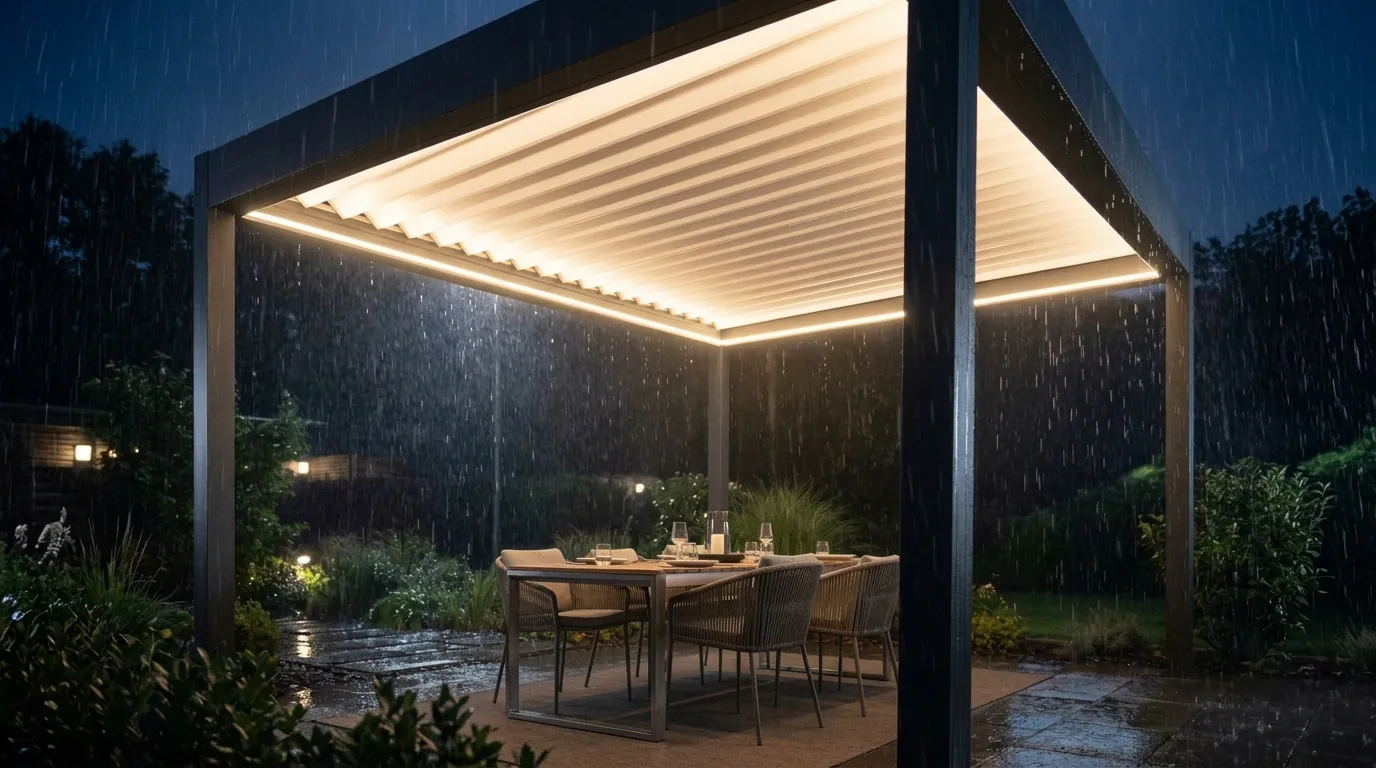
IP protection is a useful starting point, not a complete product specification. The IEC explanation of IP ratings describes protection against ingress under defined test conditions. It does not tell a buyer how a particular strip behaves after repeated UV exposure, temperature cycling, bending, connector assembly, or poor drainage on site.
Covered pergolas, patio ceilings, and protected deck details
Under a solid pergola roof or patio ceiling, the strip may be protected from direct rainfall but still exposed to humidity, condensation, dust, insects, and occasional splash. The product should be selected with the actual mounting detail in mind. A stable aluminum profile with a diffuser often gives a more repeatable result than adhesive applied directly to weathered timber, painted masonry, or a dusty composite surface.
Exposed rails, steps, landscape edges, and facade lines
Direct rain changes the design problem. The strip, end caps, connection points, cable entries, and mounting clips must work as one system. Confirm whether the stated IP rating applies to the strip body, the assembled product, or only a test sample. Also confirm the manufacturer’s limits on immersion, drainage, UV exposure, minimum bend radius, and installation orientation. If the design can trap water, a high IP claim will not rescue it.
Coastal, wet, and difficult maintenance environments
Salt air, spray, grit, and limited service access deserve a separate product decision. Ask about metal finish, sealing compounds, cable jacket, connector material, and replacement access. For a project range, document the environment that each product is intended for instead of using one “outdoor” label across every SKU.
VLED’s own product categories show why system selection matters: the COB LED strip range includes different voltages, widths, LED densities, cut sizes, power levels, and CRI options. Those are not cosmetic variations. They affect how easily a brand can standardize profiles, drivers, packaging, and installation instructions across markets.
Choose COB, SMD, neon flex, or a mini spotlight by the light effect
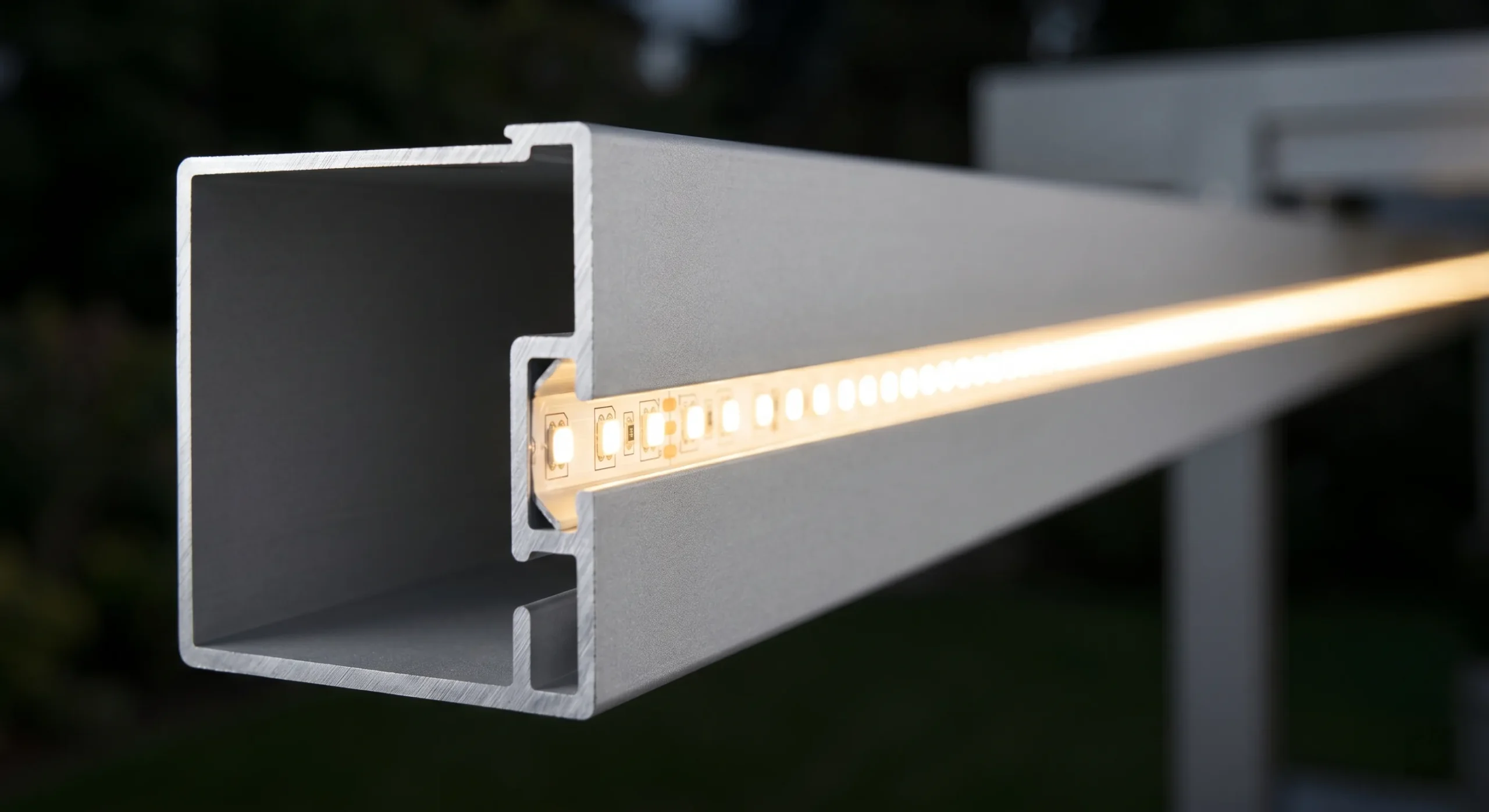
The best outdoor linear product is the one that creates the required visual line with the fewest compromises. “LED strip” can describe several very different constructions.
| Product direction | Strong fit | Specification cautions |
|---|---|---|
| COB strip | Continuous, low-dot accent under rails, beams, cabinets, benches, and architectural edges. | Check heat path, protective coating, cut interval, output, diffuser depth, and outdoor assembly. |
| High-density SMD strip | Higher-output general linear lighting where a profile and diffuser can control dot visibility. | Check LED pitch, bin consistency, PCB copper, thermal load, and end-of-run brightness. |
| Neon flex | Visible contour lines, edge outlines, curved details, and applications requiring a finished silicone extrusion. | Check bend direction, minimum radius, cut unit, mounting clips, end sealing, and service access. |
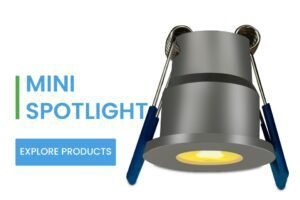
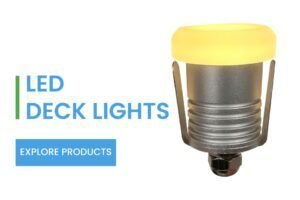
| Mini spotlight or deck light | Points, steps, posts, pergola rafters, planting features, and locations where a replaceable optical point is preferable. | Check glare, beam angle, cutout, housing material, cable route, and visual consistency with the strip. |
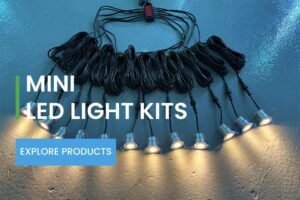
Our view is that brands should stop forcing one technology into every application. A continuous strip is excellent for washing a long edge. It is less suitable when a designer needs controlled beams on trees, planting, steps, or structural details. A coordinated family can combine a COB strip with mini LED light kits et LED step lights, using the same color-temperature logic and control architecture.
12V or 24V: decide from the run design, not habit
Both 12V and 24V systems can be appropriate for outdoor projects. The decision should follow run length, power, wiring layout, cut resolution, driver availability, and the installer’s working method.
For the same wattage, a 24V strip draws less current than a 12V strip. That can make voltage-drop management easier on longer runs, but it does not remove the need to calculate the installation. Long runs, high-output strips, small conductors, poor connections, and one-sided power feeds can still produce visible brightness variation. The manufacturer should provide a recommended maximum run and feed method for the exact SKU.
When building a product range, also check compatibility with the rest of the outdoor system. If a brand sells 24V pergola spotlights, a 24V deck light kit, and a 24V strip, shared drivers and controls may simplify inventory and installation. VLED’s product pages include both 12V and 24V options across mini spotlights, deck lights, kits, and strips, which makes this kind of family planning possible without pretending every product has identical electrical behavior.
Every quotation should identify:
- Nominal voltage and acceptable operating range.
- Power per meter and the maximum recommended run.
- Whether power is fed from one end, both ends, or multiple injection points.
- Driver type, dimming method, controller protocol, and enclosure location.
- Connector polarity, cable length, wire gauge recommendation, and field termination method.
- What happens to the warranty if the installer changes the cable, cuts the strip, or reseals an end.
Design for heat, mounting, and service access
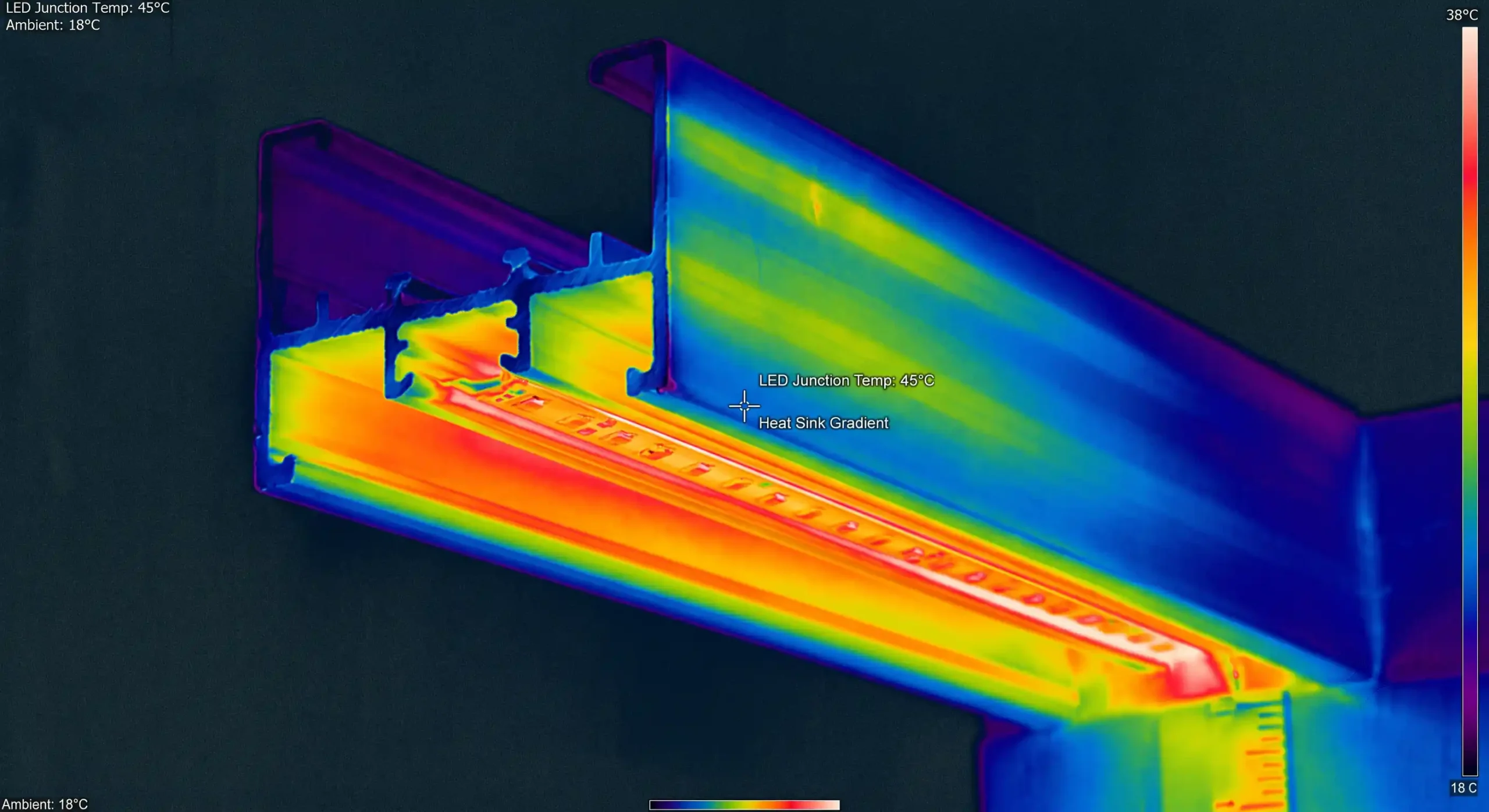
Outdoor weatherproofing and thermal management are often treated as separate issues. They are connected. Silicone, resin, profile geometry, adhesive, ambient temperature, and mounting surface all influence how heat leaves the LED assembly.
An aluminum profile can provide a stable mounting surface, protect the strip from impact, improve heat spreading, and support a diffuser. It is not automatically a waterproof enclosure, however. The profile, cover, end cap, drain path, and strip construction must match the exposure. A profile installed with no route for water to escape can create a different failure mode from a bare strip.
For deck and patio products, installation tolerances matter as much as the nominal dimensions. Record the profile width, channel depth, diffuser height, bend direction, cut interval, cable exit position, and minimum clearance around the strip. For a private-label range, these details should appear in the installation sheet and the packaging, not remain in an engineer’s email thread.
Service access is another brand-level decision. If a strip is sealed into a stone edge or behind a finished pergola beam, replacement may require removing surrounding construction. A contractor-focused product may therefore be better with modular connectors, accessible drivers, and a documented replacement section. A premium architectural product may accept more integrated construction if the design team has planned access points. Neither approach is universally correct; the failure is leaving the decision undefined.
Specify color quality and controls as part of the brand experience
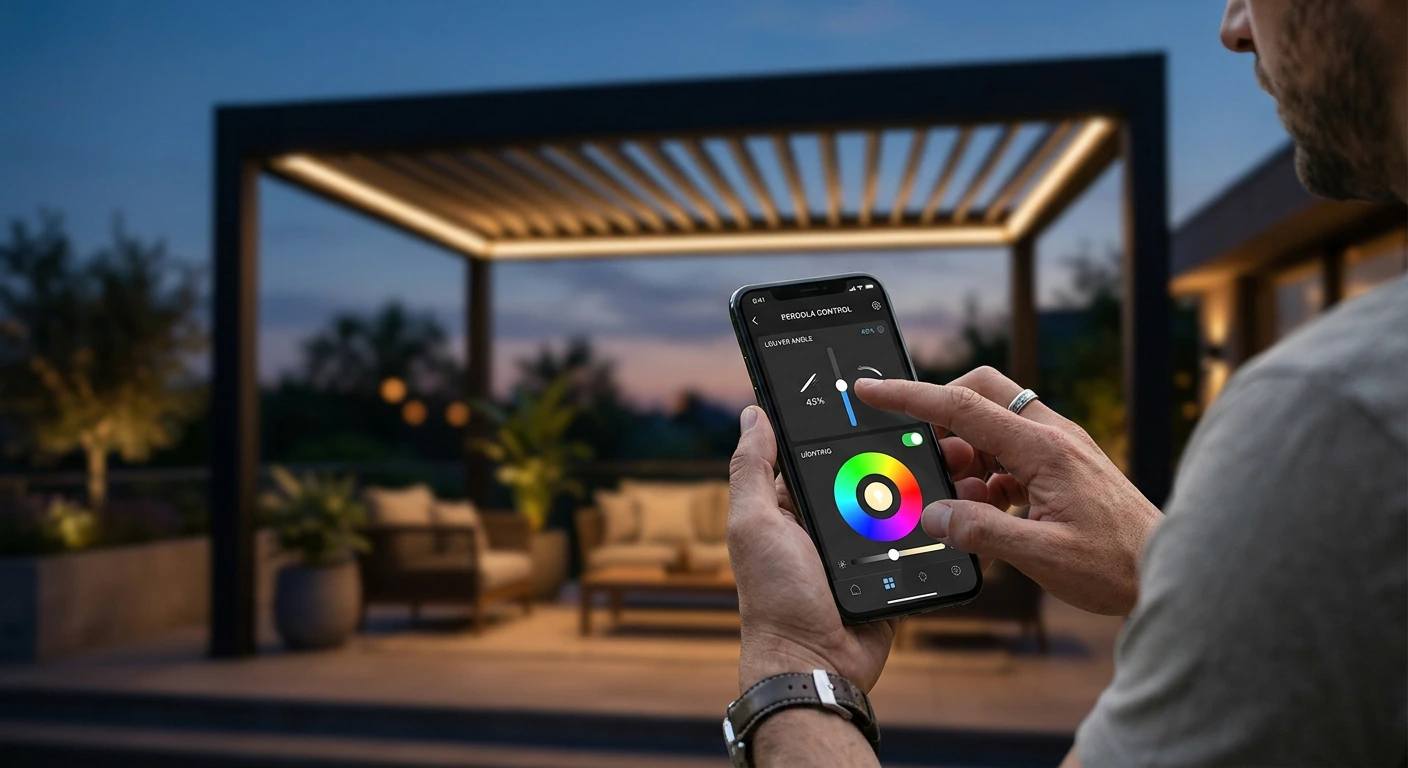
Outdoor lighting is judged at night, but the purchase decision is often made from daytime samples. Brands should approve the visual result and the control behavior together.
For hospitality patios, residential outdoor living, and landscape projects, warm white and tunable white are usually evaluated for atmosphere and consistency with adjacent fixtures. For architectural accents, RGB, RGBW, or addressable products may be justified, but the product description should say exactly what the controller, pixel group, white channel, and cut unit can do. “Smart” or “RGBIC” is not a sufficient engineering specification.
Ask the manufacturer to submit samples under the same diffuser, profile, voltage, and control settings planned for production. Compare:
- Color temperature and bin consistency across multiple samples.
- Dot visibility at the intended viewing distance.
- Dimming smoothness at low output.
- White-light quality when the product is sold as RGBW or tunable white.
- Controller range, zoning, scene recall, scheduling, and behavior after power loss.
- How the strip looks beside the brand’s mini-projecteurs et deck lights.
For manufacturers, the important point is repeatability. A lighting brand is not only selling brightness; it is selling a recognizable night-time appearance. That appearance can be lost through mixed LED bins, inconsistent silicone color, different diffuser batches, or a control system that dims one product differently from another.
What to verify in a manufacturer’s sample and production process
A strong sample is evidence of a process, not proof that every production batch will be identical. Before placing a bulk order, request a product data sheet, wiring diagram, installation drawing, sample approval record, packaging specification, and quality-control plan.
Useful questions for an outdoor LED strip manufacturer include:
- Which parts of the assembly are tested for ingress protection, and under what configuration?
- How are LED bins, CCT, CRI, PCB thickness, adhesive, silicone, and connector parts controlled between batches?
- What are the documented cut intervals and tolerances?
- How are solder joints, cable exits, end caps, and field-cut ends sealed?
- What accelerated aging, thermal, electrical, or burn-in checks are performed before shipment?
- Which certificates apply to the finished product and which apply only to a component?
- Can the manufacturer supply replacement sections, spare accessories, and updated technical files?
- Can the same visual platform be adapted for a private label without changing the approved performance?
For the North American market, the UL LED lighting services overview is a useful reminder that compliance evaluation is tied to the product and its construction. For energy and lighting fundamentals, the U.S. Department of Energy’s LED lighting guidance provides a neutral reference. Your own market may require additional marks, documentation, or installation rules, so the compliance route should be confirmed with the importer, project authority, and qualified electrical professional.
How VLED can fit into a complete outdoor lighting range
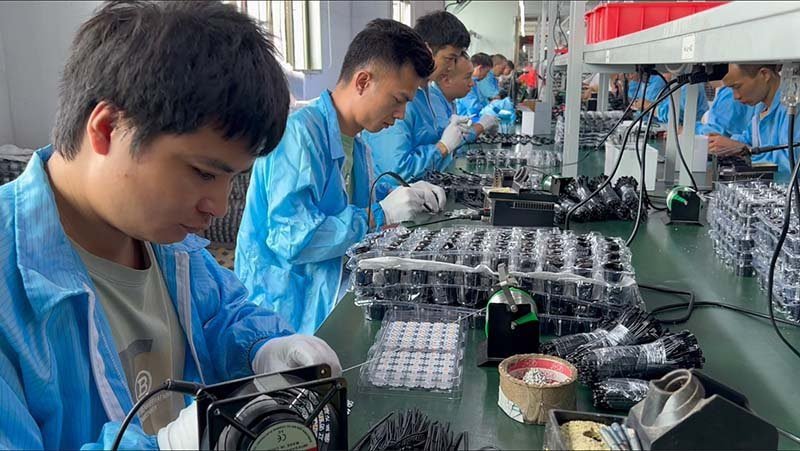
VLED has focused on small LED spotlights, mini downlights, LED kits, deck lights, and strip lighting since 2010. That manufacturing focus is useful for brands whose projects need more than one fixture type. The goal is not to replace a landscape designer’s specification; it is to help turn that specification into a coordinated, repeatable product family.
For a pergola or patio range, that may mean combining COB strip lighting under beams with compact spotlights in rafters, then adding deck or step lights where orientation and glare need tighter control. For a landscape brand, it may mean pairing linear accents with small point sources around planting, pathways, and retaining walls. The company’s factory and R&D overview describes OEM/ODM and NDA support, while the mini LED kit category shows how products can be configured as coordinated sets rather than isolated fixtures.
VLED’s public product information also lists customized voltage, CCT, RGB/RGBW, dimming, cutout, beam-angle, and kit options across relevant product groups. Those details still need to be confirmed for the exact project and market. A proper development conversation should start with the installation drawings, target customer, sample requirements, compliance needs, and forecast—not with a request to copy a competitor’s product.
Outdoor LED strip lights manufacturer FAQ
Is IP65 enough for outdoor LED strip lighting?
It depends on the installation. IP65 may suit some protected or splash-exposed locations, but the strip, power supply, connectors, cable entries, and mounting detail all need to match the exposure. Direct rain, standing water, coastal conditions, and difficult service access require a more specific construction review.
Should outdoor LED strip lights use 12V or 24V?
Choose from run length, power, voltage drop, driver architecture, cut resolution, and control compatibility. 24V can simplify current and voltage-drop management on longer runs, but the exact maximum run and feed method must come from the manufacturer for the selected SKU.
Are COB LED strips better for decks and patios?
COB strips are often a strong choice when the project needs a smooth, low-dot line of light. They are not automatically the best choice for every outdoor location. Confirm the protective construction, thermal path, cut interval, diffuser, output, and end-sealing method before approval.
Can LED strip lights and mini spotlights share one outdoor lighting system?
Yes, when voltage, control protocol, dimming behavior, color quality, and installation hardware are planned together. A strip is suited to continuous linear accents; mini spotlights and deck lights provide controlled points or task-oriented illumination. A coordinated family usually gives designers more control than one technology used everywhere.
What should importers request before placing a bulk order?
Request approved samples, a complete data sheet, wiring and installation drawings, product and component compliance documents, production tolerances, packaging details, test records, replacement policy, and a clear statement of what the warranty covers. The approved sample should be tied to the production specification.
Planning a deck, patio, pergola, or landscape lighting range?
Send VLED the application, run lengths, exposure conditions, preferred voltage, light effect, controls, target market, and sample requirements. We can help you compare strip, mini spotlight, deck light, and kit architectures before you commit to tooling or a bulk order.
Talk with VLED about your outdoor lighting specification or review the COB LED strip range et LED deck light range.
Send Us Your Request